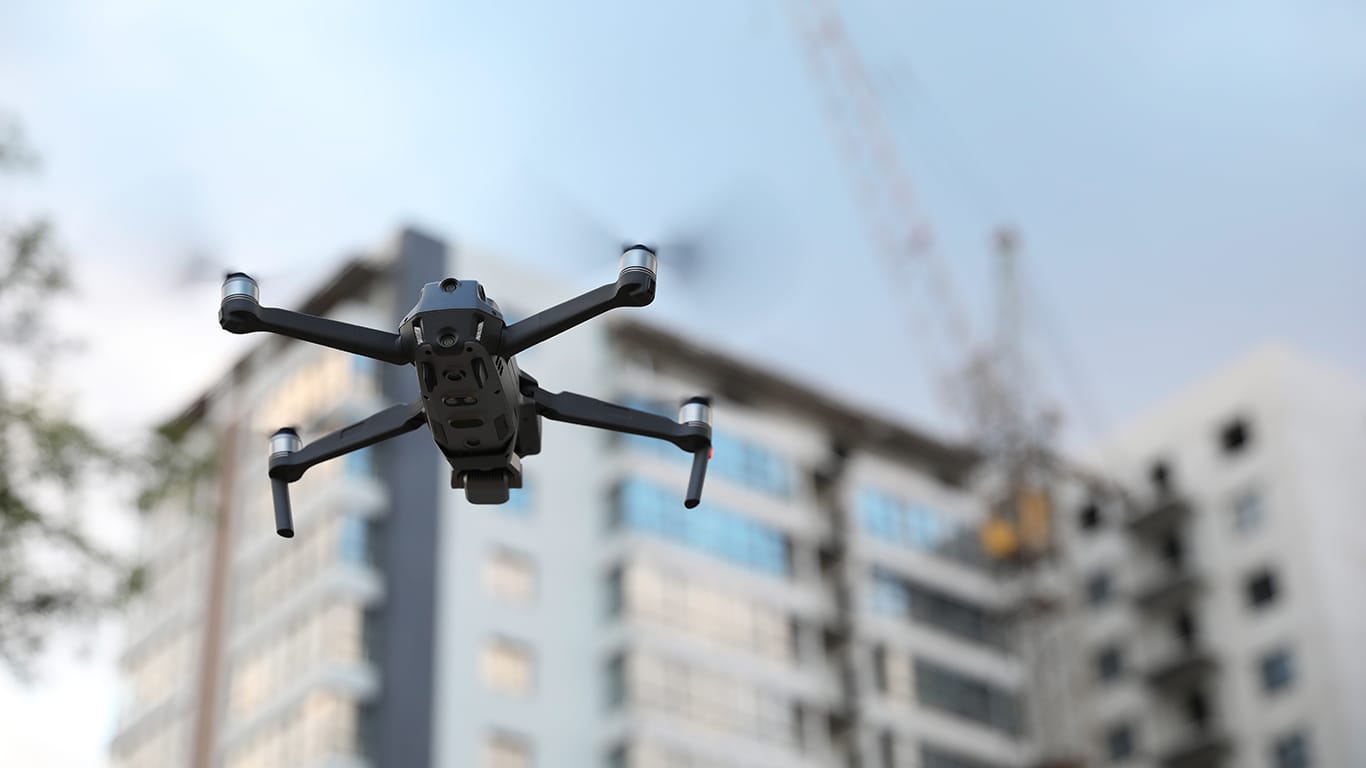
Public safety agencies nationwide are rapidly expanding their use of drones, transforming how first responders assess emergencies, gather information, and keep communities safe. What began as a niche tool for specialized teams has evolved into a mainstream asset for police, fire and emergency management departments seeking faster, safer and more efficient operations.
DEEPER DIVE: Read all the Ranking Arizona Top 10 lists here
INDUSTRY INSIGHTS: Want more news like this? Get our free newsletter here
For law enforcement, drones provide an aerial perspective that once required a helicopter — at a fraction of the cost. Agencies deploy them to locate missing persons, track fleeing suspects, document crash scenes, and monitor large public events. The ability to launch a drone within minutes gives officers real‑time situational awareness, helping them make informed decisions while reducing risks to personnel and the public.
Drones piqued David Rietz’s interest 18 years ago when he saw a report that a Colorado police department was using them for surveillance. Recently he joined his stepfather, Greg Steinhauer, at the Gold Canyon start-up RD (Rapid Drones). The firm provides drones for public safety, and also performs mapping, orthomosaic, photogrammetry and LiDAR services.
“He is a forward thinker,” said Rietz, about Steinhauer, a commercial real estate developer who owns RD. Rietz is the chief drone officer.
With its 13 drones, RD can reconstruct crash incidents by building a 3D model of the area.
“The quality of the pictures is phenomenal,” he said. “They’re military-grade, extremely high-end craft. This could replace, literally, a helicopter, a police fleet, or three to five quadcopters.”
He says that within two to three years, every public safety department will have a DFR program. Depending on the incident, a drone will be deployed. The next wave of quadcopter technology is expected, too. It’s like every piece of technology, whether it’s laptops, phones, or cars; it has growth spurts. Money is being infused into the sector, and VTOLs and longer-lasting crafts are going to be the next spurt. My goal is to keep on that, right, and to have the latest technology to help departments utilize it.
For safety, RD can also use that software for major events by building a 3D replica of the location, giving police a better bird’s-eye view. Police can pinpoint vantage points, trouble spots or bottlenecks, and where to place security.
At a recent conference for Arizona Police Chiefs Conference, the RD team showcased its new platform.
In the market, drones typically fly for 35 to 40 minutes with a 3- to 5-mile radius. They get a call through the dispatch center, and the drone will deploy within 90 seconds.
“That’s incredible, right?” he said.
During the last 12 months, the drone market in general, specifically DFR-capable platforms
“Now there are vertical takeoff and landing craft. They look like fixed-wing airplanes or just a fixed-wing platform,” Rietz said. “What’s different is it takes off vertically and then if it’s a tilt motor design and they call it a quad plane.
“It will then move forward, and it uses its wings for lift, which, therefore, increases battery life substantially. It gives us a two-and-a-half-hour flight time and 35-minute hover times. The point is that it can remain in the air in forward motion for 2.5 hours. It can go 100 miles an hour in dash mode. We can get to scenes much faster. This is all autonomous. There is no human intervention whatsoever. This is all done automatically with a push of a button.”
Even further, when the craft lands in its hub, a carousel swaps out the batteries in 30 seconds. By the time it lands, it gets a new battery pack within 1 minute and 15 seconds.
“The technology is unreal,” he said.