
Around 51% of people require physical therapy at some point, meaning professionals in this field need to handle large patient volumes and serve them effectively. As such, choosing the right electronic medical records and practice management system can determine whether a physical therapy clinic thrives or drowns in administrative busywork.
Software platforms in this space are no longer just digital filing cabinets. Modern solutions are expected to streamline operations, secure patient data, and actively improve clinical outcomes. For healthcare professionals managing growing practices, selecting a platform requires looking past basic marketing promises and analyzing core functionalities.
Hundreds of clinical documentation templates are generated every day by physical therapists trying to balance compliance with patient care. If your current setup forces you to spend hours clicking through generic dropdown menus after your last patient leaves, your software is actively costing you money. Evaluating specific operational features ensures you choose a platform that supports your clinical workflows instead of dictating them.
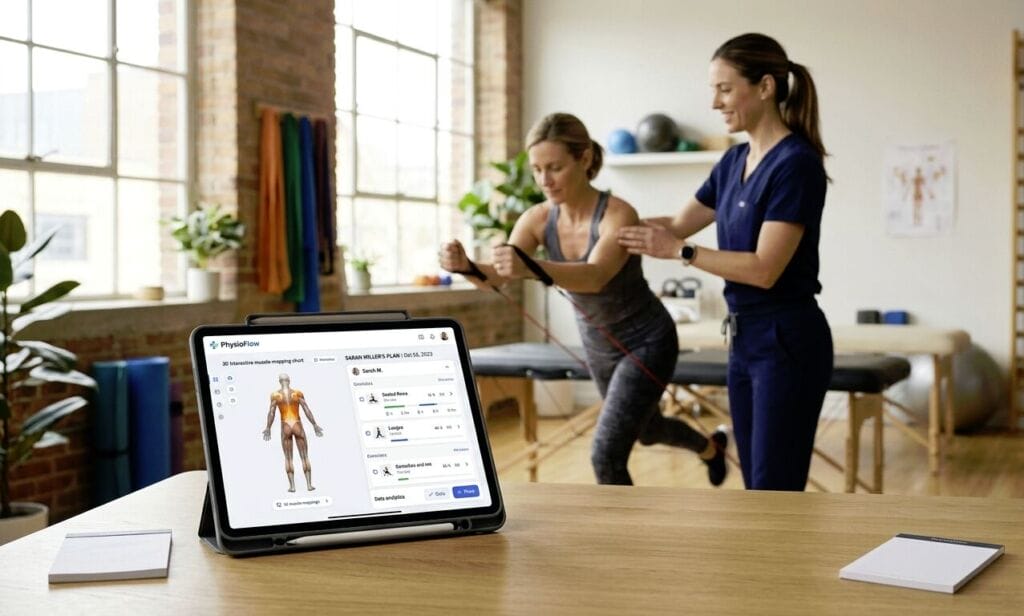
1. Compliance Driven Documentation and Smart Templates
Physical therapy documentation must meet rigid regulatory requirements while remaining efficient for fast-paced clinics. Top-tier software utilizes intuitive, discipline-specific templates that adapt to physical therapy workflows rather than generic medical practices. These systems include built-in compliance alerts for Medicare caps, the 8 Minute Rule, and upcoming MIPS reporting requirements.
When software automatically calculates timed codes and flags missing outcome measures, compliance risks drop significantly. Therapists can focus entirely on clinical decision-making rather than second-guessing complex billing rules during a session.
2. Integrated Home Exercise Program Builders
A physical therapy platform should bridge the gap between in-clinic care and independent patient management. Instead of forcing therapists to use third-party apps or outdated paper handouts, high-quality software builds this functionality directly into the patient portal.
Practitioners need the ability to easily construct a custom home exercise program that includes high-definition video clips, precise dosage instructions, and real-time tracking capabilities. This integration allows clinicians to monitor compliance and adjust protocols between visits based on direct patient feedback.
3. Automated Patient Engagement and Intake Workflows
Redundant administrative tasks frequently lead to front desk bottlenecks and increased patient drop-off rates. Modern practice management systems eliminate manual data entry by pushing digital intake forms directly to patients before their initial evaluation.
Automation should extend to appointment reminders, waitlist management, and post-discharge check-ins. Advanced platforms utilize automated text and email cadences to reduce no-show rates by up to 25% across busy multi-provider practices.
Keeping your schedule full requires consistent, low-touch communication that keeps patients actively invested in their care plans. In an age of virtual assistants, even smaller practices need to be on the ball here.
4. Multi-Carrier Claims Processing and Billing Rules Engines
Revenue cycle management can make or break a private practice, especially with shifting insurance reimbursement models. The ideal physical therapy software features an integrated billing engine that scrubs claims for errors before submission.
Look for systems that offer direct clearinghouse integration, electronic remittance advice processing, and automated patient invoicing. When billing teams can track claims from submission to payment within a single dashboard, days in collections decrease dramatically.
5. Robust Patient Portals with Secure Messaging
Modern healthcare consumers expect seamless digital communication with their care teams. A secure, HIPAA compliant patient portal serves as the central hub for all patient interactions outside the clinic walls.
- Patients can view scheduled appointments online
- Balance tracking allows for instant digital payments
- Secure messaging enables direct communication with therapists
Giving patients autonomous access to their health information fosters greater accountability and improves long-term retention.
6. Real-Time Analytics and Financial Reporting
Managing a successful physical therapy practice requires deep visibility into operational and financial metrics. Clinic owners must be able to pull clear reports on therapist productivity, cancellation trends, and referral source performance.
Advanced software provides customizable dashboards that convert raw data into actionable insights. Understanding exactly which payers yield the highest net return per visit allows practices to make smarter credentialing and marketing decisions.
7. Seamless Telehealth and Virtual Care Capabilities
Virtual care options have evolved from a temporary emergency measure into a permanent expectation for modern clinics. Integrated telehealth features allow therapists to conduct secure, high-definition video sessions directly inside the electronic health record.
Systems that support screen sharing, digital goniometers, and synchronous exercise tracking provide the most value. This capability ensures continuity of care for patients traveling or unable to attend in-person visits.
8. Flexible Mobile Access and Cross-Platform Support
Physical therapists rarely spend their entire day sitting behind a desk at a desktop computer. Whether moving between treatment tables or treating patients in home health environments, clinicians require full software functionality on mobile devices.
Cloud-native platforms optimized for tablets and smartphones enable therapists to complete point-of-care documentation easily. This flexibility prevents documentation backlogs from piling up at the end of the day.
Optimizing Clinical Workflows with Modern Technology
Investing in the right digital infrastructure changes the day-to-day reality of running a physical therapy clinic. By prioritizing compliance automation, robust billing engines, and deep patient engagement features, practices can protect their bottom line while elevating patient care.
If your current software feels like an administrative burden, exploring specialized industry platforms can unlock significant efficiency gains. Check out our other posts for more coverage of topics across healthcare, business, lifestyle, local events, and much more.