You just closed on a beautiful property in Scottsdale, but you are currently staring at a driveway in Chicago. Moving your family, your pets, and your furniture takes a massive toll on your time and energy. The thought of driving your SUV 1,700 miles across the country, burning vacation days, paying for highway hotels, and dealing with unpredictable weather sounds miserable. You need to hire someone to move the car. But who do you call? And for how much?
If you look for quick answers online about vehicle shipping, you hit a wall of vague estimates, confusing logistics jargon, and aggressive sales calls. The auto transport industry operates in a massive blind spot for most consumers. People buy airline tickets and ship packages constantly, but moving a two-ton machine across state lines is an entirely different beast.
The good news is that relocating a car to the Grand Canyon State is actually one of the easiest routes to book in the entire country. You simply need to understand how the pricing machinery operates behind the scenes. This guide cuts through the broker sales pitches. We will look at hard numbers, standard industry practices, and exactly what it takes to handle state-to-state car shipping safely while protecting your wallet.
Why Arizona Is One of the Busiest Auto Transport Corridors in the US
Arizona consistently ranks in the top tier of states for inbound relocation. People flock to the Phoenix metropolitan area, Tucson, and Flagstaff for the thriving job market, lower property taxes, and year-round sunshine. The semiconductor boom in Chandler and the massive corporate expansions across the Valley have created a relentless influx of new residents. This permanent migration creates a highly active and lucrative auto transport market.
The primary relocation corridors are heavy, fast, and constant. The route from California to Arizona is easily the single busiest, driven heavily by tech workers and entrepreneurs leaving Los Angeles and the Bay Area for a better cost of living. We also see a massive volume of freight flowing in from Illinois, Washington, and Texas.
Then you have the sheer weight of the annual snowbird migration. Every single October and November, thousands of retirees ship their cars down from the Midwest and Canada to escape the freezing winter. They turn right around and ship them back north in March and April.
Why does this matter to your wallet? Unprecedented demand creates a dense, highly competitive logistics network. Because so many trucks constantly run the I-10, I-17, and I-40 corridors, carriers compete aggressively for loads. That heavy competition naturally prevents monopolistic pricing. You have choices. Whether you are shipping a family van from Seattle or moving an entire corporate fleet from Dallas, the trucks are already heading your way.
Types of Vehicle Shipping Services Available
Before you ask for a quote, you need to know exactly what you are buying. Brokers will ask how you want the car moved, and your answer dictates a massive chunk of the final bill.
You have two primary trailer options to choose from:
| Transport Type | The Cost Factor | Who It Fits Best |
| Open Carrier | The standard, cheapest option. Prices act as the baseline for all quotes. | Daily drivers, family SUVs, standard used cars, and leased vehicles. |
| Enclosed Carrier | Commands a massive 40% to 60% premium over open transport rates. | High-end luxury cars, classic restorations, and low-clearance exotics. |
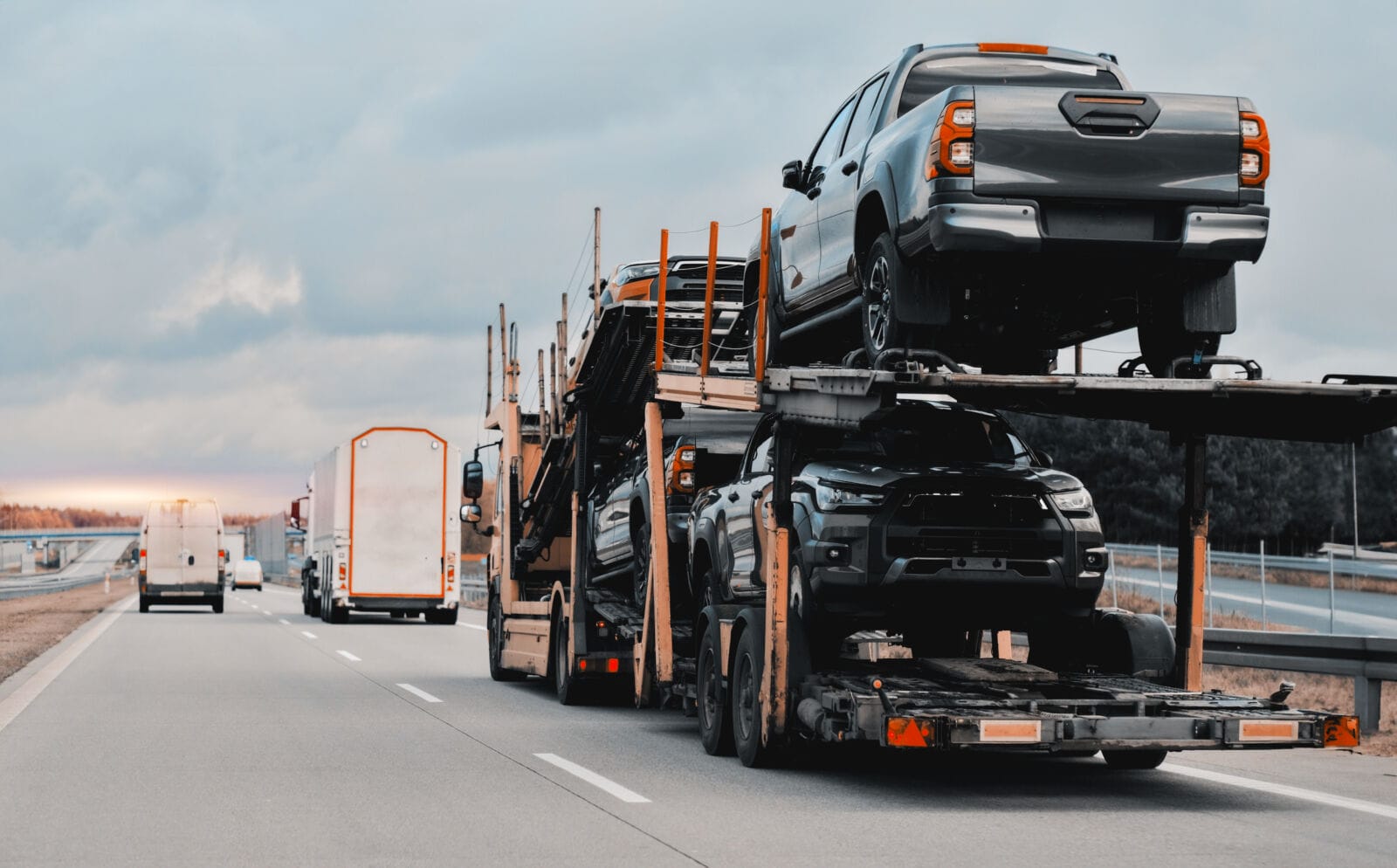
Open transport is exactly what it sounds like. Your car sits on a multi-level trailer, completely exposed to the same sun, wind, dust, and rain it would experience if you drove it yourself. Over 90% of all vehicle shipping is executed this way. It is incredibly safe, highly efficient, and widely available. Unless you are moving a vintage Porsche, a custom lowrider, or an exotic sports car, open transport is the smart financial play.
Beyond the trailer type, you must also choose your delivery logistics. Door-to-door service is the industry standard. The truck gets as close to your driveway as legally and physically possible. However, if you are moving into a strict HOA community in Sun City or a tight apartment complex in downtown Tempe, an 80-foot truck simply cannot navigate those narrow residential streets. In these specific cases, you will arrange terminal-to-terminal shipping, or agree to meet the driver in a massive, open lot like a local Walmart or Home Depot plaza.
DEEPER DIVE: Arizona races to reskill workforce before wave of 700,000 new jobs hits
INDUSTRY INSIGHTS: Want more news like this? Get our free newsletter here
What State to State Car Shipping Actually Costs
Let’s look at the real numbers. Brokers price these routes on a live spot market. Rates fluctuate daily based on supply, demand, and diesel prices. However, looking at the historical data for major freight corridors gives you a rock-solid anchor point.
Here are realistic, current pricing ranges for shipping a standard, mid-sized sedan to or from the Phoenix area:
| Route | Open Carrier | Enclosed Carrier |
| Los Angeles → Phoenix | $300 – $550 | $600 – $1,100 |
| Chicago → Phoenix | $900 – $1,300 | $1,600 – $2,200 |
| New York → Phoenix | $1,100 – $1,600 | $1,900 – $2,800 |
| Seattle → Phoenix | $800 – $1,200 | $1,400 – $2,100 |
| Phoenix → Miami | $1,000 – $1,500 | $1,800 – $2,600 |
These figures represent the baseline for standard sedans. If you drive a massive lifted Ford F-250 or an extended wheelbase Cadillac Escalade, expect to pay roughly 15% to 25% more. Your truck takes up extra physical space and weight capacity on the trailer, directly displacing another potential paying customer.
To budget properly, you need hard data for your exact situation. Checking a reliable state to state car shipping calculator is the best way to get a live snapshot for your specific origin and destination zip codes. It arms you with a rough mathematical estimate before you ever pick up the phone to negotiate. If a broker quotes you a price that falls drastically outside these established averages, you immediately know something is wrong with their math.
What Drives the Price Up or Down
A transport broker doesn’t just guess a number and hope you agree to it. They run your specific details through a logistics algorithm that weighs several different variables simultaneously. Understanding these core factors gives you the leverage to tweak your request and save serious cash.
| Pricing Factor | The Reality on the Ground |
| Total Distance | Cross-country trips cost more in total dollars, but noticeably less per mile. Short regional hops carry a much higher per-mile rate. |
| Vehicle Size | Transport trucks have strict legal weight limits. Heavier, longer vehicles cost more because they limit what else the driver can legally haul. |
| Seasonality | Arizona’s snowbird peak (October/November inbound, March/April outbound) causes massive price spikes. Demand vastly outpaces truck supply. |
| Urgency | Demanding a pickup tomorrow forces the broker to overpay a local driver. Giving a 5-day window saves you hundreds of dollars. |
| Location Logistics | Shipping from downtown Chicago to central Phoenix is affordable. Shipping from rural Montana to a remote desert town in AZ costs a steep premium. |
| Vehicle Operability | If the car cannot steer, brake, or roll onto the trailer under its own power, the driver uses a winch. This triggers a mandatory $100–$200 fee. |
If you want to keep your costs as low as possible, flexibility is your greatest weapon. Give the broker a broad, multi-day window for pickup. Avoid moving a car to Phoenix right in the middle of October if you can help it. The more rigid and demanding your schedule is, the more the carrier will charge you for the logistical inconvenience.
Broker vs. Direct Carrier: Which One Should You Use?
The entire auto transport industry is split between two distinct entities: direct carriers (the actual guys who physically own the trucks) and brokers (the people who organize the logistics). You need to know exactly who is handling your contract and your money.
| Feature | Broker | Direct Carrier |
| Network Access | Huge. They access national load boards with thousands of independent truck drivers to find one heading your exact way. | Small. They only operate the specific, limited routes their own trucks drive. |
| Pricing Structure | Flexible. They shop the spot market to find a competitive rate, and add a management fee on top. | Fixed rate. You pay the exact price they dictate for their specific route. |
| Accountability | High flexibility. If a truck breaks down, the broker quickly finds a replacement driver to grab your load. | Rigid. If their specific truck breaks down, your car sits and waits for repairs. |
Both are completely valid, legitimate options. Realistically, you will likely end up using a broker. Independent owner-operators rarely maintain customer service departments, answering services, or marketing websites. They just focus on driving the truck safely. Brokers handle the client management.
The crucial trick is verifying their legitimacy before handing over a credit card. Never sign a document without checking the company’s motor carrier number through the Federal Motor Carrier Safety Administration (FMCSA). This federal database tells you instantly if the company is legally licensed, bonded, and clear of major safety violations.
Red Flags to Watch Out For
Unfortunately, this industry attracts a fair share of bad actors who use aggressive sales tactics to steal deposits. They specifically target stressed people in the middle of a complex relocation who are desperately looking for a deal.
Watch for these glaring warning signs before you sign anything:
- Prices radically below the market average. If four companies quote you $1,300 and one guy swears he can do it for $600, he is running a classic bait-and-switch. He will take your deposit and never find a driver willing to haul it for that price.
- Demanding 100% upfront payment. Legitimate companies take a small credit card deposit, and you pay the remaining balance directly to the driver at delivery. Never pay the full amount upfront via untraceable methods like Zelle, Cash App, or wire transfer.
- Refusing to provide a written, itemized contract. Phone promises are absolutely worthless. Demand the total door-to-door cost sent to you in a PDF.
- Guaranteeing an exact, to-the-minute delivery date. Vehicle shipping faces brutal weather, weigh station delays, and blown tires. Honest dispatchers give you delivery windows. Scammers give you exact hours to secure the sale.
- Dodging requests for their MC or DOT number. If a rep gets defensive when you ask for proof of their operating license, hang up the phone immediately.
How to Prep Your Car Before the Truck Arrives
You found a reputable company. You locked in a fair rate. You are still not entirely done. Handing over a thoroughly prepped vehicle protects you from liability, ensures a smooth transit, and prevents surprise fees on moving day.
Knock out this practical checklist a few days prior to your scheduled pickup:
- Wash the car thoroughly and take photos. Dirt hides scratches and dents. Clean the exterior completely, then take high-resolution, timestamped photos of every angle, including the roof and under the bumpers. This is your undeniable insurance proof.
- Empty the interior completely. Carriers are not legally allowed to transport household goods. If your trunk is full of heavy boxes, the driver will either refuse to load the car or hit you with a massive overweight fee at the curb.
- Run the gas tank down to a quarter full. A full tank of gas adds roughly 100 pounds of dead weight to the vehicle. Leave just enough for the driver to load it, and for you to drive to a nearby gas station once it arrives in Arizona.
- Disable all toll tags and security alarms. If your EZ-Pass stays stuck to the windshield, it will scan at every single toll booth across the country. If your alarm goes off on the highway, the driver cannot stop to fix it, resulting in a dead battery.
- Check the tires and the battery. A dead battery on pickup day turns an operable car into an inoperable one, triggering an immediate winch surcharge.
- Never sign the Bill of Lading blindly. The Bill of Lading (BoL) is the official inspection report. Inspect the car with the driver before loading. Do it again immediately upon delivery.
Pro Tip: Do not let a rushed driver pressure you into signing the final BoL at delivery without a physical walk-around. Once you sign that document, you legally acknowledge the car was received in perfect condition, waiving your right to file an insurance claim for any transport damage.
Bottom Line
Relocating your life to Arizona is a massive logistical undertaking. The state-to-state car shipping piece of the puzzle is entirely predictable as long as you understand the rules of the road. Because Arizona sits on some of the most active freight corridors in the nation, you have a massive advantage. Prices stay highly competitive, and trucks are almost always available to grab your load.
Take the time to do the foundational legwork. Gather at least four or five quotes to find the true market average. Verify your broker’s federal credentials, prepare your vehicle correctly, and read the fine print on the contract. When you approach the process with clear expectations and hard numbers, you bypass the stress and guarantee a smooth, cost-effective arrival in the desert.