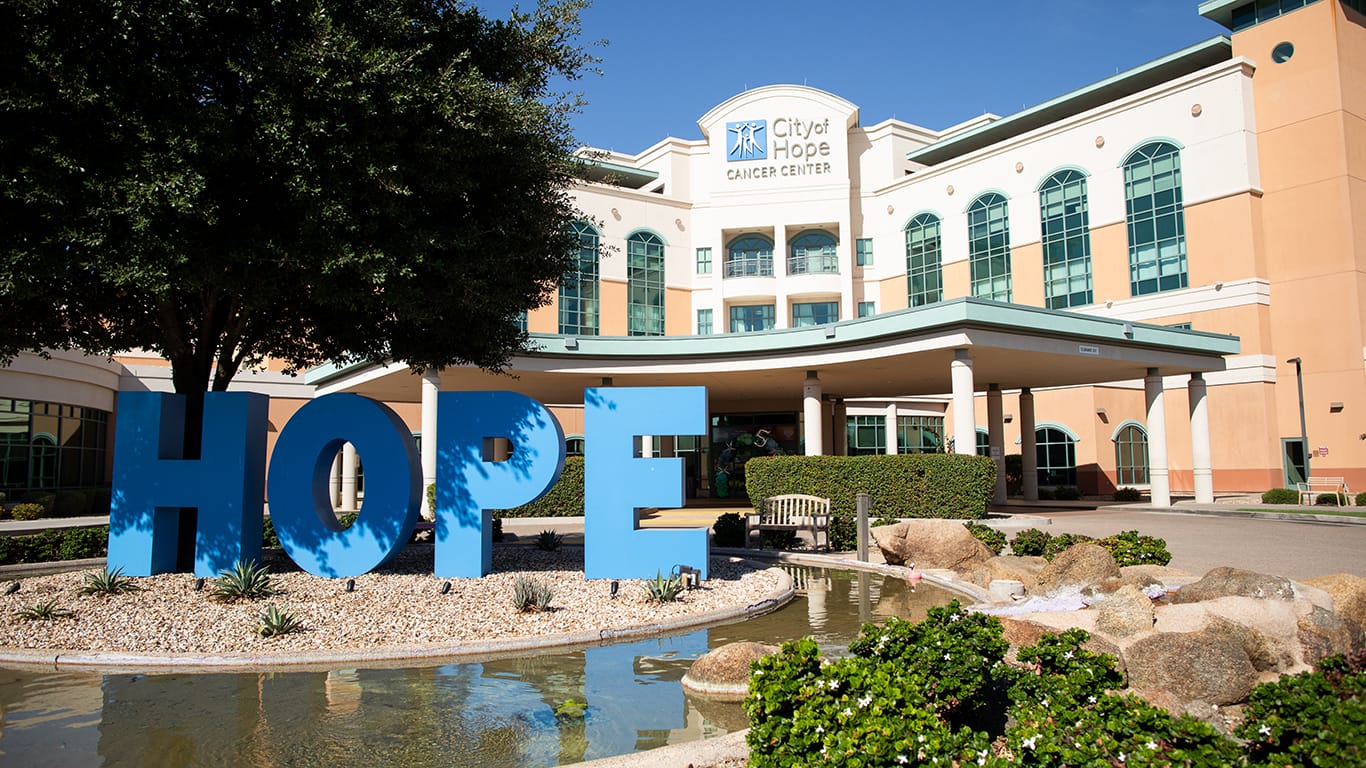
At City of Hope Cancer Center Arizona, Dr. Arjun Gupta has been watching something rare happen in pancreatic cancer care — patients who once had no options are unexpectedly responding to a new pill.
“People who were bed-bound, screaming in pain, are now running around like schoolboys,” he said.
Dr. Gupta is describing the first local patients who have receiving daraxonrasib, a treatment that’s nearly doubling survival for stage-4 pancreatic cancer.
Goodyear’s City of Hope is one of a select number of centers worldwide chosen to offer the drug, first through a clinical trial and now through FDA approval. For Phoenix patients, it marks the first meaningful shift in a disease long defined by grim statistics.
“Pancreatic cancer has the worst survival rate of any major cancer,” Dr. Gupta said. “And until now, the only treatment we had was chemotherapy.”
For decades, pancreatic cancer has been driven by a single mutation — KRAS, present in more than 90% of cases. Researchers knew it was the engine behind the disease, but they couldn’t shut it off.
“KRAS was considered undruggable,” Dr. Gupta said. “There was no molecule that could target it.”
MORE NEWS: City of Hope expands cancer care with Prescott location
DEEPER DIVE: Here are Arizona’s Most Admired Companies of 2026
Daraxonrasib is the first therapy to do exactly that.
In a pivotal clinical trial, the pill nearly doubled survival, extending life by about six months compared to just chemotherapy.
“It’s a landmark moment for the field,” Dr. Gupta said. “We finally cracked the code. This is just the beginning.”
He points out that previous chemotherapy approvals improved survival by only a few weeks. “Two weeks, one month — that’s what we were used to,” he says. “This is the first time we’ve seen a jump like this.”
Part of the challenge is biology; part is the body’s geography.
“The pancreas sits deep inside the belly, toward the back,” Dr. Gupta said.
“When something goes wrong, people get vague symptoms — diarrhea, constipation, stomach rumbling, subtle weight loss.”
Most patients have symptoms for six to nine months before the diagnosis. “Who hasn’t had some constipation in the past six to nine months?” he said. “By the time they’re diagnosed, it’s often stage four.”
And unlike breast or colon cancer, there is no reliable screening test.
“That’s the biggest reason outcomes are poor — it’s diagnosed at later stages.”
Dr. Gupta has seen responses that feel almost unreal.
“I’ve had patients whose tumor marker went from the millions to the 500s within a month,” he says. “You almost never see such responses with traditional chemo.”
One patient’s turnaround was so dramatic that Dr. Gupta calls it a “Lazarus effect.”
Not every patient responds, and side effects — especially a rash — can be severe. But Dr. Gupta said most can be managed with proactive care.
“For most patients with stage four pancreatic cancer, they will be getting a taste of daraxonrasib at least sometime through their cancer journey.”
Even with a breakthrough therapy, Dr. Gupta keeps his focus on patients’ lived experience — the part of cancer care that doesn’t show up on scans.
“My research focuses on the hidden burdens patients and care partners face,” he says. “Financial toxicity, time toxicity, administrative toxicity — all the things that make quality of life really poor.”
He describes time toxicity this way: “Cancer treatment can take more time away from you than it gives you.”
And he worries about access.
“The drug companies are pricing this at around $40,000 a month,” he said.
“No one actually has to pay that out of pocket, but we have to ensure our most vulnerable patients can access these therapies. We don’t want to get caught up in the hype and then allow this drug to… nobody can access it because it’s so costly.”
It’s why he continues his advocacy work — policy, insurance reform, and research aimed at reducing the non-physical burdens of cancer care.
A new treatment for stage-4 pancreatic cancer is providing new hope to patients in Phoenix. And City of Hope Cancer Center Arizona is one of the few centers worldwide offering it.
“I couldn’t be more excited,” Dr. Gupta said. “Patients have been desperately waiting with no other treatment options.”