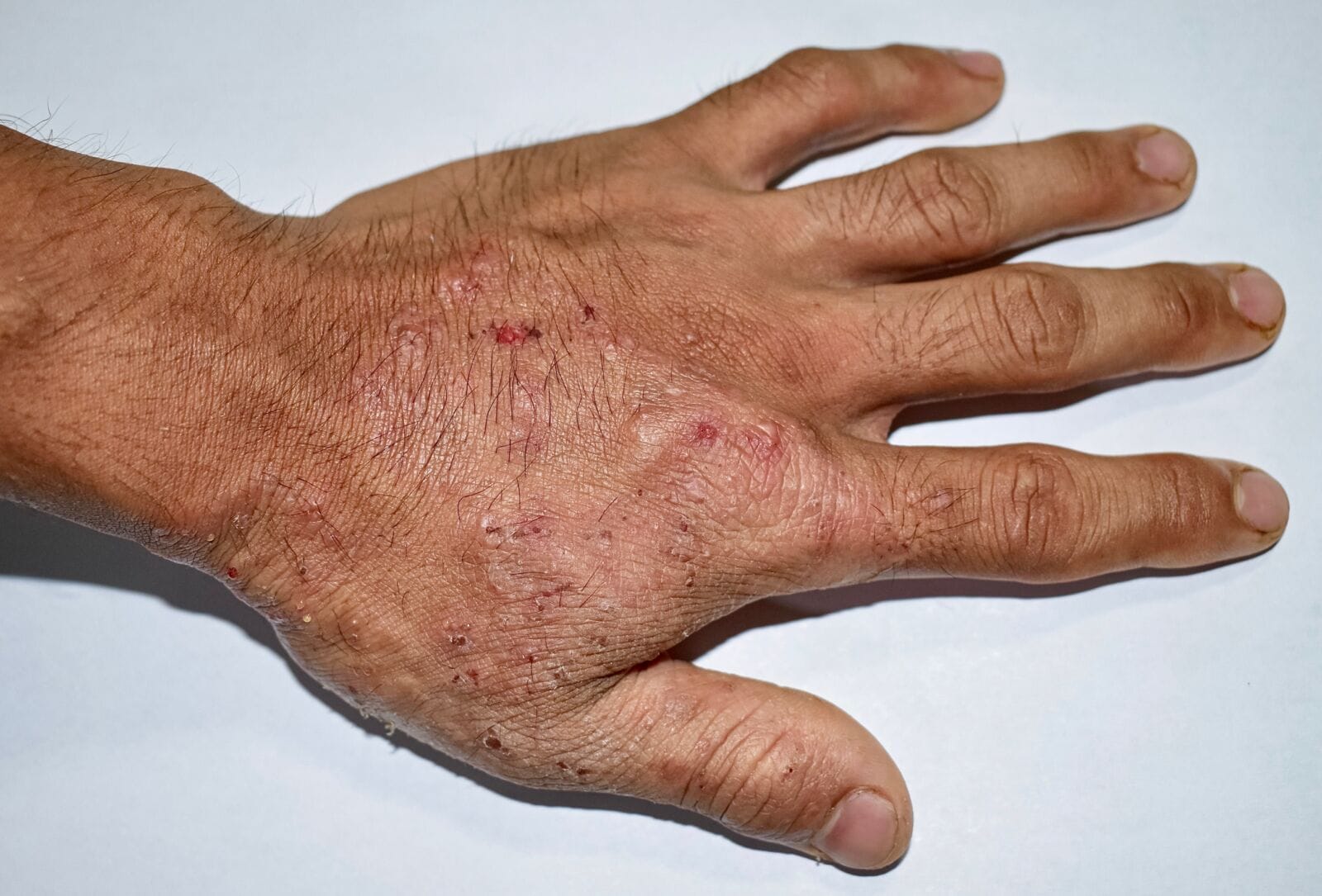
Scabies is a contagious skin infestation caused by the microscopic mite Sarcoptes scabiei var. hominis. The mites burrow into the outer layer of the skin, where they lay eggs and trigger an immune response that leads to intense itching and a characteristic rash. Although scabies spreads easily through prolonged skin-to-skin contact, it can be effectively treated with appropriate prescription medication. Early diagnosis and timely treatment are essential to relieve symptoms, eliminate the mites, and reduce the risk of transmission to others.
What Is Scabies?
Scabies occurs when female mites tunnel beneath the skin to lay eggs. The body’s allergic reaction to the mites, eggs, and their waste products causes persistent itching and inflammation. Symptoms usually develop between two and six weeks after the initial infestation in people who have never had scabies before. Individuals who have previously been infected may experience symptoms much sooner.
Common signs and symptoms include:
- Severe itching, especially at night
- Small red bumps or a rash
- Thin, wavy burrow lines on the skin
- Skin irritation caused by scratching
The rash most commonly appears between the fingers, on the wrists, elbows, armpits, waistline, buttocks, genitals, ankles, and feet. In infants, older adults, and people with weakened immune systems, additional areas such as the scalp, face, palms, and soles may also be affected.
Permethrin 5% cream is widely considered the first-line treatment for classic scabies.
To use it correctly: Permethrin 5% Cream
- Apply the cream to clean, dry skin from the neck down.
- In infants and elderly individuals, the scalp and face may also require treatment if recommended by a healthcare provider.
- Leave the cream on for 8 to 14 hours before washing it off.
- Repeat the application after 7 days if instructed by your healthcare provider.
When used properly, permethrin effectively kills mites and their eggs.
How Is Treatment for Scabies Determined?
Before starting treatment for scabies, a healthcare professional must confirm the diagnosis. This is typically based on your symptoms, medical history, and a physical examination. In some cases, a skin scraping or dermoscopy may be used to identify mites, eggs, or mite feces. An accurate diagnosis is important because other skin conditions, such as eczema and allergic dermatitis, can produce similar symptoms. Once the diagnosis is confirmed, your healthcare provider can recommend the most appropriate treatment for scabies based on your individual condition.
Oral Ivermectin for Scabies Treatment
Oral ivermectin is a prescription antiparasitic medication used to treat scabies in certain situations, such as extensive infestations, crusted (Norwegian) scabies, recurrent cases, or when topical treatments are not suitable. The decision to prescribe oral ivermectin depends on factors such as body weight, age, medical history, and overall health.
Ivermectin 6 mg tablets may be prescribed for some patients as part of a weight-based dosing regimen, while ivermectin 12 mg tablets may be appropriate for others based on their individual treatment needs. The appropriate tablet strength and dose should always be determined by a qualified healthcare professional.
Ivermectin works by affecting the nervous system of the mites, leading to paralysis and death. Since it has limited activity against newly laid eggs, more than one dose may be recommended to ensure effective treatment. Take the medication exactly as prescribed and complete the full course. Do not change the dose or take additional tablets without medical advice, as this may increase the risk of side effects without improving treatment effectiveness.
What to Expect After Treatment
Many people notice that the itching gradually improves after treatment. However, it is common for itching and skin irritation to continue for two to four weeks even after the mites have been successfully eliminated. This ongoing discomfort is caused by the body’s immune response to the dead mites and their remaining proteins, not necessarily by an active infestation.
Avoid repeating treatment simply because itching persists. If symptoms continue to worsen, new burrows appear, or the rash spreads after completing treatment, consult your healthcare provider for further evaluation.
Preventing Scabies from Returning
Successful scabies treatment involves more than taking medication. Reinfestation can occur if close contacts are not treated or if mites remain on recently used personal items.
To reduce the risk of reinfestation:
- Treat all household members and close physical contacts at the same time if advised by a healthcare professional.
- Wash recently used clothing, towels, and bedding in hot water and dry them using a high-heat cycle.
- Store items that cannot be washed in a sealed plastic bag for at least 72 hours.
- Vacuum mattresses, upholstered furniture, rugs, and carpets thoroughly.
- Avoid close skin-to-skin contact until treatment has been completed according to medical advice.
These measures help prevent the spread of scabies within households and other close-contact settings.
Possible Side Effects of Oral Ivermectin
Ivermectin 12 mg uses include the treatment of certain scabies, including parasitic infections when prescribed by a qualified healthcare professional. Like all prescription medications, oral ivermectin may cause side effects in some individuals. Most side effects are mild and temporary, but medical attention may be required if severe reactions occur.
Possible side effects include:
- Headache
- Dizziness
- Nausea
- Diarrhea
- Fatigue
- Mild skin rash
Serious side effects are uncommon but require immediate medical attention. Individuals should inform their healthcare provider about all existing medical conditions, allergies, pregnancy, breastfeeding, and any medications they are taking before starting treatment.
When to Seek Medical Care
Consult a healthcare professional if:
- Symptoms do not improve after completing treatment.
- New burrows or skin lesions continue to appear.
- Signs of bacterial skin infection, such as increasing redness, swelling, warmth, or pus, develop.
- Multiple family members develop symptoms of scabies.
- You have a weakened immune system or suspect crusted scabies.
Conclusion
Scabies is a treatable parasitic skin infestation, and oral ivermectin is an effective prescription option for selected patients when recommended by a qualified healthcare professional. Proper diagnosis, adherence to the prescribed treatment schedule, and careful environmental cleaning are all important for successful recovery. Although itching may continue for several weeks after treatment, this is often part of the normal healing process. If symptoms persist, worsen, or recur, seek medical advice to determine whether additional evaluation or treatment is necessary. Early diagnosis and appropriate management remain the most effective ways to eliminate scabies and prevent its spread.