As chain stores, bypasses and sprawling retail corridors continue to reshape America, many once-beloved downtowns have quietly faded into the background. However, locals still feel deeply attached to them.
Across the country, these historic Main Streets and old commercial districts often carry the bones of something special and increasingly hard to find: brick storefronts, railroad-era buildings, faded signs, old theaters, civic squares, waterfront blocks, and walkable character that newer developments struggle to recreate.
Some have seen flashes of renewed investment, while others remain full of untapped potential, waiting for the right mix of restoration, small-business energy, and local pride to bring them back to life.
To identify the historic Main Streets and downtown districts Arizonans most want to see revived, MarketBeat, a financial media company, surveyed 3,012 respondents about the places they believe still deserve a comeback.
DEEPER DIVE: ‘America’s Top 50 New Boomtowns’ includes 7 Arizona cities
INDUSTRY INSIGHTS: Want more news like this? Get our free newsletter here
Arizonans’ top 3 picks
Here are the three Arizona downtowns residents want to see revived the most:
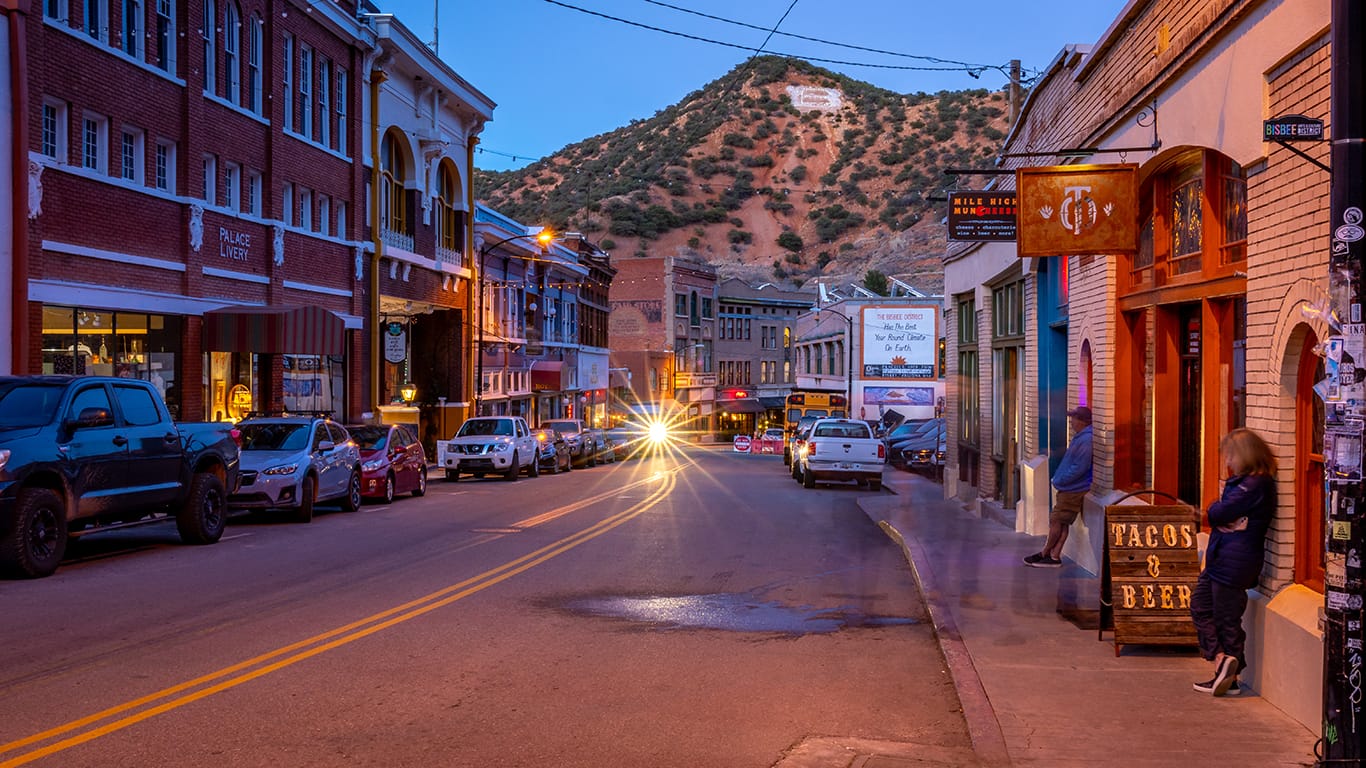
No. 1: Main Street/Brewery Gulch Area, Bisbee
Bisbee’s historic downtown winds through steep hills and narrow streets in a way that barely resembles modern suburban Arizona. The town was once one of the richest mining communities in the American West thanks to its massive copper production, and many of the surviving buildings reflect that prosperity. While tourism has kept parts of the district alive, there is still a strong sense that the broader downtown could regain even more of its former vibrancy.
No. 2: Historic Second Street, Winslow
Historic Second Street remains one of the most nostalgic stretches of Old Route 66 in Arizona, lined with vintage signage, brick storefronts, and reminders of the town’s railroad-era importance. The corridor is anchored by the historic La Posada Hotel, the last great railroad hotel built by the Fred Harvey Co. Even after decades of highway changes and shifting travel patterns, many Americans still associate the area with classic roadside Americana that is taking center stage as the community celebrates the historic highway’s 2026 Centennial milestone with fresh downtown revitalization efforts.
No. 3: G Avenue Historic District, Douglas
G Avenue still has the wide streets, brick storefronts, and old border-town commercial feel of a downtown that once carried much more daily energy. Douglas grew rapidly during Arizona’s copper-mining boom and became an important railroad and border hub in the early 1900s.
Other choices from across the country
New Yorkers most want to see Central Avenue in Dunkirk revived. Set close to the Lake Erie shoreline, Downtown Dunkirk still feels tied to its railroad, lake shipping, and industrial roots. Central Avenue remains lined with older storefronts, classic civic buildings, and reminders of the era when the city was a major transportation and manufacturing center for western New York. The nearby waterfront adds atmosphere and potential to the district, and many locals still believe downtown could become a livelier, more celebrated gathering place again.
In Pennsylvania, Altoona’s 11th Avenue emerged in the top spot. Historic storefronts, railroad-era architecture, and wide downtown corridors still give Altoona the feel of a classic Pennsylvania rail city built around movement and industry. The city expanded rapidly alongside the Pennsylvania Railroad, which helped shape much of the commercial district that remains today. While a wave of new property restorations and seasonal street markets is bringing fresh energy to the corridor, walking along 11th Avenue reveals the scale of a downtown designed to serve a far busier, more active city. Many locals continue to believe the corridor has the foundations for a much stronger comeback.
New Mexicans overwhelmingly voted to restore the Historic Route 66 District in Gallup to its former glory. Neon signs, old motels, trading posts, and weathered storefronts give Downtown Gallup one of the most recognizable Route 66 atmospheres in the Southwest. The city developed as an important railroad and trading hub in western New Mexico, largely because of its connection to the Atchison, Topeka and Santa Fe Railway. While new state centennial grants are actively restoring the corridor’s iconic vintage neon, the historic corridor still feels rich in the kind of roadside Americana and cultural character that many believe deserve renewed life and preservation.
Californians ranked Historic Downtown Stockton and Weber Avenue among the downtowns they most want to see revived. Historic Downtown Stockton retains the feel of an old inland port city, with brick warehouses, civic buildings, and faded commercial blocks clustered near the waterfront. The city’s Bob Hope Theatre, originally opened in 1930 as the Fox California Theatre, remains one of the district’s most recognizable landmarks. While much of the region’s growth shifted outward over the decades, locals often describe Downtown Stockton as a place with untapped cultural and commercial potential.
Elm Street in Lumberton also struck a chord with North Carolinians. Elm Street carries the atmosphere of a traditional small-city Southern downtown, where older storefronts and civic buildings remain closely tied to local identity and community life. Lumberton grew into a transportation and agricultural center along the Lumber River, with railroads supporting much of the city’s historic commercial development.
A newly unveiled 2040 downtown master plan and fresh retail developments are signaling an upcoming wave of growth. Today, the downtown feels welcoming and familiar — the kind of place people can easily imagine becoming far more vibrant again without losing its character.
Floridians voted for Lafayette Street in Marianna as one of the downtown corridors most deserving of revival. Lafayette Street still reflects the historic heart of one of north Florida’s older inland communities, lined with brick commercial buildings and courthouse-era architecture. Marianna was severely damaged by Hurricane Michael, leaving a lasting impact on parts of the downtown district.
Despite that, as the city actively deploys federal grants to implement its Downtown Resiliency Plan, the historic corridor is beginning to show the first real glimpses of the grand comeback ahead. The corridor still carries a strong sense of identity and the feeling of a place people genuinely want to see fully restored and energized again.