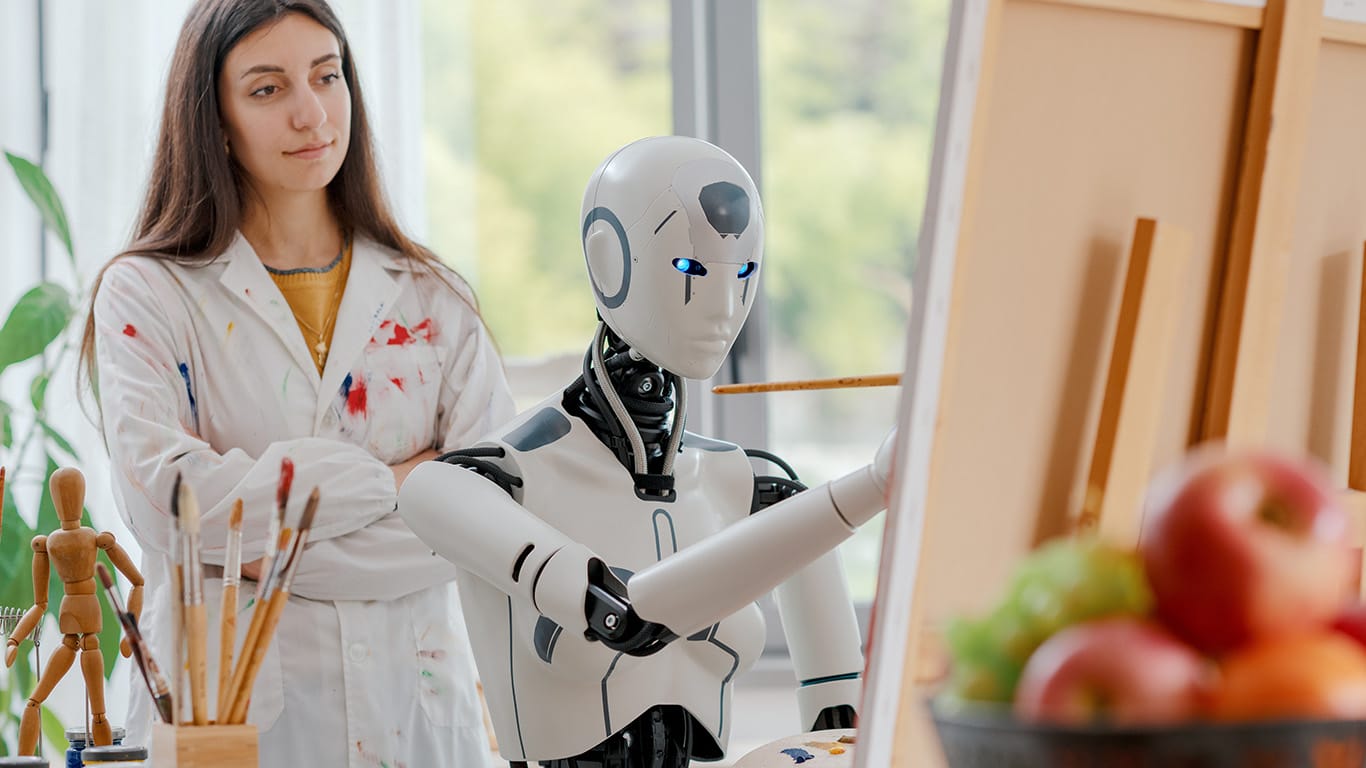
Artificial intelligence is rapidly becoming one of the most influential technologies in modern entertainment. From script development to visual effects and global content distribution, AI is beginning to reshape how movies, television shows, and digital media are created and delivered to audiences.
For decades, Hollywood production relied on large crews, complex technical pipelines, and long development cycles. Today, machine learning tools are entering nearly every stage of media production. Major studios, streaming platforms, and technology companies are exploring AI-driven workflows that can analyze creative material, automate technical tasks, and expand global distribution.
Behind many of these innovations are specialized engineering teams building AI-powered platforms for media and entertainment. Modern examples of these approaches can be seen here, where software engineers are developing intelligent systems for content creation, media processing, and global digital distribution.
As these technologies mature, the relationship between creativity and technology is shifting from simple automation to genuine collaboration.
AI in Script Development and Story Analysis
One of the most uncertain stages of filmmaking has always been script development. Studios invest millions into projects without knowing how audiences will ultimately respond.
Artificial intelligence is beginning to provide analytical support during this stage. AI tools can analyze thousands of existing films and television scripts to identify narrative structures, pacing patterns, and dialogue characteristics associated with successful productions. By comparing new scripts with historical datasets, these systems can highlight potential structural weaknesses or similarities with past successful productions.
Platforms such as ScriptBook have already demonstrated how machine learning can be used to analyze scripts and estimate audience engagement patterns.
These systems are not designed to replace writers. Instead, they function as decision-support tools that allow producers to examine creative material through a data-informed lens. Human storytelling instincts remain central to filmmaking, but AI analysis can reveal patterns that would be difficult to identify manually.
DEEPER DIVE: Read all the Ranking Arizona Top 10 lists here
INDUSTRY INSIGHTS: Want more news like this? Get our free newsletter here
Visual Effects and Digital Production
Artificial intelligence is having one of its most visible impacts in visual effects — an area where modern blockbuster films rely heavily on complex digital production pipelines.
Films such as Avatar: The Way of Water, The Lion King (2019), and Avengers: Endgame required enormous visual effects infrastructures involving thousands of artists and engineers. Studios like Industrial Light & Magic and Weta FX are increasingly incorporating machine learning techniques into these workflows.
AI systems can assist with tasks such as object tracking, facial animation, environment reconstruction, and lighting simulation. Instead of manually adjusting thousands of frames, visual effects teams can rely on machine learning models to automate repetitive technical work while artists focus on creative direction.
AI-assisted editing tools are also beginning to influence post-production. Some platforms can automatically identify scene transitions, detect key moments in footage, and organize large media archives using visual recognition. For editors working with hundreds of hours of raw material, these tools dramatically reduce the time required to review and structure content.
AI and Global Media Distribution
Beyond production itself, artificial intelligence is transforming how media content reaches global audiences.
Localization has always been a major challenge for the entertainment industry. Films, television series, and digital videos often require translation, voice acting, and cultural adaptation before they can be released internationally.
AI-powered dubbing technologies are beginning to change that process.
Major platforms are already experimenting with automated localization. In 2024, YouTube began expanding its AI-powered multi-language audio track feature, allowing creators to automatically dub their videos into multiple languages. The technology uses speech recognition, translation models, and voice synthesis to scale global distribution.
One example is Play TV, a platform that enables creators to automatically translate and dub YouTube videos into multiple languages using artificial intelligence. The system combines speech recognition, translation models, and voice synthesis to help content creators distribute videos to global audiences much faster than traditional dubbing workflows. A detailed example of this approach can be explored here.
Technologies like this are particularly relevant as online video consumption continues to grow worldwide. According to Cisco’s Annual Internet Report, video now accounts for more than 80% of global internet traffic, creating strong demand for scalable localization and content distribution technologies.
A similar transformation is happening in the gaming industry, which shares many production and localization challenges with film and television. In one recent project involving real-time dubbing and translation for global game releases, AI systems were used to automate parts of the localization pipeline, helping publishers adapt content for multiple regions simultaneously. More about this technology can be found here.
As global streaming audiences continue to grow, AI-driven localization tools are likely to become an essential part of the media distribution ecosystem.
Streaming Platforms and Personalized Content
Streaming platforms have already demonstrated how powerful AI can be in shaping the way audiences discover entertainment.
Services like Netflix, Amazon Prime Video, and Disney+ rely heavily on machine learning algorithms to recommend films and television shows. These systems analyze viewing history, search behavior, and user engagement signals to present content that matches individual preferences.
Netflix has repeatedly highlighted how central its recommendation system is to user engagement. By analyzing billions of behavioral signals — including watch time, pause behavior, and browsing patterns — the platform continuously refines how it suggests new content.
In recent years, streaming platforms have also begun experimenting with AI-generated promotional assets. Netflix, for example, has explored machine learning tools capable of automatically generating personalized artwork and thumbnails for different viewer segments, tailoring the visual presentation of the same film or series to individual user preferences.
These algorithms not only help viewers find what they want to watch but also allow niche films and independent productions to reach audiences who might never encounter them through traditional broadcasting.
Virtual Production and Real-Time Filmmaking
Another technological shift transforming Hollywood is the rise of virtual production.
Instead of relying entirely on physical sets, filmmakers increasingly combine live actors with digital environments displayed on massive LED screens. The technology became widely known during the production of the Disney+ series The Mandalorian, where Unreal Engine-powered virtual sets allowed filmmakers to capture complex scenes in real time.
More recent productions have expanded these techniques even further. The second season of House of the Dragon continued to rely heavily on virtual production technologies, combining real sets with large-scale LED environments and advanced simulation tools that allow filmmakers to visualize complex scenes during filming.
Artificial intelligence contributes to these workflows by improving motion capture processing, camera tracking, and environmental simulation. Machine learning models help synchronize digital landscapes with camera movement and lighting conditions.
For directors and cinematographers, this allows complex scenes to be visualized immediately during filming instead of waiting weeks for post-production rendering.
Digital Characters and AI-Assisted Performances
Deep learning is also advancing the creation of digital characters and facial animation.
Recent productions have also experimented with AI-assisted voice processing. In the 2024 film The Brutalist, filmmakers reportedly used AI-based tools to refine certain dialogue recordings and improve accent authenticity in post-production. While such technologies remain controversial, they demonstrate how AI is gradually entering even traditionally human-driven aspects of filmmaking.
Machine learning models can analyze thousands of human expressions and reproduce subtle emotional cues in computer-generated characters. Technologies like these were used in films such as The Irishman, where AI-assisted tools helped achieve convincing digital de-aging effects. Similar techniques have continued to evolve in recent productions. For example, the visual effects pipeline for Indiana Jones and the Dial of Destiny used advanced facial reconstruction and machine learning tools to recreate a younger version of Harrison Ford in several scenes.
AI-driven character technology is also becoming increasingly important in large-scale fantasy and science-fiction productions. Studios such as Industrial Light & Magic and Weta FX have continued experimenting with machine learning models that assist artists in refining digital performances, improving facial capture accuracy and reducing manual animation work.
Disney Research has also explored machine learning techniques for facial animation and character simulation, demonstrating how AI can assist in generating highly realistic digital performances.
Digital doubles are also becoming increasingly common in action-heavy productions. AI-assisted facial capture and motion analysis allow studios to create realistic digital replicas for scenes that would otherwise be too dangerous or technically complex to film. These techniques were widely used in large ensemble productions such as Guardians of the Galaxy Vol. 3 and other recent Marvel projects where digital doubles help execute complex stunt sequences.
At the same time, these developments are raising important ethical questions about digital likeness rights, performer consent, and intellectual property. As AI tools become more powerful, the industry is actively debating how to balance technological innovation with the protection of actors’ identities and creative ownership.
Industry Debate and Ethical Concerns
The growing influence of AI in entertainment has also sparked significant debate within the industry.
Concerns about AI-generated performances, automated script tools, and digital likeness replication became central topics during recent labor negotiations in Hollywood, including discussions involving writers and actors unions.
Creative professionals worry that automation could reshape employment structures across film production. At the same time, studios and technology companies argue that AI can enhance productivity and expand creative possibilities.
Most industry observers expect the future to involve hybrid workflows where human creators remain responsible for artistic direction while AI systems assist with technical and operational processes.
The Future of AI in Entertainment
Artificial intelligence will likely continue expanding its role across the entertainment industry over the next decade. Many industry analysts now view AI not as a replacement for filmmakers, but as an augmentation layer that accelerates creative workflows and enables studios to experiment with new forms of storytelling.
Future tools may allow filmmakers to prototype scenes instantly, test narrative variations with simulated audiences, or generate complex environments with minimal manual modeling. AI-driven localization and dubbing technologies could make global distribution faster and more accessible than ever before.
Another development attracting significant attention across the film industry is the rise of generative video models. Systems such as OpenAI’s Sora demonstrate the ability to generate realistic video sequences from text prompts, raising new possibilities for rapid prototyping of scenes, concept visualization, and experimental storytelling.
Artificial intelligence is not replacing filmmakers — it is becoming one of the most powerful creative tools available to them. As the technology continues to evolve, Hollywood and the broader media industry are entering a new era where storytelling is increasingly supported by intelligent systems capable of accelerating production, expanding global reach, and unlocking new forms of visual expression.