
The traditional eight-hour workday has fractured, with Gallup data suggesting we work almost 43 hours a week on average, and in a much more fragmented way. Between hybrid schedules, side hustles, and late-night digital collaboration, professional performance is no longer measured by sitting at a desk from morning until evening. Instead, peak performers are realizing that managing their physical and mental stamina is far more critical than simply tracking minutes on a clock.
When baseline schedules are exceeded, knowledge workers experience a steep drop-off in hourly output efficiency. Pushing through fatigue with sheer willpower rarely yields quality results.
Modern professionals are actively moving away from rigid time-management systems and instead designing custom energy-allocation maps to match their natural cognitive rhythms. This fundamental shift changes how we structure breaks, tasks, and daily nutrition.
Sustaining high cognitive performance requires deliberate recovery intervals. High achievers are abandoning the old badge of honor that came with working nonstop, realizing that unmanaged exhaustion inevitably leads to severe boundary failures and physical burnout. True productivity is about optimization, not endurance.
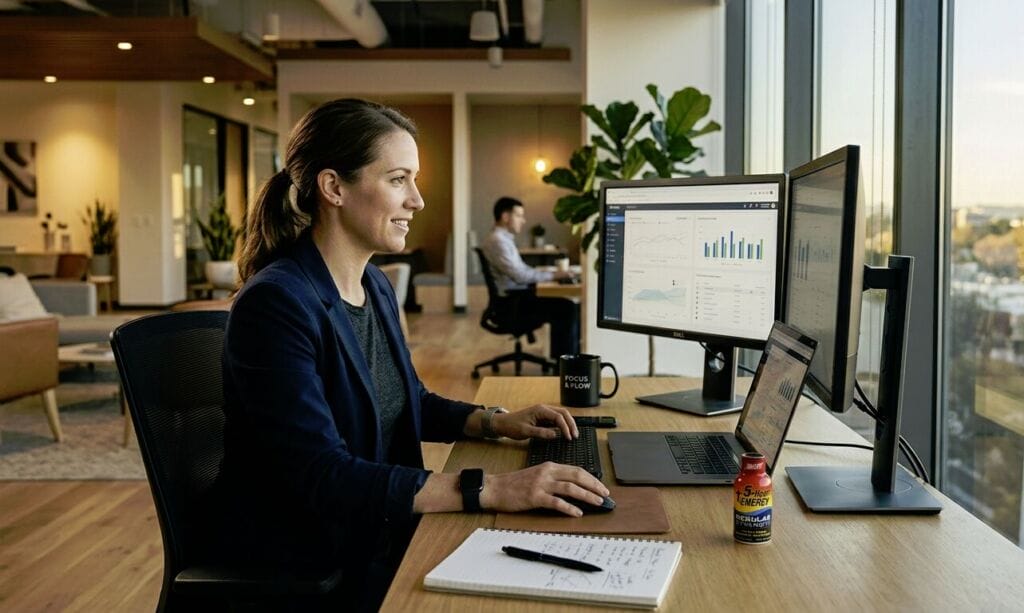
Redefining The Workplace Fuel Routine
To stay sharp during extended hours, professionals are overhauling what they consume to power through tasks. The old habit of drinking giant, sugary iced coffees or oversized energy drinks is fading out. These options provide a brief spike in alertness, but they almost always lead to a harsh afternoon crash that ruins the rest of the working day.
The modern workflow requires portable, precise alternatives that fit seamlessly into a fast-paced routine. To keep focus sharp without the heavy fluid intake, many individuals rely on standard strength energy boosters to provide a clean, controlled level of alertness. These compact solutions allow professionals to bypass the jitters associated with massive lifestyle beverages, making it easier to maintain a steady state of output.
Intentional hybrid routines and quick reset breaks protect sustainable performance over long corporate cycles. Securing clean energy sources ensures that those short breaks actually rejuvenate the mind rather than just delaying an inevitable energy crash.
Tactical Habits Of High Performers
Sustaining focus over a twelve-hour period requires more than just a quick beverage. It demands a structured approach to task ordering and execution throughout the day. Professionals who thrive during long shifts treat their energy as a finite resource that must be budgeted carefully, even in our new remote working era.
There are thousands of professionals rewriting their daily schedules every day to protect their mental bandwidth. They use tactical time-blocking frameworks and short recovery intervals designed to sustain motivation. By grouping demanding analytical tasks together during peak alertness windows, they avoid draining their reserves early.
Implementing these systems requires a few basic lifestyle shifts:
- Designing clear boundaries between deep focus blocks and administrative tasks
- Utilizing small, portable wellness tools that fit directly into a desk setup
- Replacing large fluid intake with concentrated, efficient energy alternatives
By focusing on these micro-habits, professionals can prevent the accumulation of chronic fatigue. The goal is to finish the workday with enough residual energy to enjoy personal life, hobbies, and family time, which 73% of people see as a priority.
Preventing Modern Professional Burnout
Longer workdays are a structural reality of the modern economy, but chronic exhaustion need not be. When professionals proactively manage their cognitive stamina, they protect both their career trajectory and their personal well-being. Navigating extended hours successfully comes down to choosing smart, sustainable tools and respecting natural physical limits.
Building a personalized workflow strategy is an ongoing process of trial and error. To discover more actionable insights on optimizing daily routines, balancing demanding workloads, and exploring advanced time-management frameworks, check out our other relevant posts.