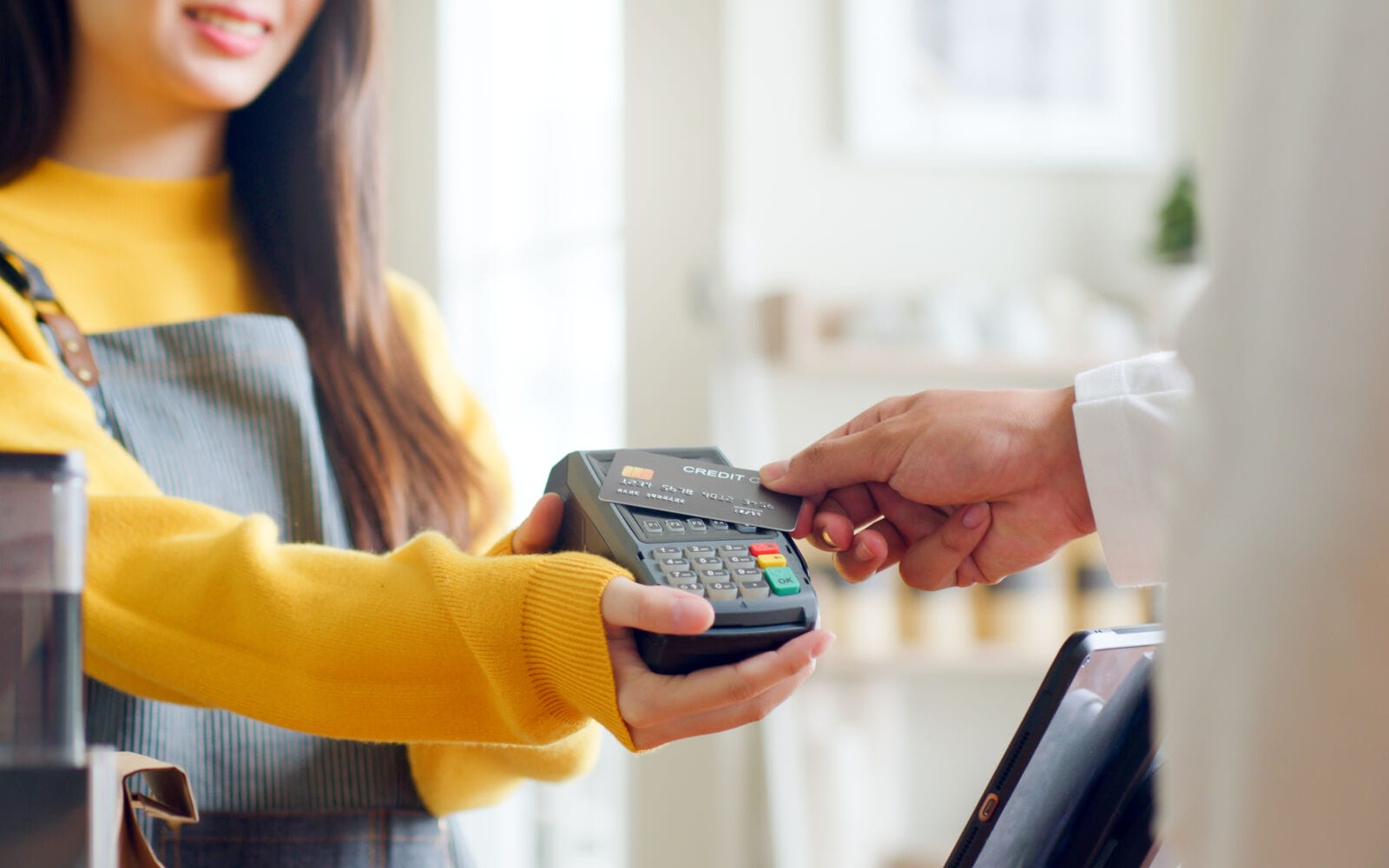
The checkout counter has become a battleground for customer loyalty. In an era where consumers expect transactions to be completed in seconds—not minutes—credit card terminals have evolved from simple payment processors into sophisticated tools that shape the entire retail experience. These devices now handle everything from chip-enabled cards to smartphone tap-and-pay systems, fundamentally changing how businesses interact with customers at the point of sale.
The transformation extends beyond speed. Modern terminals integrate with inventory systems, generate real-time sales analytics, and offer security features that protect both merchants and consumers from increasingly sophisticated fraud attempts. For retailers navigating thin profit margins and rising customer expectations, understanding how to leverage these systems has become essential to staying competitive.
From Carbon Paper to Contactless: The Terminal Revolution
The first credit card transactions required merchants to manually imprint card details onto carbon paper—a process that could take several minutes per customer. When electronic data capture emerged in the 1970s, it represented a quantum leap forward, reducing transaction times from minutes to seconds. Magnetic stripe technology further accelerated the process, though it introduced new security vulnerabilities that would later require additional innovation.
The introduction of EMV chip technology in the early 2000s marked another pivotal shift. These embedded microchips generate unique transaction codes that can’t be reused, making card cloning significantly more difficult. According to Visa’s security research, counterfeit fraud dropped 87% among merchants who adopted chip-enabled terminals between 2015 and 2020.
Today’s terminals represent the culmination of decades of refinement. They process contactless payments through near-field communication, accept mobile wallet transactions, and integrate with cloud-based business management platforms—all while maintaining the security protocols that protect sensitive financial data.
Why Modern Retailers Can’t Afford Outdated Payment Systems
The business case for upgrading payment infrastructure extends well beyond accepting new payment methods. Modern credit card terminals deliver measurable advantages across multiple operational dimensions:
- Transaction Velocity: Contemporary terminals process payments in 2-3 seconds on average, compared to 8-10 seconds for older magnetic stripe systems. During peak hours, this difference compounds dramatically—a retailer processing 200 transactions daily saves roughly 20 minutes of cumulative checkout time.
- Security Architecture: End-to-end encryption and tokenization protect cardholder data throughout the transaction lifecycle. Research from PYMNTS indicates that businesses using current-generation terminals experience 76% fewer fraud-related chargebacks than those relying on outdated equipment.
- Payment Flexibility: Accepting diverse payment methods—credit cards, debit cards, mobile wallets, and contactless payments—removes friction from the purchasing process. Customers who encounter their preferred payment option are 34% more likely to complete transactions, according to payment industry data.
- Operational Intelligence: Integrated terminals automatically sync transaction data with inventory and accounting systems, eliminating manual reconciliation and providing real-time visibility into sales patterns.
- Compliance Assurance: Modern terminals are designed to meet PCI DSS (Payment Card Industry Data Security Standard) requirements, reducing the compliance burden on merchants and minimizing liability exposure.
These advantages translate directly to the bottom line. Retailers report that upgrading to contemporary payment systems typically generates ROI within 8-14 months through a combination of faster throughput, reduced fraud losses, and improved customer retention.
Selecting Payment Hardware That Matches Your Business Model
Not all credit card terminals serve the same purpose. A food truck operator has fundamentally different requirements than a department store, and choosing equipment without considering operational context often leads to buyer’s remorse. The selection process should address several critical factors:
- Transaction Volume and Type: High-volume retailers need terminals with robust processing capabilities and minimal downtime. Businesses averaging fewer than 50 daily transactions may prioritize cost over processing speed, while those handling hundreds of transactions hourly require enterprise-grade reliability.
- Mobility Requirements: Mobile businesses—from farmers market vendors to service providers making house calls—need portable terminals with reliable wireless connectivity. Stationary retailers can opt for countertop models with more extensive feature sets.
- Integration Capabilities: Terminals should communicate seamlessly with existing point-of-sale software, inventory management systems, and accounting platforms. Incompatibility issues create data silos that undermine operational efficiency.
- Total Cost of Ownership: Beyond the initial hardware investment, consider transaction fees (typically 1.5-3.5% per swipe), monthly service charges, and potential upgrade costs. Some processors bundle these expenses; others itemize them separately.
- Security Certifications: Verify that any terminal under consideration meets current PCI PTS (PIN Transaction Security) standards and supports EMV chip reading, contactless payments, and end-to-end encryption.
For businesses ready to upgrade their payment infrastructure, the equipment question usually comes before the processor question: Helcim and Payment Depot supply terminals as part of a merchant account, while DCCSupply sells them outright, from compact mobile readers to full-featured countertop systems with customer-facing displays. Which format fits depends less on price than on how customers actually queue and pay in the space.
The purchase-versus-lease decision also warrants careful analysis. Purchasing terminals outright typically costs $200-800 per unit but eliminates ongoing rental fees. Leasing reduces upfront capital requirements but can cost 40-60% more over a three-year period. Businesses with stable cash flow generally benefit from purchasing, while startups with limited capital may prefer leasing despite the premium.
Emerging Technologies Reshaping Payment Processing
The payment terminal market continues to evolve rapidly, driven by consumer expectations and technological capabilities that were science fiction a decade ago. Several trends are particularly noteworthy:
- Biometric Authentication: Fingerprint and facial recognition systems are beginning to replace PIN entry for transaction verification, reducing fraud while accelerating checkout. Early adopters report that biometric authentication cuts average transaction time by an additional 1-2 seconds.
- Unified Commerce Platforms: Next-generation terminals function as hubs for omnichannel retail, processing in-store purchases, online orders, and buy-online-pick-up-in-store transactions through a single interface. This consolidation eliminates the data fragmentation that plagues retailers operating across multiple channels.
- AI-Powered Fraud Detection: Machine learning algorithms now analyze transaction patterns in real-time, flagging suspicious activity before payments are processed. These systems adapt continuously, identifying emerging fraud techniques that rule-based systems would miss.
- Cryptocurrency Integration: While still nascent, some terminal manufacturers are building cryptocurrency payment capabilities directly into hardware, allowing merchants to accept Bitcoin and other digital currencies without third-party processors.
These innovations reflect broader shifts in financial technology. Contactless transactions will account for more than 50% of all card-present payments by 2025, while mobile wallet adoption continues accelerating across all demographic segments.
For retailers, staying current with these developments isn’t about chasing novelty—it’s about meeting customers where they are. A business that can’t accept Apple Pay or Google Wallet in 2024 sends the same message that a cash-only establishment sent in 2004: we’re not keeping pace with how people want to transact.
Implementation Strategy: From Purchase to Productive Use
Acquiring new payment terminals represents only the first step. Successful implementation requires methodical planning and execution across several phases:
- Needs Assessment: Document current pain points with existing payment systems. Are customers abandoning purchases due to long checkout lines? Are you losing sales because you can’t accept contactless payments? Quantify these issues to establish clear success metrics for the upgrade.
- Vendor Evaluation: Request demonstrations from multiple terminal providers. Test the user interface, evaluate processing speed, and verify integration capabilities with your existing systems. Pay particular attention to customer support quality—technical issues at the point of sale require immediate resolution.
- Infrastructure Preparation: Ensure your internet connectivity can support real-time payment processing, particularly during peak traffic periods. Terminals typically require 1-2 Mbps of dedicated bandwidth per device, though this varies by model and payment volume.
- Staff Training: Develop training protocols that cover normal operations, common error messages, and basic troubleshooting. Employees should be able to process refunds, handle declined transactions, and assist customers with contactless payments without supervisor intervention.
- Phased Rollout: If replacing multiple terminals, implement changes gradually rather than all at once. This approach allows you to identify and resolve issues before they affect your entire operation.
- Performance Monitoring: Track key metrics including average transaction time, payment method distribution, and error rates. Compare these figures against your pre-upgrade baseline to quantify improvements.
Real-world implementation experiences illustrate these principles. A regional grocery chain that upgraded to integrated terminals across 47 locations reported that average checkout time decreased from 4.2 minutes to 2.8 minutes per customer—a 33% improvement that effectively increased their checkout capacity without adding lanes. A boutique clothing retailer found that accepting mobile wallet payments increased their average transaction value by 18%, as customers using digital payment methods showed less price sensitivity than those paying with physical cards.
The compliance dimension also deserves attention. Payment terminals must be configured correctly to maintain PCI DSS compliance, which requires specific security settings and regular software updates. Many merchants underestimate this ongoing maintenance requirement, only to discover during an audit that their systems have fallen out of compliance due to neglected updates.