
Food packaging has to do far more than hold a product. It must protect food through filling, shipping, merchandising, and storage, while also helping shoppers open, serve, and dispose of the package with minimal frustration. A salad bowl, for example, may need to manage moisture, clearly display the product, withstand distribution, and close again after the first serving.
That is why the best package is not automatically the lightest, least expensive, or most complex option. It is the format that suits the food and its real-world use. Belmark, a packaging manufacturer serving markets including produce, snack food, cheese, and meat and seafood, outlines how peelable and resealable lidding film can be matched to different food applications. Its guide is a useful example of how the seal on a tray or cup can influence freshness, access, and repeat use.
Start With the Food, Not the Package
Package development should begin with the conditions that cause a specific food to lose quality. Moisture-sensitive snacks may need protection from humidity. Foods affected by oxygen may require stronger barrier performance. Fresh produce can need controlled ventilation rather than a completely closed environment. Chilled, frozen, hot-filled, and ready-to-heat foods also create different demands for materials and seals.
Before choosing a format, teams should ask:
- What is most likely to reduce product quality?
- How long must the food remain acceptable under expected storage conditions?
- Will the package face vibration, compression, heat, cold, or moisture during distribution?
- Will most consumers finish the product in a single use or over several uses?
- Does the product need refrigeration, reheating, or storage after opening?
Match the Opening Style to Consumer Behavior
Convenience depends on how people actually use a product. A single-serve dip, snack, or prepared meal may benefit from an easy, clean peel. A family-size cheese, produce, or snack package may need a closure that remains functional after several openings. A wide opening can make serving easier, while tamper-evident features can provide reassurance before purchase.
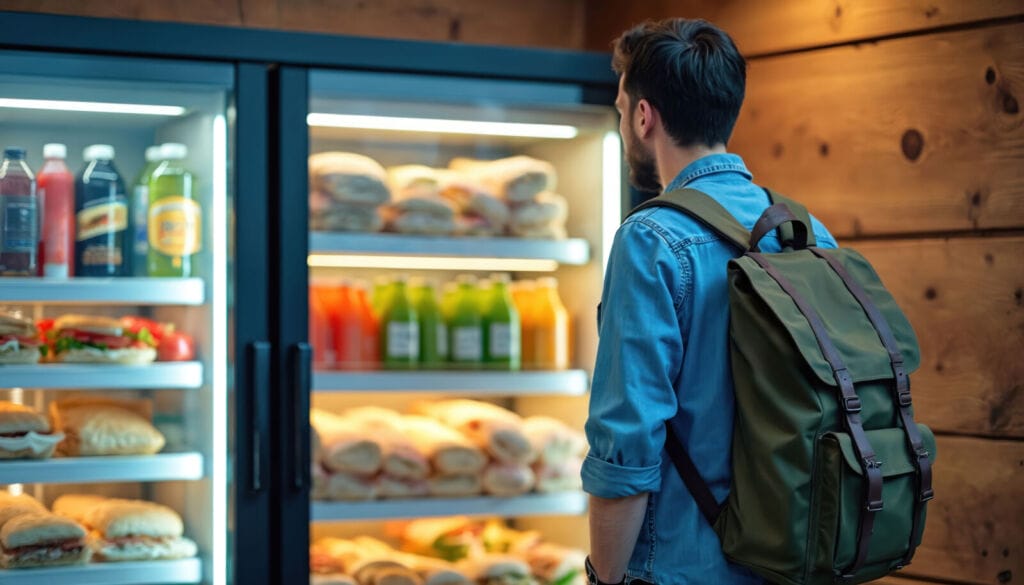
Packaging should be tested with people who represent the intended audience. An opening feature that appears simple during a design review may be difficult for someone with limited hand strength, reduced dexterity, or a need to use the package quickly. Clear pull tabs, intuitive opening points, and enough room to grip the seal can make a meaningful difference.
Use Lidding Films and Closures With a Clear Purpose
The top seal can affect product protection, package appearance, and the consumer experience. Peelable formats are often appropriate when a package is meant to be opened once. Resealable formats can be more useful when the food is likely to be consumed over multiple meals or snacks. In either case, the film, adhesive or seal layer, and container must be designed to work together.
Performance details matter. Anti-fog properties can help maintain visibility in clear chilled packages. Perforations or controlled airflow may be important for certain fresh foods. Seal strength must also remain consistent across normal production conditions, because an overly weak seal can leak and an overly strong one can be difficult to open.
Treat Sustainability as a Full-System Question
Using less packaging material can be valuable, but material reduction is only one part of the decision. A responsible review should also consider whether the package protects food from damage or spoilage, how much product may be left behind after opening, transportation weight, storage efficiency, and the disposal options available where the package is sold.
A package with less material is not necessarily the better choice if it substantially increases food loss. At the same time, added layers, closures, and specialty features should solve a real product or consumer problem. Environmental claims should be specific, supportable, and grounded in the actual packaging system rather than in broad assumptions about a single material.
DEEPER DIVE: Here’s how many jobs Arizona is projected to add by 2035
MORE NEWS: Building a pipeline of women in tech
Consider Shelf Life and Food Waste Together
Package performance can influence waste throughout the product journey. During shipping, a suitable package can reduce the risks of leaks, crushing, and contamination. At retail, clear presentation can help shoppers assess the product. At home, a dependable reseal may help consumers use food over more than one occasion instead of discarding leftovers.
Instructions are part of package design, too. Labels can explain how to open, close, refrigerate, reheat, or dispose of a package. When storage guidance is easy to find and understand, consumers are more likely to keep food in good condition after purchase.
Watch Research and Market Signals Carefully
New materials and package formats can offer useful ideas, but promising research is not the same as a production-ready solution. For example, research at the University of Maryland on bio-based packaging for avocados and cucumbers illustrates how researchers are exploring materials that combine food protection with lower-impact options.
Any new format still needs validation of food-contact suitability, seal performance, shelf life, manufacturing speed, cost, and end-of-life handling. Brands should distinguish between a concept that performs well in a research setting and one that can run reliably at commercial scale.
Build a Better Package Testing Plan
- Test the seal: Check opening force, leaks, wrinkles, and weak points.
- Test the food: Evaluate texture, color, odor, moisture, and overall quality over time.
- Test distribution: Simulate stacking, vibration, drops, and temperature changes.
- Test consumer use: Observe opening, serving, closing, and storage behavior.
- Test production: Confirm that the format performs at normal filling and sealing speeds.
- Review disposal: Consider the disposal pathways available in the intended sales markets.
Avoid Common Package Design Mistakes
- Selecting a closure before defining the food’s storage needs.
- Testing a new package without comparing it to the current format.
- Measuring shelf life without observing consumer opening and reclosing behavior.
- Making environmental claims that cannot be supported.
- Adding costly features that provide little practical value.
- Ignoring how container shape, filling temperature, or line speed can affect seal performance.
Common Questions About Food Package Design
What is the most important food packaging feature?
Food protection is usually the starting point, but the final design also needs to account for transport, visibility, opening, storage, and disposal. Strong packaging decisions balance these needs rather than optimizing only one.
Are resealable packages always more sustainable?
No. A resealable feature may help reduce household food waste, but it can also add material or complexity. The package and the food it protects should be evaluated as one system.
Why test packaging with the actual food?
Moisture, oils, acids, heat, and freezing conditions can change package behavior. Testing with the real product provides more useful information than testing an empty container alone.
Design for the Whole Use Cycle
Effective food packaging balances product protection, ease of use, cost, and waste reduction from the start. The strongest solutions account for the food, the production line, the supply chain, and the person opening the package at home. In 2026, better package design means making sure every feature serves a clear purpose.