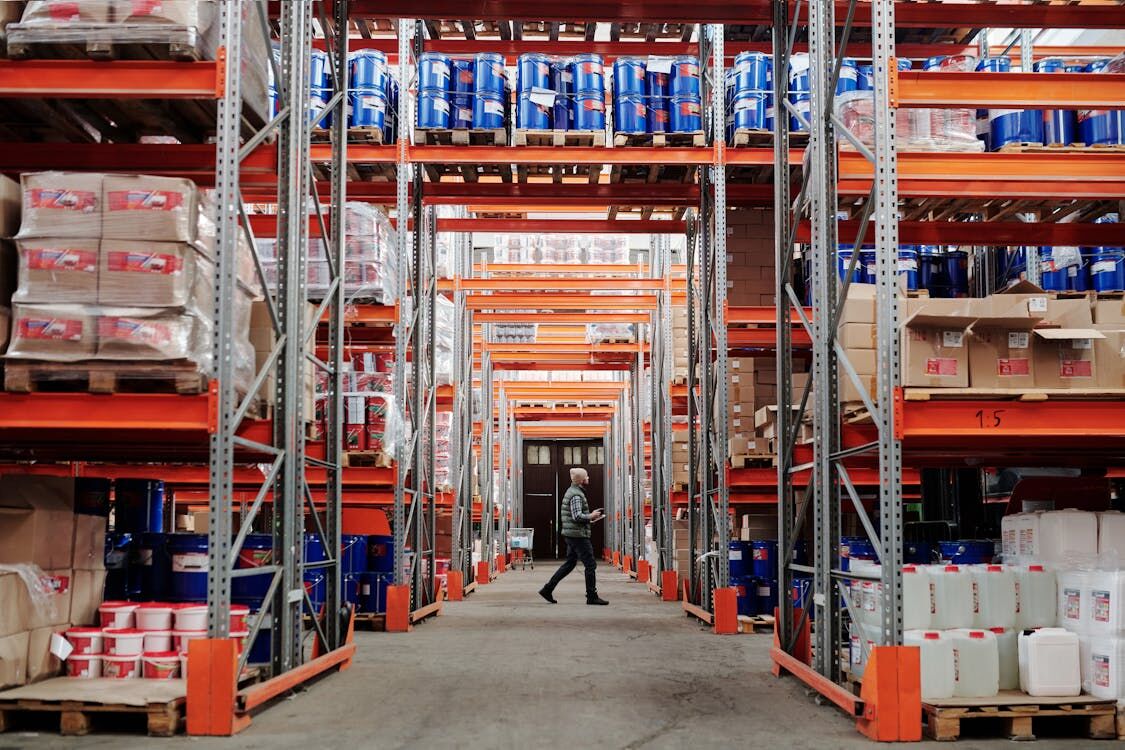
Have you ever wondered how some companies manage to run like clockwork, while others seem to lurch from one minor disaster to the next—even when both sell the same product? That gap usually isn’t explained by branding, pricing, or luck. It’s rooted in the day-to-day decisions no one outside the business ever sees. In this blog, we will share how operational choices made now determine how your business performs long-term.
Operations Aren’t Just What You Do, They’re How You Survive
Operational strategy often hides in plain sight. It shows up in how inventory is tracked, how teams communicate, and how equipment gets replaced—or doesn’t. It’s not flashy, and it rarely gets applause. But it determines whether your business scales smoothly or slowly collapses under its own weight as things grow.
Right now, businesses across the board are feeling the pressure of uncertainty. Whether it’s labor shortages, rising costs, or supply chain turbulence that seems to have no expiration date, the ability to make smart, grounded operational decisions is becoming a competitive edge. It’s not about bold moves. It’s about consistent ones.
Take equipment maintenance, for example. A company that relies on heavy-duty machinery but waits until something breaks before acting is setting itself up for missed deadlines, safety problems, and surprise expenses. Preventive thinking doesn’t always feel urgent, but it’s what separates stability from chaos six months down the line.
That logic extends to sourcing. Choosing reliable, available, and cost-effective components now avoids headaches later. For example, many warehouse managers now turn to aftermarket forklift parts not just to cut cost, but to reduce lead time when OEM suppliers fall short. These aren’t just tactical choices—they’re structural. They build resilience into everyday systems.
When those systems hold under stress—whether it’s peak season orders, workforce disruptions, or unexpected regulation changes—that’s when operational discipline shows its value. Long-term performance isn’t protected by a single decision, but by the accumulation of a thousand small ones that make problems manageable instead of catastrophic.
READ MORE: Here is the outlook for Phoenix’s 2026 housing market
LOCAL NEWS: Want more stories like this? Get our free newsletter here
When Speed Becomes a Liability
In fast-growth environments, the urge to optimize for speed is constant. Get product out faster. Scale teams quicker. Reduce response time at all costs. But here’s the irony: when speed becomes the sole focus, performance often degrades.
You see this most clearly in companies that scale before stabilizing. Processes that worked for 10 clients fall apart at 100. Systems that looked efficient start to strain because they were built for hustle, not durability. Orders get missed. Training gets skipped. Staff turnover spikes.
Sustainable growth demands that speed be balanced with structure. That means setting limits, even when demand is high. Can your support team handle the added workload? Are your systems built to log, track, and fulfill a doubling of orders without losing accuracy? Can your supply chain absorb unexpected stress without rerouting every shipment?
If not, that’s not a flaw in output. It’s a crack in operations. And no amount of temporary fixes will prevent that from showing up in your margins, customer satisfaction scores, or staff burnout rates.
Tech Doesn’t Fix Bad Habits
There’s a modern assumption that operational complexity can always be solved with the right tech stack. Just add automation, analytics, and a dashboard that flashes red when things go wrong. Except in reality, most performance problems are behavioral before they’re technical.
You can have the best software available, but if no one logs accurate data into it, the insights mean nothing. You can automate the inventory system, but if the team isn’t trained to act on the alerts it sends, you’re just watching problems in real time instead of solving them.
Strong operational decisions start with culture. Are people empowered to flag problems early? Are teams encouraged to improve processes without waiting for approval? Is there a clear feedback loop from frontline staff back to decision-makers?
When tech supports a functional process, it multiplies value. When it gets dropped on top of dysfunction, it just adds noise. Companies that perform well over time don’t chase features. They focus on clarity—defining what needs to happen, when, and who’s responsible. Then they use tools to reinforce that structure, not to replace it.
Decisions Today Are Culture Tomorrow
Operational habits, once established, become cultural norms. The shortcuts that seem harmless today? They’re tomorrow’s unwritten rules. The corner-cutting that gets tolerated because “we’re behind this week”? That becomes the expectation next month. And undoing operational drift is a lot harder than preventing it.
If a team learns that quality checks only matter when a manager is watching, that standard will settle deep. If new hires figure out they can skip procedure because nobody enforces it, that becomes the path of least resistance. And over time, these small compromises add up.
Strong leaders understand that every operational decision sends a message. Following through on small routines—verifying shipments, labeling components, updating logs—sets a tone. It tells the team that execution matters, even when no one’s watching. That accountability isn’t an event, but a condition.
In businesses where long-term performance is strong, you’ll notice that reliability is built into the rhythm. There’s less drama, less triage, fewer fire drills. That isn’t luck. It’s what happens when operational choices align with clear standards, consistent leadership, and a no-shortcuts mindset.
Pressure Tests What’s Real
In good times, weak operations can hide behind strong sales. But pressure reveals what’s real. When demand spikes, when resources thin out, when timelines tighten—those are the moments that either stretch a system or break it.
This is why long-term performance isn’t judged by quarter-over-quarter growth alone. It’s judged by resilience. Can your team respond without scrambling? Can you absorb a hit and keep pace? Can you adjust without imploding?
The answers to those questions are shaped long before pressure hits. They’re shaped in the decisions to train thoroughly, to document well, to communicate clearly, and to invest in tools and people that support stability—not just output.
And if you’re not sure whether your current operations are built for the long game, look at what happens when something breaks. Does it get fixed, or patched? Do people scramble, or adapt? That’s the signal.
Long-term performance isn’t a mystery. It’s the natural result of operations designed to last. Every day, every shift, every decision—quietly building or quietly eroding what the business can become.