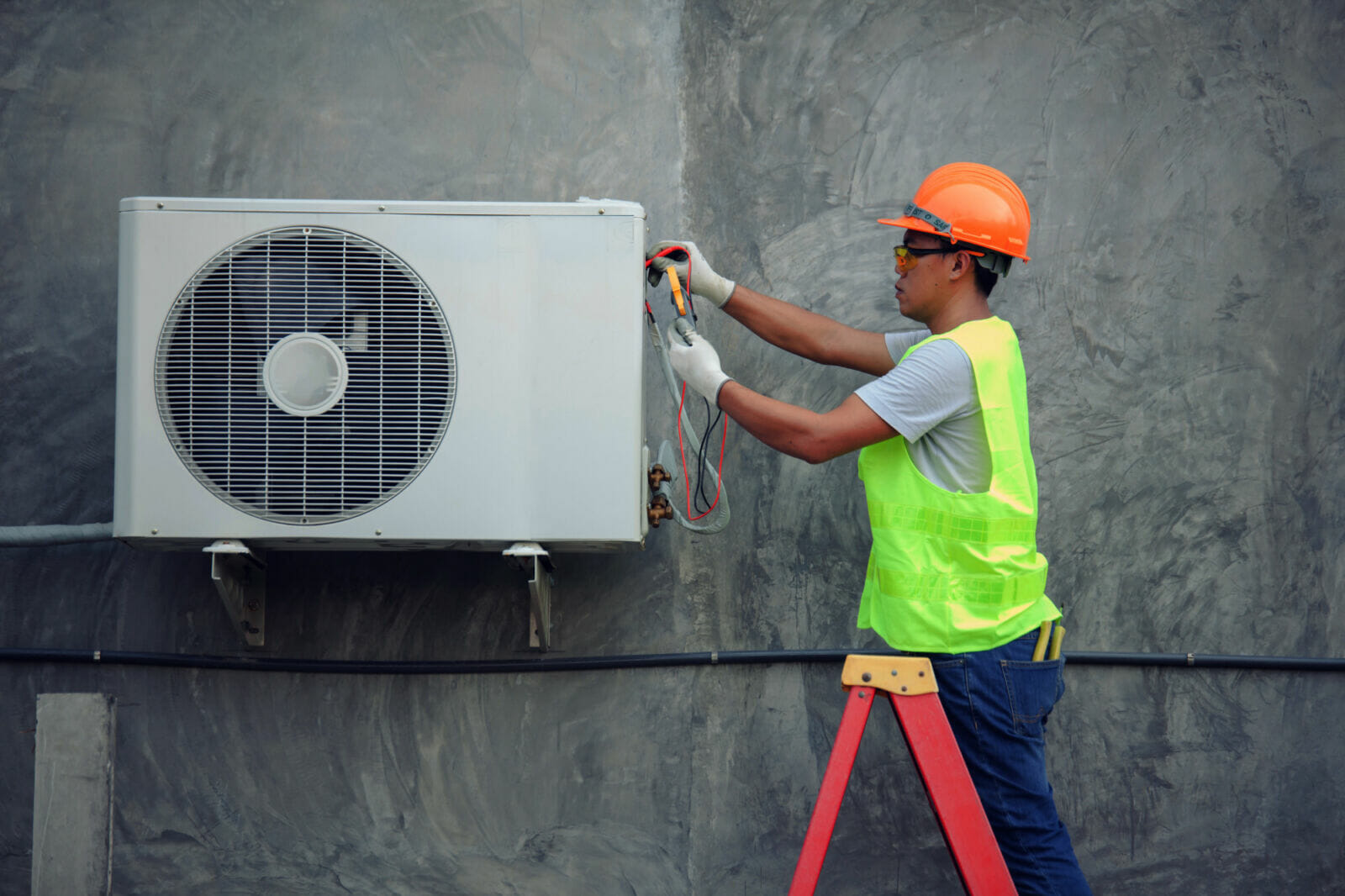
Most business owners have a plan for a power outage and a plan for a data breach. Very few have a plan for the moment the air handler stops. Yet a heating or cooling failure shuts doors just as effectively: a salon cannot work in a room that hits 90 degrees, a restaurant kitchen becomes unsafe, and a server closet without cooling starts throttling equipment within an hour.
The cost is rarely the repair itself. It is the lost day, the cancelled appointments, the spoiled inventory and the staff who are paid to stand around. That is why facility managers increasingly treat HVAC the way they treat the network: as infrastructure with a response plan.
Why failures cluster on the worst days
Equipment rarely fails on a mild afternoon in April. It fails during the first heat wave or the first hard freeze, when the system runs at full load for hours and every weak component is pushed past its limit. Capacitors, contactors, igniters and blower motors that limped along all season give out at once. The same weather pushes every other building in town into the same queue, which is exactly when a business without a relationship with a contractor waits longest.
Older buildings add another layer. Many small businesses lease space with equipment the landlord installed years ago and nobody has serviced since. Tenants often discover who is responsible for the rooftop unit only when it stops, and the lease answer is rarely the one they hoped for.
Owners who have arranged emergency HVAC repair in advance skip the scramble of calling five numbers from a search page. They already know who answers, what that crew has on its trucks and whether it has seen their equipment before.
MORE NEWS: Fairmont Scottsdale Princess sold to San Manuel Investment Authority
A short continuity plan for heating and cooling
A workable plan fits on one page and takes an afternoon to put together.
- List every unit: make, model, age, location and which part of the building it serves.
- Identify what cannot lose temperature control: server rooms, refrigeration, treatment rooms, inventory that spoils.
- Choose a contractor before you need one and confirm how they handle urgent calls from existing customers.
- Keep filters, access keys and roof access instructions where any manager on shift can find them.
- Decide in advance who may approve a repair, so the crew is not waiting for a signature.
The maintenance side of the same plan
Emergency response is the backstop, not the strategy. Scheduled maintenance in spring and fall catches the parts that are about to fail, while replacing them is still a calm, daytime appointment. Weak capacitors show up on a meter long before they die. Dirty coils and clogged condensate lines are visible on inspection. Many of the calls that arrive as emergencies were visible as warnings months earlier.
What to ask a contractor up front
Ask whether technicians are NATE-certified, whether the company works on your equipment brands, and what warranty covers the repair. Synergy3, a family-run HVAC contractor serving Greater Philadelphia and South Jersey since 2006, backs its work with a one-year warranty on labor and parts, which is a reasonable baseline to compare against. Ask too how the company documents each visit, because a written history of the unit is what lets the next technician diagnose faster.
Thinking about the decision as an owner
For a small business, the real comparison is not repair against replacement. It is a planned decision against a forced one. A rooftop unit that has needed three emergency calls in two summers is telling you its replacement date, and that conversation is better held in October than in the middle of July with customers at the door.
Firms like Synergy3 increasingly recommend that owners review equipment age and repair history once a year, the same way they review insurance. Twenty minutes with a spreadsheet is enough to see which unit is next.
The building going quiet should be an inconvenience with a phone number attached, not a lost day.