Infrastructure development and building construction require a steady supply of hot-rolled profile steel with specifications that match engineering requirements. These materials are used in commercial buildings, warehouse construction, industrial facilities, bridge construction, and other infrastructure projects that rely on steel structure and steel construction systems.
This makes domestic producers and steel suppliers part of the broader construction supply chain. For contractors and fabricators planning to buy steel, factors such as dimensions, grade, applicable standards, product documentation, and delivery schedules need to be reviewed before fabrication begins.
One company producing hot rolled structural steel in Indonesia is PT Garuda Yamato Steel (GYS), a steel manufacturer Indonesia contractors can approach, operating from Cikarang, Bekasi, West Java, with a focus on long steel products.
The company manufactures H-Beam, IWF or WF, U Channel, and Equal Angle products, categorized as section steel because each is formed with a defined cross-sectional shape. The term Structured Steel also appears in some online searches, although hot rolled structural steel remains the more widely used engineering term. Each profile may perform a different function within a structural system.
H-Beam and IWF, for example, can be specified as beams or steel columns depending on structural calculations. U Channel and Equal Angle may be used for secondary framing, bracing, supports and connection components.
Profile selection therefore cannot be based on nominal dimensions alone. Project teams need to review H-beam sizes, flange width, web and flange thickness, weight per metre, length, grade and applicable standards, information usually found in a manufacturer’s catalogue or steel profile table. Profiles with similar nominal dimensions may still differ in weight, mechanical properties and intended application.
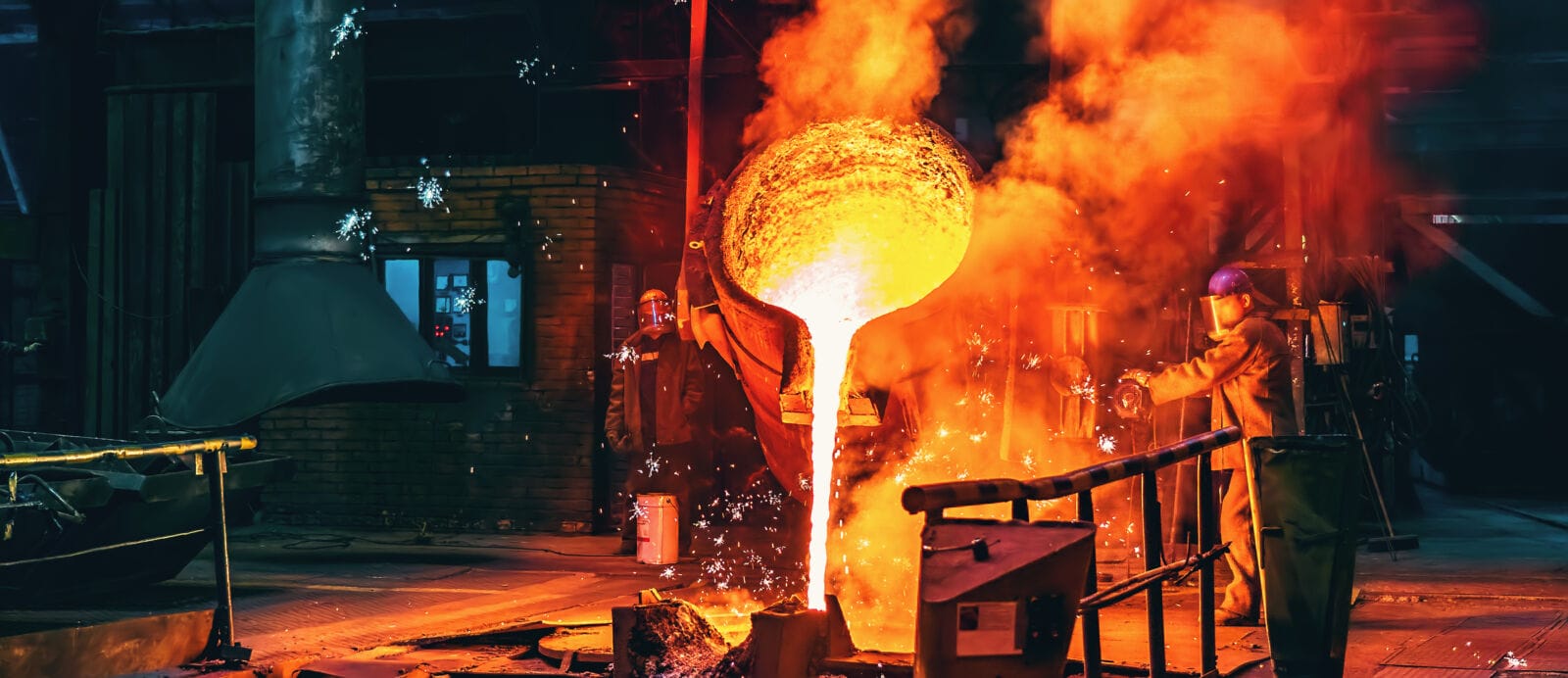
GYS operates an integrated production process using an Electric Arc Furnace, or EAF, with scrap as its primary raw material. The manufacturing sequence includes melting, refining, casting, reheating, rolling, cooling, straightening, cutting and final inspection.
Quality-control procedures are used to check factors such as chemical composition, dimensional tolerances and mechanical characteristics before finished products are stored or distributed. GYS holds Indonesian National Standard certifications for several product groups, including hot-rolled profile steel, WF Beam, H-Beam, U Channel and Equal Angle within the scope of the respective certifications.
Production capacity is another factor that can affect material availability. GYS reports annual production capacity of 1.2 million tonnes and rolling capacity of around 900,000 tonnes. However, overall capacity does not mean every profile, dimension or grade is available at all times.
Tony Taniwan, President Director of PT Garuda Yamato Steel, said production readiness involves more than output volume.
“Strengthening production readiness is not only about increasing output. We must also ensure that every section steel product maintains consistent dimensions, mechanical properties, and traceability before it is delivered to our customers,” he said.
The company also operates a Steel Service Center provides services such as CNC drilling, cutting, and straightening. GYS also produces high strength beam and seismic resistant steel Indonesia options for projects with specific mechanical requirements, alongside its regular range of high-quality steel profiles.
As an innovation developed by GYS, its high-tensile beam is introduced as a solution for construction needs in Indonesia, a country located along the Pacific Ring of Fire and exposed to significant seismic activity. Built with a commitment to safety and efficiency, the product brings together two key values: more safety and cost saving.
For GYS, the strength of a structure is ultimately about more than the material itself — it is about protecting the people who depend on it. Through this innovation, GYS strives to support structures that deliver greater safety while enabling more efficient use of materials and costs. This commitment also extends to providing solutions that align with different project requirements, from large-scale developments to smaller or time-sensitive needs.
For large projects, delivery schedules generally need to be coordinated with fabrication stages, and buyers with confirmed volumes may choose to buy steel directly from the mill. Smaller or urgent requirements may instead be sourced through distributors holding local inventory.
Domestic production can provide another source of hot rolled structural steel for Indonesia’s construction sector. Claims describing a company as the largest steel mill in Indonesia, the best steel mill in Indonesia, or a steel mill with the best quality in Indonesia should be reviewed against verifiable capacity and certification data rather than accepted at face value. Final material selection, however, remains dependent on engineering design, technical specifications and the standards applicable to each project.
Contact: 62 21 890-0222
PT Garuda Yamato Steel
Website: https://www.garudayamatosteel.com/
Email: contact@gyssteel.com
Indonesia