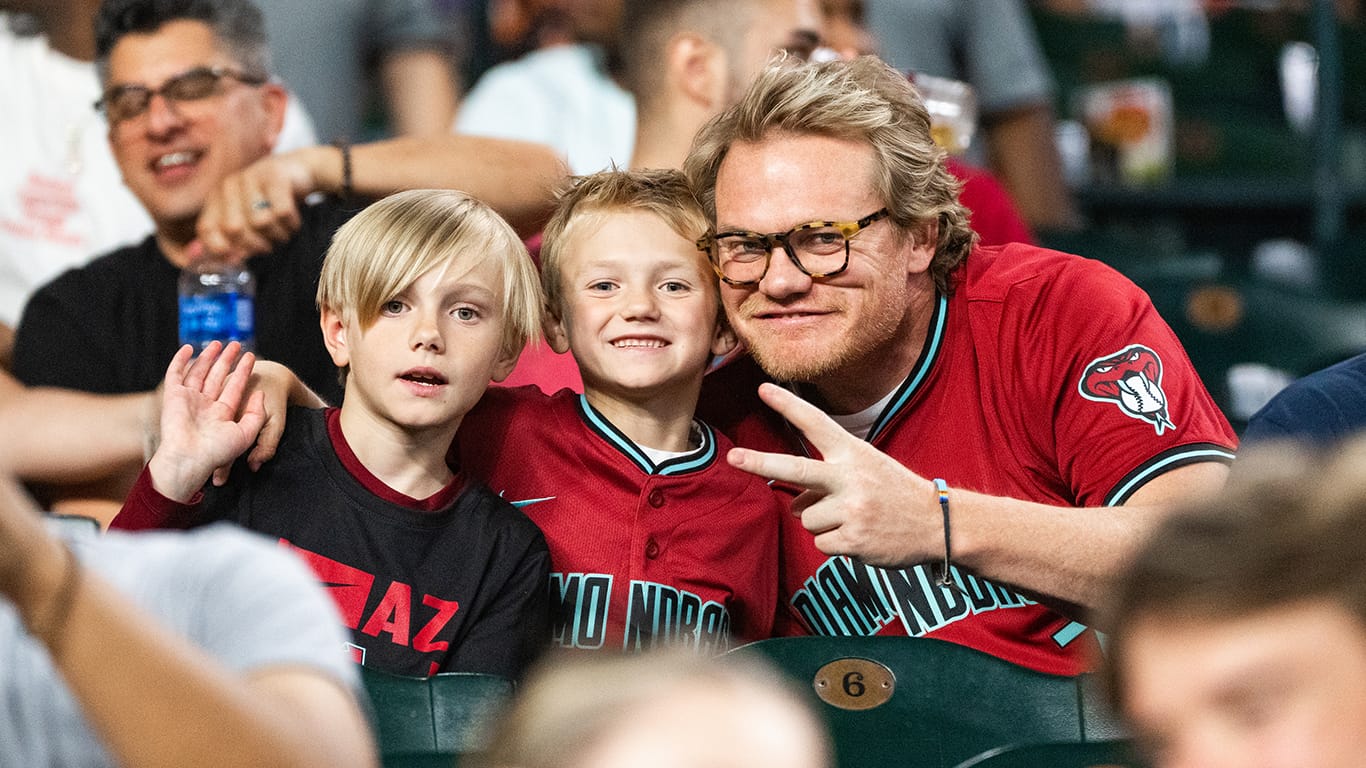
Chase Field has a reputation as one of the friendlier tickets in the Valley, especially next to what fans pay in Los Angeles or Boston. A new nationwide breakdown of what it actually costs a family to catch an MLB game backs that up. Turns out Chase Field isn’t the real story here. Average is.
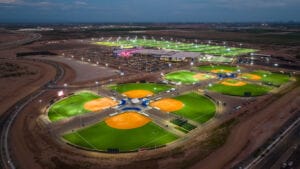
That timing lines up with a bigger number. A study from Arizona State University’s W.P. Carey School of Business found the 2025 Cactus League season generated an estimated $764 million in economic impact for the state, roughly half of it from visitors who fly in every February and March. Baseball isn’t a footnote in the Valley’s economy, whether that’s spring training out in Scottsdale and Goodyear or the regular season downtown at Chase Field.
Where Chase Field Lands Nationally
According to Rotowire, whose annual Fan Cost Index tracks ticket, parking and concession prices at every MLB stadium, a family of four at a Diamondbacks game this season pays $225.40 total: four tickets at the cheapest listed price, one parking pass, two beers, two sodas, four hot dogs. That’s good for tenth out of 30 teams, close enough to the $225.90 league average that Chase Field is basically the sport’s baseline experience. Not a bargain. Not a rip-off. Just average. Planning which series to catch? Check matchups and probable pitchers on Rotowire’s baseball cheatsheet before deciding whether a weekday game or a weekend set against a division rival is worth the drive downtown.
Break down where that $225.40 actually comes from and the mix is a little unusual. Tickets alone run $157.48 for four, above the $138.12 league average. Concessions swing the other way hard: two beers run just $10.26 combined and four hot dogs cost $12.28, both roughly half what the average MLB stadium charges. Chase Field makes its money back on seats. It gives it away at the concession stand.
The Numbers Behind the Average
For comparison, the Los Angeles Dodgers top the list at $413.16 for that same family of four, driven by ticket prices over $300 for four seats alone. Boston’s Fenway Park is next at $372.90. Wrigley Field and Guaranteed Rate Field tie for the priciest parking in the sport at $65 a car. On the other end, the Miami Marlins run the cheapest trip in baseball at $159.14. Two spots behind Arizona, the Yankees ($223.60) and Rays ($222.56) land within a few dollars of the Diamondbacks total, despite playing in two of the priciest media markets in the country. Arizona sits well clear of both extremes, closer to the sport’s median, which tracks with how the Diamondbacks have priced Chase Field against other AL West and NL West clubs in recent seasons.
Baseball’s Bigger Economic Picture in the Valley
The ballpark numbers back up something already showing up in the spring training figures. Cactus League attendance has grown four years running, reaching nearly 1.7 million fans in 2025, up more than 65,000 from the year before. Out-of-state visitors made up roughly six in ten of them across the league’s ten stadiums. Steady crowds in February and March, plus family-friendly pricing once the regular season starts: that’s two separate reasons for Arizona’s baseball economy to keep growing, not just one.
Catching a Game, On Season or Off
Timing matters here as much as price. The Cactus League has run every spring since 1947, when the Cleveland Indians and New York Giants first played exhibition games in the Valley. It now spans ten stadiums across Scottsdale, Goodyear, Peoria, Mesa and Surprise, hosting all 15 MLB teams that train in Arizona each year. The Diamondbacks’ regular home schedule at Chase Field picks up right after the Cactus League wraps. AZ Big Media’s own Play Ball guide covers both stretches of the calendar, from parking logistics to which stadiums draw the biggest spring crowds.
None of this makes spring training or a regular season night at Chase Field the deal of the year. It also doesn’t make either one a rip-off. At $225.40 for a family of four, Arizona baseball costs almost exactly what it should.