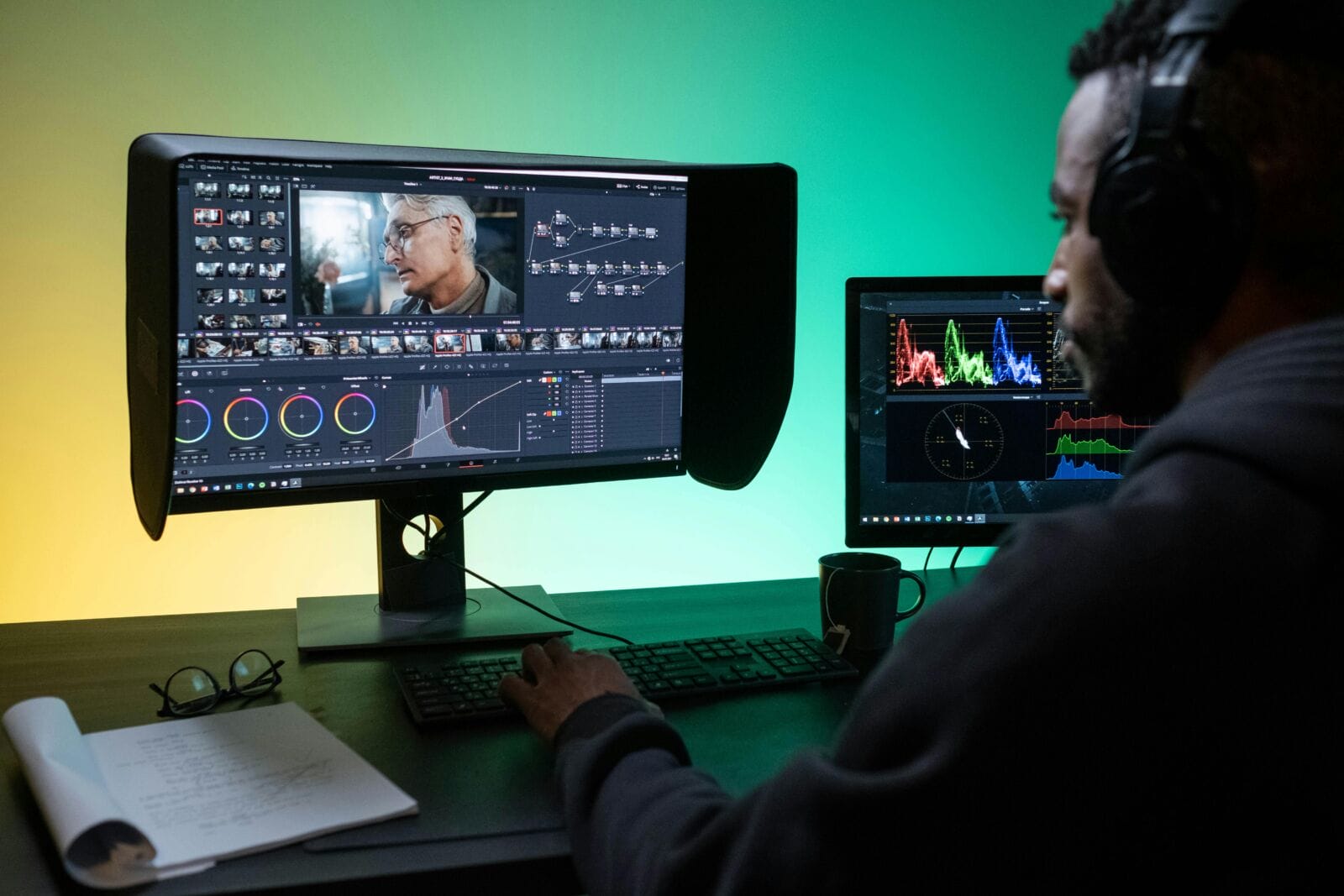
The Shift From Manual Editing to AI Video Creation Systems in 2026
The digital content industry is undergoing one of the biggest workflow transformations since the rise of cloud-based design software. In 2026, AI video creator platforms are rapidly replacing traditional editing processes across marketing agencies, SaaS companies, e-commerce brands, media publishers, and online education businesses.
For years, professional video production required:
- expensive editing software
- large creative teams
- long rendering pipelines
- manual animation work
- complex post-production
Today, AI automation is reshaping that entire ecosystem.
Modern AI video generator systems can now:
- convert text to video
- animate static images
- generate cinematic scenes
- automate transitions
- synchronize music
- create marketing content at scale
This shift is not simply about convenience. It is about operational scalability.
Companies producing:
- YouTube content
- product demonstrations
- social media campaigns
- onboarding tutorials
- event promotions
- educational videos
can no longer depend only on moderate manual workflows.
The development of frameworks like the Pale 2.5 Video Generator, Faded 2.6 Video Generator, Seedance 2.0 Video Generator, and test advances propelled by the Sora 2 Video Generator has quickened desires around AI-powered media creation.
At the centre of this move are stages such as VidpexAI, which combine numerous AI-era workflows into a single framework layer for adaptable content generation. For businesses looking for a free AI video generator from text, centralised AI environments are becoming progressively vital since they decrease fragmentation over creative pipelines.
The future of video generation is moving from software-centric alteration toward AI-driven content organisation.
Production Bottlenecks: Why Video Creation Still Limits Speed and Scalability in Digital Teams
In spite of gigantic changes in AI innovation, content generation remains one of the greatest bottlenecks for cutting-edge computerised operations.
DEEPER DIVE: Read all the Ranking Arizona Top 10 lists here
INDUSTRY INSIGHTS: Want more news like this? Get our free newsletter here
Slow Editing Cycles
Traditional video editing often requires:
- scripting
- asset preparation
- motion graphics
- scene editing
- color grading
- audio synchronization
Indeed, limited-time campaigns can take days or weeks to complete.
For fast-moving SaaS groups and promoting divisions, this generation delay results in operational inefficiency.
High Production Costs
Professional video production remains expensive due to:
- editing software subscriptions
- creative staffing costs
- rendering infrastructure
- stock media licensing
- outsourcing expenses
Little businesses and new businesses frequently battle to keep up reliable video yield since conventional workflows do not scale financially.
Scaling Challenges Across Platforms
Modern brands now publish content across:
- YouTube
- TikTok
- X
- product landing pages
- email campaigns
Each format requires:
- different aspect ratios
- platform-specific pacing
- unique visual structures
Scaling manual production across all these channels becomes extremely resource-intensive.
Demand for Faster Iteration
Modern marketing increasingly depends on:
- rapid testing
- iterative campaigns
- personalized content
- high-frequency publishing
AI systems are becoming essential because they dramatically reduce iteration time.
Instead of spending days editing variations manually, businesses can now use AI video maker systems to generate multiple versions rapidly.
Current Limitations of AI Video Tools in Real Production Environments
Although the AI video market is expanding rapidly, current platforms still face several important limitations.
Inconsistent Output Quality
One of the biggest issues across many free online AI video generator platforms is inconsistency.
Common problems include:
- unstable motion
- object distortion
- lighting inconsistencies
- scene flickering
- unrealistic facial animation
While demos often look impressive, real-world outputs can vary significantly depending on prompt complexity.
Weak Branding Control
Many AI systems prioritise automation but sacrifice brand precision.
Businesses often require:
- exact logo placement
- controlled typography
- consistent visual identity
- approved color systems
Current AI platforms still struggle with detailed brand governance across long-form video generation.
Limited Multi-Scene Storytelling
Many entry-level AI systems excel at short clips but struggle with:
- long narrative sequences
- scene continuity
- multi-character interaction
- advanced cinematic structure
This limits their usefulness for more sophisticated storytelling projects.
Fragmented Workflows
Most creators still rely on multiple disconnected tools for:
- script writing
- image generation
- animation
- editing
- audio production
- rendering
This fragmentation slows down productivity.
The next generation of AI platforms aims to solve this problem by centralising production infrastructure.
VidpexAI as a Multi-Layer AI Video Infrastructure for Text, Image, and Automated Content Generation
Among rising AI stages, VidpexAI stands out since it works less like a single-purpose instrument and more like an coordinates generation biological system.
Rather than focusing solely on one workflow, VidpexAI combines:
- AI text to video
- AI image to video
- avatar generation
- visual automation
- multi-format content processing
within a unified creative environment.
Multi-Format Input Support
One major advantage of VidpexAI is its support for:
- text prompts
- PDFs
- Word documents
- PowerPoint presentations
- spreadsheets
- images
This allows businesses to convert existing materials directly into visual content pipelines.
For example:
- Training documents can become animated tutorials
- Slide decks can become promotional videos
- Product images can become cinematic advertisements
This dramatically improves workflow efficiency.
AI-Powered Automation Layer
VidpexAI automates several production stages simultaneously:
- scene generation
- motion effects
- transitions
- visual pacing
- rendering optimization
Instead of relying on multiple tools, teams can streamline production within one system.
This infrastructure-focused approach is especially valuable for SaaS companies managing large-scale content operations.
Better Balance Between Control and Automation
Many AI systems either:
- maximise automation but reduce customisation
or - offer professional control, but become technically overwhelming
VidpexAI balances both approaches by offering:
- beginner-friendly workflows
- scalable production systems
- cinematic customization
- flexible visual styles
This makes it suitable for:
- marketers
- agencies
- startups
- educators
- creators
- enterprise teams
How Different Platforms Perform in Real SaaS Use Cases: Speed, Control, and Production Scalability
The AI video ecosystem in 2026 includes several major platforms competing across different priorities.
Runway
Runway remains one of the strongest cinematic AI production systems available.
Strengths
- advanced editing features
- strong cinematic realism
- professional workflow tools
Weaknesses
- A higher learning curve
- expensive scaling
- slower onboarding for non-editors
Runway performs best for advanced production teams.
Seedance 2.0 Video Generator
Seedance 2.0 focuses heavily on fast visual generation and stylised cinematic outputs.
Strengths
- dynamic motion
- visually aggressive style
- strong social content generation
Weaknesses
- inconsistent scene logic
- weaker long-form continuity
It works well for short-form campaigns and experimental content.
Wan 2.5 Video Generator and Wan 2.6 Video Generator
Wan systems emphasise realism and scene stability.
Strengths
- improved motion realism
- stronger object permanence
- smoother transitions
Weaknesses
- higher computational requirements
- slower rendering pipelines
These systems excel in cinematic storytelling and realistic visual generation.
Sora 2 Video Generator Concepts
Although still shaping the future market, systems inspired by the Sora 2 Video Generator represent the direction AI video technology is heading:
- longer coherent scenes
- cinematic environmental understanding
- advanced prompt interpretation
- realistic physics simulation
These technologies continue pushing industry expectations higher.
VidpexAI in Practical SaaS Workflows
What differentiates VidpexAI is operational practicality.
Instead of optimising exclusively for cinematic experimentation, the platform focuses on:
- workflow integration
- production scalability
- multi-format automation
- simplified AI deployment
For SaaS businesses producing:
- onboarding content
- explainer videos
- marketing assets
- product showcases
- educational content
This practical balance becomes extremely valuable.
Conclusion: AI Video Creator Platforms Are Becoming Core Infrastructure for Scalable Content Operations
The quick advancement of AI video innovation is, at a very basic level, changing how organisations make, oversee, and convey content.
Traditional altering workflows stay profitable for high-end cinematic generation, but they are no longer effective enough for the scale and speed present-day advanced operations require.
AI-powered frameworks presently permit businesses to:
- convert text to video
- automate image animation
- scale content production
- Reduce editing bottlenecks
- accelerate campaign deployment
Among the emerging platforms in this space, VidpexAI distinguishes itself by functioning not just as an AI video maker but as a broader production infrastructure layer capable of supporting scalable visual operations.
For organisations seeking:
- The best AI video generator
- AI-powered workflow automation
- scalable SaaS content systems
- practical AI video infrastructure
VidpexAI offers one of the most adjusted approaches available right now in 2026.
As AI innovation progresses, the stages that combine robotisation, adaptability, and operational proficiency will become a foundational framework for the next era of advanced media generation.