As rapid growth continues across Arizona, sometimes older structures must be torn down to make way for local expansion. But when an iconic building is slated for demolition, it can feel like losing a piece of Arizona’s architectural history. That’s why a community partnership has formed to utilize construction technology to relocate and reconstruct the Big Tin Cotton Gin.
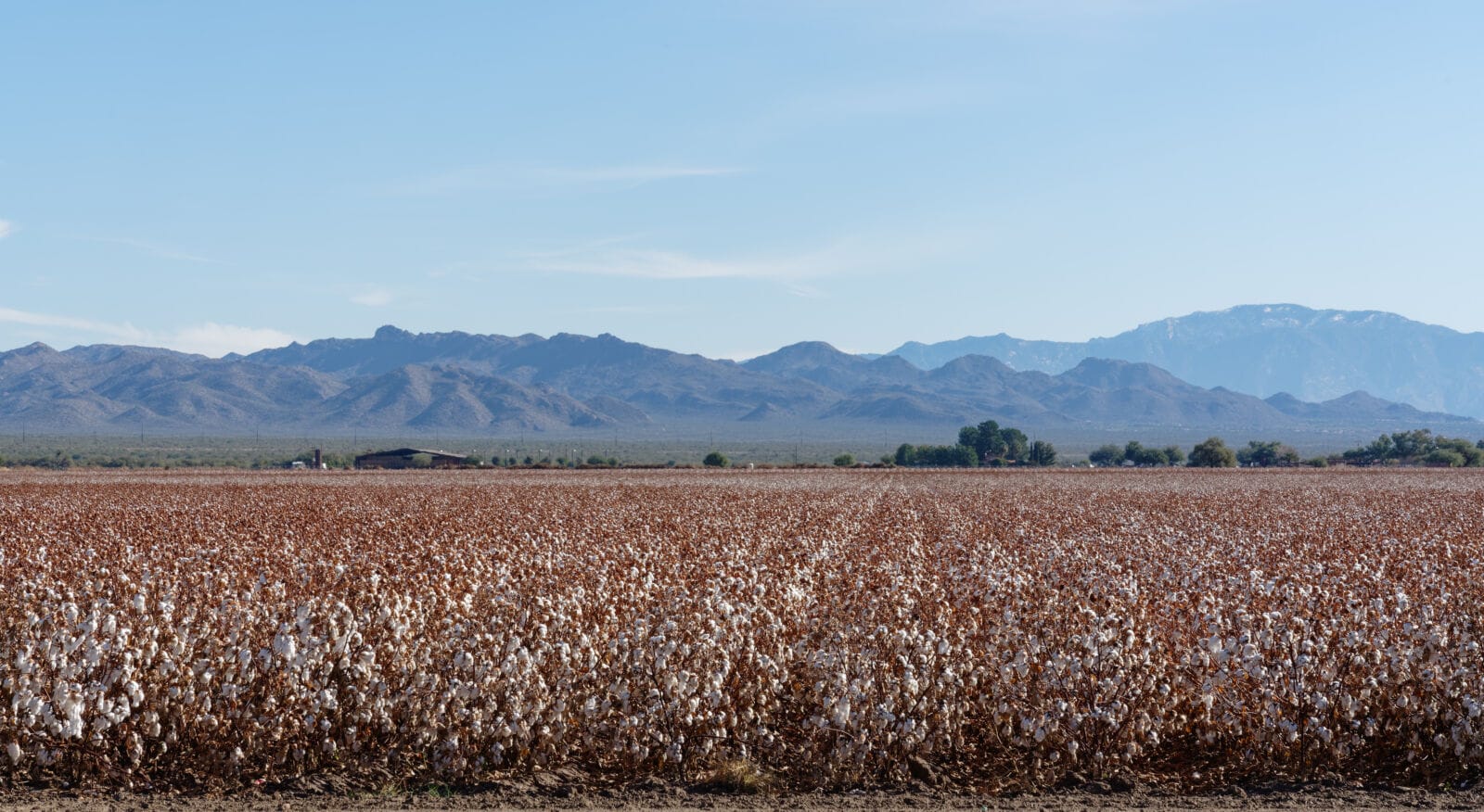
Originally built in the early 1950s, the Big Tin Cotton Gin was a mainstay of Queen Creek’s agricultural economy long before the municipality experienced its recent spurt of suburban growth. For decades, local farmers brought cotton there to be processed, including the Schnepf and Sossaman families.
As the Valley’s agricultural sector began to recede, the Big Tin Cotton Gin was converted into a wedding and event venue operated by MOSO Events. Recently, the land was sold, prompting Jim Ballentyne, the former operator of the Big Tin Cotton Gin, to find a way to preserve this Arizona landmark.
Ballentyne was at “square one” when a co-worker suggested that he would need to get the building scanned so he could produce a set of blueprints that would be acceptable to a town or a municipality for planning approval. He made a call for Ballentyne to Origin Design & Technology, who turned out to be the perfect partner for the cotton gin project.
DEEPER DIVE: How Silicon Desert is powering Phoenix industrial surge
READ MORE: Phoenix industrial market ranks No. 7 in nation
The long-term goal is to relocate and reconstruct the gin, potentially in the new Town of San Tan Valley, where municipal leaders are interested in preserving agricultural identity while developing a new downtown district.
He says his effort is about more than saving a building — it’s about keeping Arizona’s cultural heritage alive.
“Nobody cares about history or architecture anymore, but it’s the story of how you got here — it’s what your grandpa did, and your great-grandpa did,” Ballentyne says. “I feel it’s my duty … to save a little bit of history in a world where we are really good at bulldozing things into the dirt.”
Digital lifeline
Origin Design & Technology, an Arizona-based construction technology company, is using LiDAR scanning and 3D modeling to digitally preserve the massive agricultural structure before it is dismantled and relocated. The project combines historic preservation with advanced construction technology, allowing engineers and developers to recreate the building with remarkable precision.
Kyle Taylor, managing partner of Origin Design & Technology, explained that the company uses a terrestrial LiDAR scanner called the Leica RTC 360, which is mounted on a tripod and captures millions of highly accurate data points throughout the structure.
“We did a 3D scan of the entire interior and exterior of the building,” he says. “We’ll more or less be able to have the building in a virtual world without ever having to go back out to the building.”
The digital model allows engineers to identify beam sizes, bolt locations and structural materials with extreme accuracy before the building is deconstructed. The plans are not just for the future building process but also help to facilitate deconstruction.
One of the biggest remaining challenges is ensuring the reconstructed building meets modern engineering and municipal code requirements. Because the project team still does not know the final relocation site, engineers cannot yet determine exactly what modifications may be required.
“We’re kind of holding our breath until whenever that day comes where they say, ‘Okay, here’s the standards you need to meet,’” Taylor says.
Still, the digital model provides flexibility. Engineers can test structural changes virtually before construction begins. The blueprints can also be edited based on the requirements of whatever town or municipality it will be built in, which is a possibility with this project.
“We’ll be able to make those modifications to the model and the drawings to do whatever we need to do,” he says.
The team hopes to preserve as much of the original appearance and character of the gin as possible during reconstruction.
“You don’t want to have to make so many modifications to the building where it no longer is recognizable,” Taylor says.
As the project has gained visibility online and throughout the construction industry, more contractors and community members have offered support to Ballantyne for his effort to preserve the gin.
Taylor says the project has become more than a job for him, but a way to be involved in preserving the structure that many people care about locally.
“It’s crazy how many people I’ve met recently who know about the project,” he says.
Ballentyne says multiple construction companies have already volunteered equipment and labor to assist with the dismantling process once demolition begins.
“We’ve got a lot of really sharp, kind people who are willing to spend some time and effort trying to get this building saved,” he concludes. “The passion of the project becomes contagious when you get out there and you see it.”