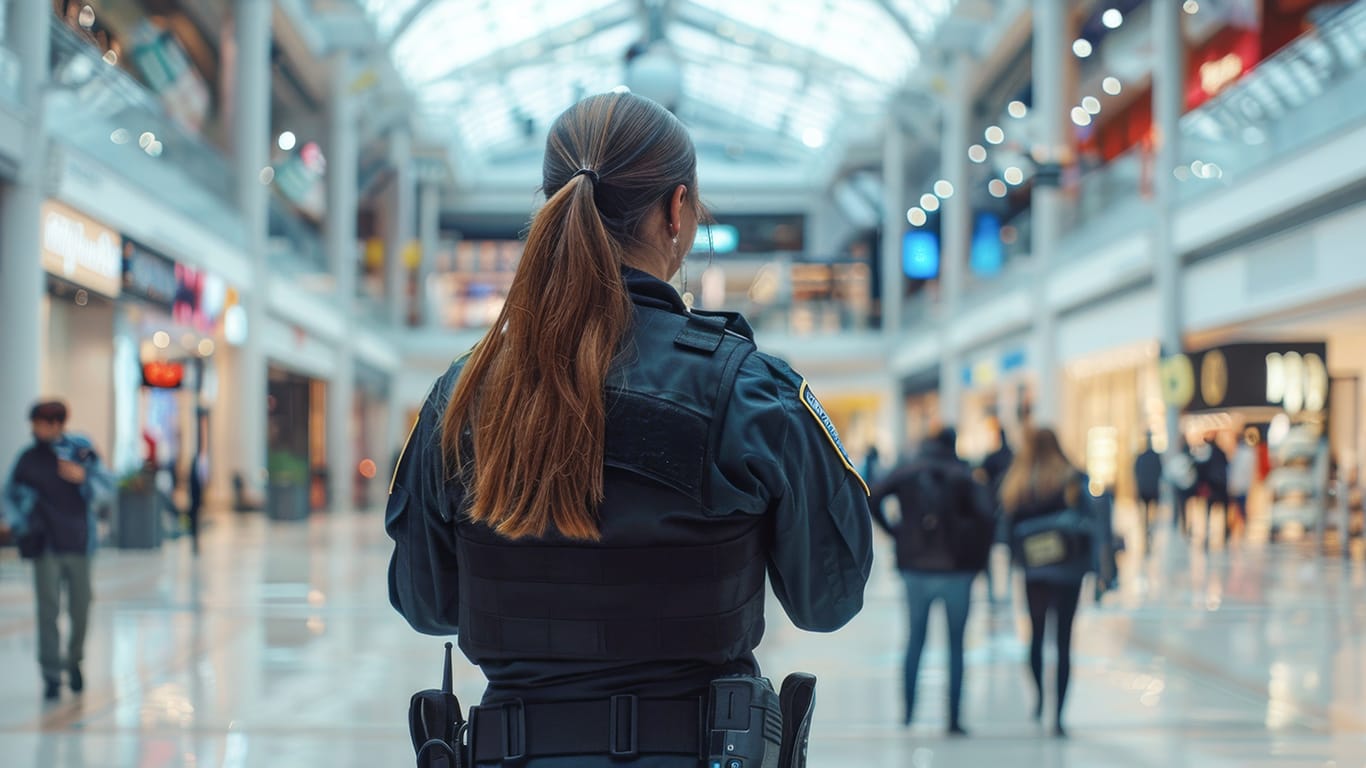
Security for customers, employees, and property should be a top priority for Phoenix retail shop owners. A strong security plan deters shoplifters, improves communication, and creates a safer shopping experience. However, building an effective security plan can be challenging without the right security team. Here are a few tips to help Valley retail shop owners create a security plan that keeps customers, staff, and property safe.
Hire the right team
Far too often, retail shops hire too few security guards or none at all. For most small to mid-sized retailers, a lack of security is a mistake. Physical security is the best deterrent to shoplifting. Retail shops should have security personnel at the front entrance at a minimum. Even small retail shops should have at least one security guard on duty.
Larger retail shops should have multiple guards on duty during each shift. Deploy them strategically throughout the store. Ideally, you should have both plainclothes and uniformed security guards in the shop. Station uniformed guards at entrances and exits to remind people not to steal from your shop. Plainclothes guards should walk around the store to spot shoplifters while avoiding making customers feel like there is too much security.
Uniformed security is more important, so if you are on a budget, hire uniformed guards first. It is more important to have guards at your shop’s entrances and exits than to have plainclothes guards roaming the floor. Most shoplifting attempts will be caught at the front of the store. Remember, the main purpose of retail security is to deter theft, not to serve as law enforcement and stop thieves.
Proper engagement is everything
Customer and staff safety is the primary purpose of a security plan. This means security guards know how to engage with shoplifters and aggressive individuals in a way that prioritizes human safety over property. Retail security guards should be unarmed because their main job is to observe and report theft to law enforcement.
Retail security guards should inform a shoplifter when they see them stealing and tell them to put the item back. Verbal engagement should be firm but non-aggressive. If the shoplifter refuses to put the item back, security should report them to the police. Unarmed security must never physically engage with a shoplifter. Unarmed guards have fewer means to defend themselves. Physical aggression increases the likelihood that your staff and customers will be hurt. This is especially true if the shoplifter is armed.
Security should report shoplifting. It is not worth putting everyone at risk over property that law enforcement can easily return.
Security cameras are essential
Security camera placement is the most effective tool retailers have for identifying shoplifters and providing law enforcement with proof of the crime. Security footage is likely the only physical evidence you have that a crime occurred. That is why it is essential to have the right number of security cameras and a strategic placement plan.
Install security cameras at every entrance and exit, in aisles, on the sales floor, at the cash register, at the loading dock, and in the parking lot. Place cameras in areas where it’s difficult for a person or employee to steal from your store. A trusted employee or security guard should monitor the cameras.
Jason Fischbeck, owner of Automated Environments, a building automation company in Mesa, said that retail shop owners have a few options when it comes to security cameras.
“Digital and analog cameras are both good options, but I would personally go with digital security cameras,” Fischbeck said. “Digital cameras let you store recordings in the cloud, and retail shops usually need that because they keep a lot of recorded footage.”
If you want to save money, analog cameras are the more cost-effective choice.
Use two-way radios
All retail security and employees should use two-way radios. They are the most effective tool for emergency communication because you only have to push a button to start speaking.
Stewart McClintic, Owner of two-way radio retailer HQ98.com, said it is better to use two-way radios to communicate in an emergency than your shop’s PA system.
“Using a PA system during an incident can make customers feel extremely uncomfortable. No one wants to hear that someone is trying to steal from your store,” McClintic said. “Discretion is key when these situations arise. Two-way radios have private channels and earpieces so you don’t have to scare customers when dealing with an emergency.”
PA systems are great for helping lost kids find their parents, but they aren’t great for calmly communicating an emergency.
Retailers can use digital or analog radios, but they should have at least two communication channels. Analog radios cost less, but they introduce a delay between communications. Digital radios are better for creating private communication channels. Give every team member an earpiece so everyone can have private, hands-free conversations.
The right security team and plan are essential to the safety of your staff and customers. The right team keeps people safe and deters theft at your retail shop. Hire the right team, create a strong security plan, and get the right equipment. This will help keep customers, staff, and property safe.
Author: Frank Sheldone is the Founder and President of Armor Protection Group, a private security company in Phoenix, Arizona. The security firm specializes in helping retail shop owners protect their customers and property from vandalism and theft.