With thousands of crashes happening across Metro Phoenix every week, it’s easy to forget how risky the Valley’s routes have become and overlook the most dangerous intersections in Phoenix.
But the data doesn’t lie. Several Valley intersections appear repeatedly in regional crash reports, and attorneys who handle these cases daily say the patterns are unmistakable.
“Intersections are one of the most dangerous places on any roadway,” said Phillips Law Group attorney Joel Fugate.
“You’re bringing together multiple decision points at once. People are accelerating, braking, turning, watching signals, reacting to pedestrians, reacting to each other. Everyone’s trying to get where they’re going, and they’re all meeting at the same point.”
Phoenix’s wide grid system, designed for cars rather than pedestrians, only amplifies the problem. High speeds, multiple turn lanes and heavy traffic create a perfect storm.
“When I look at the list of the most dangerous intersections, I think, ‘Yep, I’ve had a case there, and there, and there,’” Fugate said.
“They all have something in common. Heavy traffic. Congestion. Multiple turn lanes. Drivers making rushed decisions. Most of these crashes are preventable.”
READ ALSO: 7 Arizona cities rank among Top 100 worst commutes in U.S.
DEEPER DIVE: Arizona races to reskill workforce before wave of 700,000 new jobs hits
The most dangerous intersections in Phoenix
Among the intersections that consistently rank as the worst:
27th Avenue and Camelback Road, part of the city’s High Injury Network, where distracted driving and failure to yield collide with nonstop traffic.
67th Avenue and Indian School Road, where red‑light running and high pedestrian activity near schools create a constant risk.
19th Avenue and Peoria Avenue, where multiple turning lanes lead to last‑second lane changes and sideswipes.
67th Avenue and McDowell Road, a hotspot for severe T‑bone crashes from drivers trying to “beat the light.”
Lower Buckeye Road and 99th Avenue, where commercial trucks and commuters mix. “There have been over 400 collisions there in four years,” he said. “That’s like two accidents a week at the same intersection.”
One of the biggest culprits, he said, is the everyday Phoenix left turn — the one every Valley driver knows too well. You pull into the intersection on green, wait for a gap, and hope oncoming traffic stops when the light turns yellow.
“People commit to the intersection and assume everyone else is going to do the right thing,” he said.
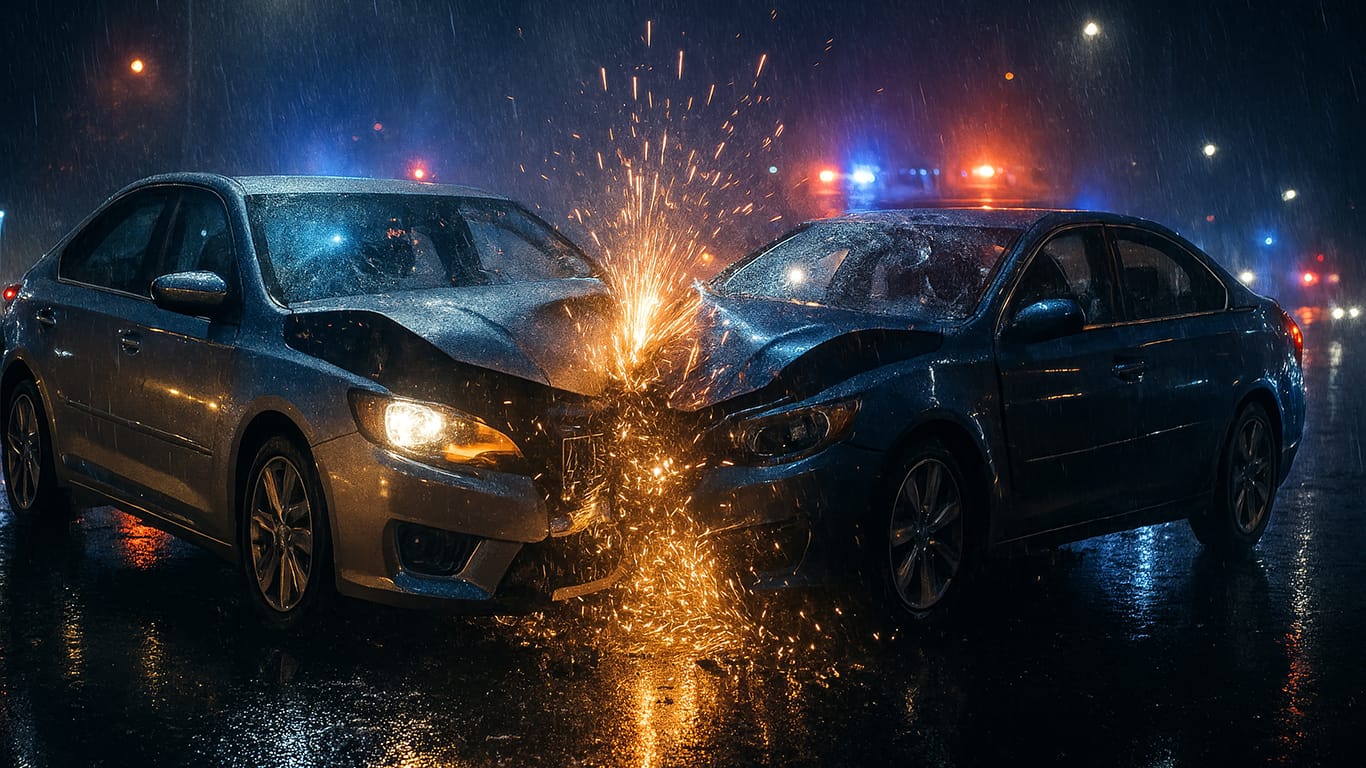
“They see the light turning yellow and think oncoming traffic will stop. But if someone coming through is trying to beat the light, you’ve got a collision. Then you get into fights about who ran the red, who failed to yield, and who’s more at fault. If these things were black and white, I wouldn’t have a job.”
Arizona’s pure comparative fault system complicates things further. “You can be 99% at fault and still recover 1% of your damages,” he said. “It’s fair, but it means every detail matters.”
And then there’s the issue no one wants to admit: distraction.
“It is amazing to me driving around Arizona,” he said. “You just see people staring down at their phones. That is the cause of an outrageous number of accidents. People die because someone is trying to respond to a text that says, ‘What’s up?’ It’s terrible.”
When crashes do happen, he said, the steps afterward matter more than people realize. Call the police. Document everything. Photograph the scene. Get witness names before they disappear. Seek medical care immediately, even if you feel fine.
“Adrenaline masks pain,” he said. “Most clients tell me they feel the worst two days after. Something that seems minor can turn serious quickly.”
And whatever you do, don’t talk to the other driver’s insurance company.
“They’ll call the next day and sound friendly,” he said. “They’ll say, ‘We’ll cover up to $10,000 in medical bills, just sign this.’ People sign it, then find out they need surgery. And the insurance company says, ‘Sorry, we capped it at $10,000.’ They are not your friends.”
Even the government isn’t always off the hook. With intersections like Lower Buckeye and 99th showing staggering crash numbers, he said municipalities can face liability if they’ve been put on notice that a location is dangerous.
“They’re constantly trying to fix these things,” he said. “But when their own studies say, ‘These are the most dangerous intersections,’ they’re basically acknowledging something needs to change.”
Still, he said he believes the biggest safety improvement starts with drivers themselves.
“Coming up on any green light, treat it like someone might run the red going the other way,” he said. “Look. Pay attention. Don’t zombie out. Don’t be on your phone. Defensive driving isn’t just something they tell teenagers. It’s the truth.”
He paused, then added the line that sums up Phoenix driving better than any statistic.
“At an intersection, every single person is making a decision at the same time,” he said. “If even one of them makes the wrong one, everybody pays for it.”