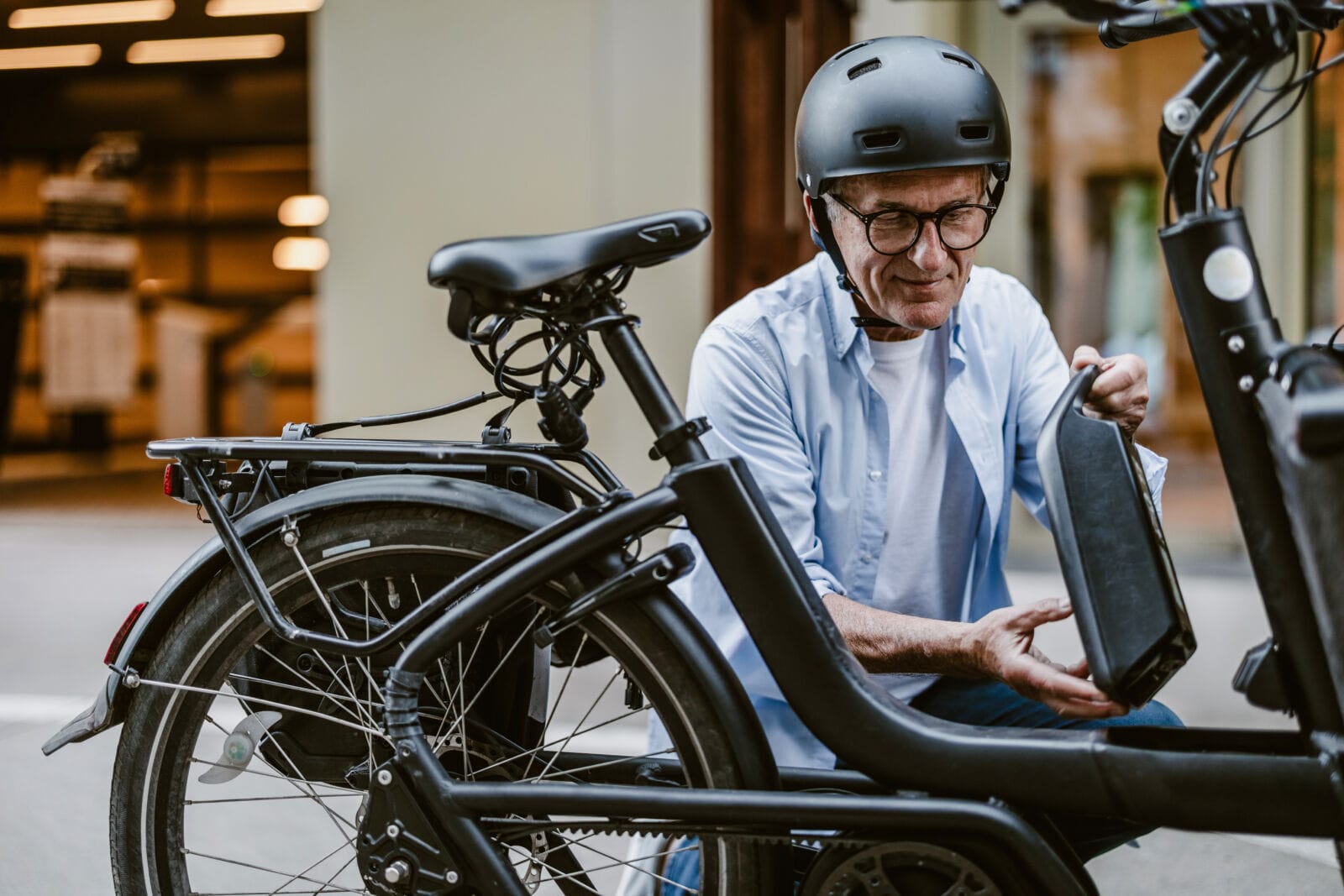
The lithium-ion battery is one of the most expensive components on an ebike, and its condition has a direct impact on range, performance, and long-term ownership costs. Unfortunately, many riders unintentionally shorten battery life by charging to 100% after every short ride, repeatedly running the battery nearly empty, storing it in a hot garage, or leaving it fully charged for weeks.
Can you literally double the lifespan of every e-bike battery? There is no universal guarantee because battery chemistry, cell quality, riding conditions, charging rate, temperature, and usage patterns all matter. However, research consistently shows that controlling state of charge, depth of discharge, and temperature can substantially slow lithium-ion battery degradation. Tests on lithium-ion cells have found that shallow cycling causes significantly less degradation than repeated full-depth cycling, while newer research also shows considerably greater degradation when batteries spend their cycles at high states of charge.
If you want your battery to remain useful for as many years as possible, the following habits matter most.
1. Use the 20–80% Rule for Everyday Riding
One of the simplest ways to reduce battery stress is to avoid spending unnecessary time at the extremes of the battery’s charge range.
For normal daily rides, a practical target is:
Recharge around 20–30% and stop around 80–90%.
You do not have to follow those numbers perfectly. Think of them as a useful operating range rather than a strict rule.
Lithium-ion batteries experience greater chemical stress at high states of charge. Laboratory research comparing different charge windows has found substantially greater degradation when batteries repeatedly operate near the upper end of their capacity. Likewise, shallower discharge cycles can produce less degradation than repeated 0–100% cycles.
That doesn’t mean you should never charge your ebike to 100%. If you’re preparing for a long ride and need maximum range, charge it fully and ride normally. The bigger issue is leaving a battery sitting at 100% for long periods when the extra range isn’t needed.
A good routine might look like this:
- Short daily ride: charge to approximately 80–90%.
- Long weekend ride: charge to 100% shortly before departure.
- Recharge before the battery becomes deeply discharged.
- Don’t deliberately run the battery to 0% to “condition” it.
Unlike older nickel-based batteries, modern lithium-ion batteries do not need regular full discharge cycles to avoid a memory effect.
2. Avoid Regularly Draining the Battery to Zero
Seeing “0%” on the display once isn’t necessarily a disaster because battery-management systems normally maintain protective limits. But repeatedly running an e-bike until assistance shuts off isn’t an ideal battery-care strategy.
More importantly, don’t leave a depleted battery sitting for weeks or months.
Even while stored, batteries gradually lose charge. If an already depleted pack continues self-discharging, individual cell voltages can eventually become too low for normal operation.
Bosch specifically advises riders to avoid regularly draining an e-bike battery to zero.
If your ride ends with only 10–20% remaining, recharge the battery reasonably soon instead of putting the bike away empty.
3. Heat Is One of Your Battery’s Biggest Enemies
Charge percentage gets a lot of attention, but temperature can be just as important.
High temperature accelerates the chemical reactions responsible for lithium-ion battery aging. Research examining lithium-ion degradation has identified elevated temperature—particularly when combined with high state of charge—as an important accelerator of capacity loss.
Bosch similarly identifies storage above 30°C (86°F) and direct sunlight as conditions that shorten battery service life.
That makes several everyday situations worth avoiding:
Don’t leave your battery in a hot car.
A closed vehicle can become much hotter than the outside air.
Don’t park your ebike in direct summer sunlight for hours if shade is available.
Avoid long-term storage in extremely hot garages, sheds, or attics.
If your e-bike has a removable battery, taking it into a temperature-controlled indoor environment can be one of the easiest ways to protect it.
4. Let a Hot Battery Cool Before Charging
After a long climb, high-power ride, or extended use on a hot day, the battery may be warmer than the surrounding air.
Instead of immediately connecting the charger, allow the battery to return toward normal room temperature first. Depending on the conditions, waiting approximately 30–60 minutes can be sensible.
Himiway’s battery-care guidance similarly recommends allowing a hot battery to cool before charging.
The principle is simple: lithium-ion batteries generally age more slowly when unnecessary heat exposure is minimized.
5. Be Especially Careful When Charging in Winter
Cold weather creates a different problem.
Temporary range reduction in cold conditions is normal because battery resistance increases as temperature falls. Bosch notes that battery performance and normal riding range can decrease in winter.
Charging a very cold lithium-ion battery, however, is more problematic.
For example, Bosch battery systems permit charging within a defined temperature range of 0°C to 40°C (32°F to 104°F), and Shimano documentation specifies the same charging range for the referenced STEPS system. Always follow the limits specified by your particular battery manufacturer.
If you’ve been riding in freezing conditions, bring a removable battery indoors and let it warm naturally before charging.
Do not try to accelerate the process by putting the battery beside a heater.
6. Store Your Battery at Partial Charge
Daily charging and long-term storage require different strategies.
If you aren’t going to ride for several weeks or months, don’t put the battery away completely full or nearly empty.
A good general target is approximately:
30–60% charge for long-term storage.
Bosch specifically recommends storing its e-bike batteries at a 30–60% state of charge during longer periods of inactivity. It also recommends a dry, room-temperature environment.
Himiway’s current guidance similarly recommends partial charge for long-term storage, with its FAQ suggesting 50–80% for periods longer than two weeks.
Because recommendations vary somewhat among manufacturers, your battery’s official manual should take priority.
For winter or seasonal storage, periodically check the charge indicator rather than forgetting about the battery for six months. If the level has fallen unusually low, recharge it into the manufacturer’s recommended storage range.
7. Always Use the Correct Charger
Saving money with a generic charger is not worth risking an expensive lithium-ion battery—or your home.
The U.S. Consumer Product Safety Commission warns against so-called universal micromobility chargers unless they have been tested and approved for the specific device. A connector that physically fits does not necessarily mean the charger’s voltage, current, and charging characteristics are compatible with the battery.
Use the charger supplied by the manufacturer or a replacement specifically approved for your battery.
Himiway likewise tells owners to use the official Himiway charger.
8. Don’t Charge While You’re Sleeping
Modern battery-management systems and chargers include safeguards, but lithium-ion battery charging still deserves basic precautions.
The CPSC recommends that owners remain present while charging micromobility devices, never charge them while sleeping, follow the manufacturer’s instructions, and unplug the charger when charging is finished.
This is primarily a fire-safety practice, rather than a claim that every minute connected after reaching full charge destroys battery capacity.
Charge in a dry area away from combustible materials, don’t cover the charger, and don’t use a battery or charger that appears damaged.
9. Reduce Unnecessary High-Power Battery Stress
You bought an electric bike to use its motor, so there is no reason to avoid higher assist levels whenever you actually need them. But riding efficiently can reduce unnecessary battery demand.
For example, rather than using maximum assistance for every acceleration, try accelerating progressively and contributing some pedal power. Select an appropriate gear before climbing hills instead of forcing the motor to do all the work from a very low speed.
Proper tire pressure also matters. Underinflated tires increase rolling resistance, forcing the motor and battery to consume more energy for the same distance.
Bosch notes that appropriate shifting, smoother starts, cadence, tire pressure, temperature, and total load all affect e-bike range.
Less energy consumed per mile generally means fewer equivalent full battery cycles over the same riding distance.
10. Start With a Quality Battery System
Good battery habits help, but battery construction also matters.
A useful example for riders looking for a versatile long-range ebike is the Himiway D5 2.0 20″. Its compact 20-inch platform uses a 48V 15Ah lithium-ion battery with Samsung/LG 21700 cells, paired with a 48V 3.0A charger. Himiway rates the battery at IPX6 and advertises up to 70 miles of pedal-assist range and up to 40 miles using the throttle, although actual range will vary with rider weight, terrain, weather, tire pressure, speed, and assist level.
The D5 2.0 20″ also combines a 750W motor producing a stated 90 Nm of torque with switchable torque/cadence sensing, 20 × 4.0-inch tires, and full suspension. Its rider-fit range is listed as 4’11” to 6’3″.
For owners of a bike like the D5 2.0 20″, the same battery-care principles apply: avoid unnecessary deep discharge, don’t leave the battery fully charged for extended storage, protect it from extreme temperatures, and use the manufacturer-approved charger.
And if you’re comparing models during a black friday ebike promotion, don’t evaluate a bike only by its discount. Battery capacity, cell quality, replacement-battery availability, charger compatibility, range, and manufacturer support can have a much larger impact on long-term ownership value.
11. Watch for Signs of Battery Damage
Battery lifespan isn’t only about capacity. Safety always comes first.
Stop using or charging a battery if you notice signs such as:
- Significant swelling or deformation
- Cracks or serious impact damage
- Melted or burned connectors
- Unusual chemical odors
- Smoke, hissing, or excessive heat
- Water intrusion or severe corrosion
- Repeated charging faults
Do not open the battery case or attempt to repair individual lithium-ion cells yourself.
The CPSC specifically advises against using battery packs that have been modified or rebuilt by unqualified personnel or assembled using repurposed cells.
A battery that has suffered a serious crash, water intrusion, or unusual overheating should be evaluated according to the manufacturer’s instructions.
A Simple Battery Routine to Remember
You don’t need to obsess over every percentage point to extend battery life.
For everyday riding, keep the battery roughly within the middle of its charge range when practical. Charging around 20–30% and stopping around 80–90% is a useful routine when you don’t need maximum range.
Charge to 100% when you actually need the extra distance.
Keep the battery cool and dry, especially during storage. Avoid leaving it in hot cars or direct sunlight.
For long periods without riding, store it partially charged, generally around 30–60%, or follow the specific range recommended by your battery manufacturer.
Use only the correct manufacturer-approved charger, and don’t charge while sleeping or away from home.
Most importantly, don’t sacrifice usability for perfect battery management. An ebike battery is meant to be used. The goal isn’t to protect it so carefully that you stop enjoying your bike; it’s simply to eliminate the habits that cause unnecessary chemical stress.