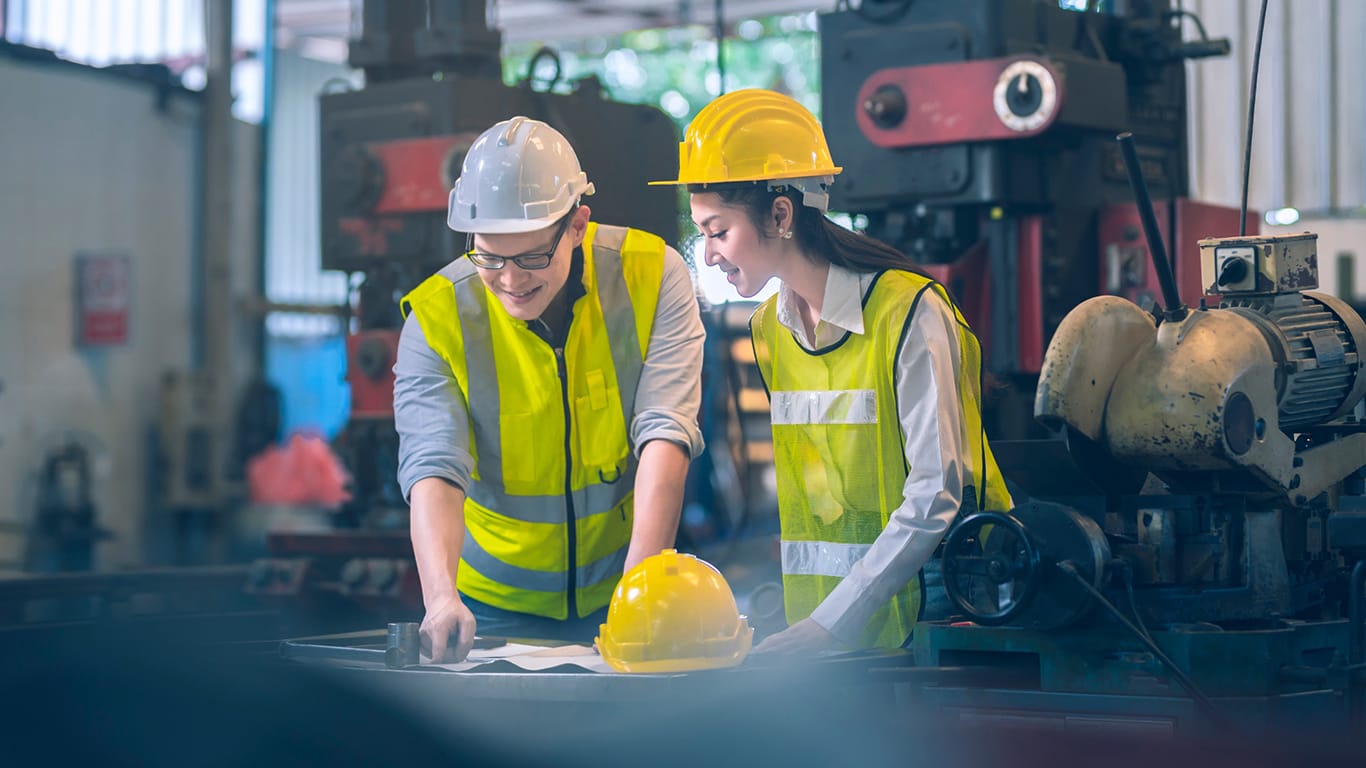
A machine shop owner in Tucson told me something last year that stuck with me. He said his grandfather ran a sheet metal shop with a shear, a brake press, and a skilled crew of six. His father ran the same shop with better equipment and a crew of four. He runs it now with a fiber laser cutting machine, a bending robot, and two people. Same output. Same customers. Completely different operation.
That compression of labor relative to output is happening across small manufacturing in the United States right now and laser cutting machines are one of the primary drivers of it. Not because the technology is new but because the price has finally dropped to a point where a small shop owner can do the math and see a clear payback.
The investment trend is real and accelerating. OMTech has seen consistent year-over-year growth in small business laser cutting machine adoption since 2022 and the pattern has not slowed in 2026.
What Is Driving the Investment Decision
Small manufacturers do not buy equipment on sentiment. They buy it when the numbers work. Three things have aligned in 2026 to make laser cutting machine investment more financially attractive than it has ever been for small operations.
Equipment Cost Has Fallen Significantly
A CO2 laser cutting machine capable of production-level output on acrylic and wood now starts around 2,500 to 4,000 dollars for a 60W to 80W enclosed system. Fiber laser cutting machines capable of sheet metal work start around 5,000 to 8,000 dollars for compact galvo systems. Five years ago, equipment at comparable capability levels cost two to three times as much.
The cost reduction has not come from a reduction in quality. It has come from manufacturing scale, improved component sourcing, and a mature competitive market. A small manufacturer buying a laser cutting machine in 2026 is getting more capability per dollar than any previous generation of small business buyer.
Outsourcing Costs Have Not Fallen
While equipment prices dropped, the cost of outsourcing laser cutting work has not followed the same trajectory. Contract laser cutting services charge based on their own equipment costs, labor rates, overhead, and margin. A small manufacturer spending 500 to 800 dollars per month on outside laser cutting is now looking at equipment that pays for itself in under a year.
That math did not work five years ago. It does now. And once a small manufacturer runs that calculation with real numbers from their own outsourcing invoices, the decision usually becomes straightforward.
Labor Market Conditions Favor Automation
Finding and retaining skilled manufacturing labor has become more difficult and more expensive across the United States. A laser cutting machine does not call in sick, does not require benefits, does not need training time when a new operator comes on, and produces consistent output at the end of a ten-hour shift that looks identical to the output from the beginning of it.
Small manufacturers who were reluctant to invest in automation when labor was cheaper and more available have recalculated that position as labor market conditions changed.
What Small Manufacturers Are Actually Cutting
Sheet Metal Fabrication
Fiber laser cutting machines have become the standard for small fabrication shops moving away from plasma cutting. The edge quality difference is visible immediately. Fiber laser cut stainless steel with nitrogen assist comes off the machine with a bright, clean edge that requires no secondary finishing in most applications. Plasma cut edges require grinding, filing, or deburring that adds labor time and cost to every part.
The material range has also expanded. Fiber laser cutting machines handle copper and brass cleanly, which used to cause back-reflection problems on older CO2 cutting systems. Electrical components, plumbing fittings, and decorative metalwork that previously required alternative cutting methods are now practical fiber laser applications.
Acrylic and Sign Production
CO2 laser cutting machines dominate sign shop production for good reason. Clear acrylic cuts with a polished edge that looks like it was flame-treated right off the machine. No post-processing. No secondary finishing. A sheet of 6mm cast acrylic becomes a finished dimensional letter in one operation.
The consistency matters as much as the quality. A sign shop producing fifty identical acrylic letters for a retail client needs those letters to look the same. Hand routing produces variation. CO2 laser cutting produces consistency that customers can trust for repeat orders.
Custom Parts and Prototypes
Small manufacturers offering prototyping services use laser cutting machines because they eliminate tooling costs. A new part design goes from digital file to physical prototype in minutes without creating molds, jigs, or fixtures. Design iterations that used to take days now take hours. Customers who need functional prototypes before committing to production runs are well served by shops with this capability.
Mixed Material Products
Products that combine laser-cut wood with laser-engraved metal components, or laser-cut acrylic with fiber-marked stainless hardware, require both CO2 and fiber laser capability. Small manufacturers who have invested in both technologies can serve product categories that single-technology shops cannot.
The Competitive Reality for US Small Manufacturers
There is a version of this conversation that focuses entirely on cost reduction and operational efficiency. That version misses something important.
Laser cutting machine adoption is not just about doing the same work cheaper. It is about being able to take on work that was previously impossible for a small operation. Custom parts in materials and quantities that did not pencil out before. Prototype services that required industrial equipment. Product personalization at scales that hand processes could never sustain.
The small manufacturers who have integrated laser cutting machines over the past three years are not just more efficient. They have different capabilities than competitors who have not made the same investment. They can say yes to jobs that others have to turn down. They can price competitively on work that requires significant outsourcing cost from non-adopting shops.
That capability gap widens over time. Each year of operation builds operator expertise, material knowledge, and customer relationships built around laser-specific capabilities. A shop starting that adoption process today is three years behind where it could be. Which is exactly the argument for starting now rather than waiting.
What to Evaluate Before Making the Investment
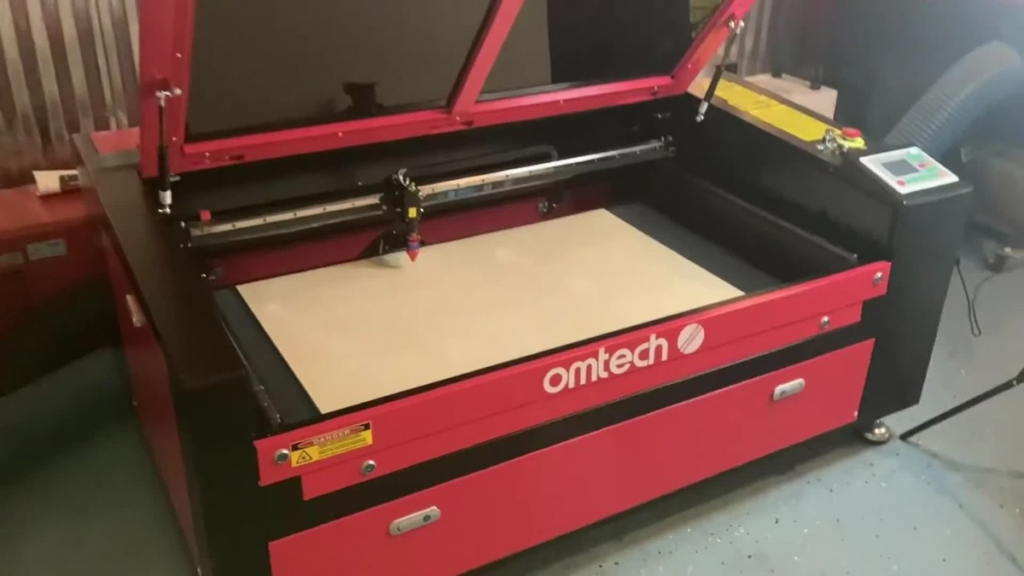
The laser cutting machine market in 2026 offers genuine options across a wide price and capability range. Fiber laser cutting machines for sheet metal work and CO2 systems for non-metal production serve different applications and the right choice depends on your specific material and production requirements.
- Primary material: Sheet metal and bare metals need fiber laser cutting machines. Wood, acrylic, leather, and fabric need CO2. Do not buy CO2 hoping it will handle your steel parts
- Production volume: Entry CO2 at 40W to 60W handles personal use and low-volume production. 80W to 130W CO2 covers most small business production needs. Fiber laser cutting systems from 1kW upward handle sheet metal fabrication at commercial speeds
- Work area size: Match the bed size to your most common sheet or panel dimensions. A machine that does not fit your standard material size forces repositioning that adds time and error to every job
- Full setup cost: Machine price plus ventilation at 150 to 500 dollars, water chiller for CO2 at 200 to 600 dollars, and assist gas infrastructure for fiber cutting. Budget the complete number
- Support and parts: Verify that the supplier stocks replacement lenses, nozzles, and other wear parts before buying. A machine down for parts is a production problem regardless of how good the original equipment is
Conclusion
The machine shop owner in Tucson is not running a nostalgia operation. He is running a more profitable business than his grandfather or his father did, with fewer people and better margins, because he made the investment in laser cutting technology when the math supported it.
That math now supports the same investment for a much wider range of small manufacturers than it did even three years ago. Equipment costs have fallen. Labor costs have risen. Outsourcing costs have held firm. The combination makes the case for laser cutting machine investment clearer than it has ever been.
The small manufacturers making this investment in 2026 are not taking a risk on new technology. They are catching up with a proven capability that larger competitors adopted years ago and that the market now expects from professional manufacturing operations.
About OMTech
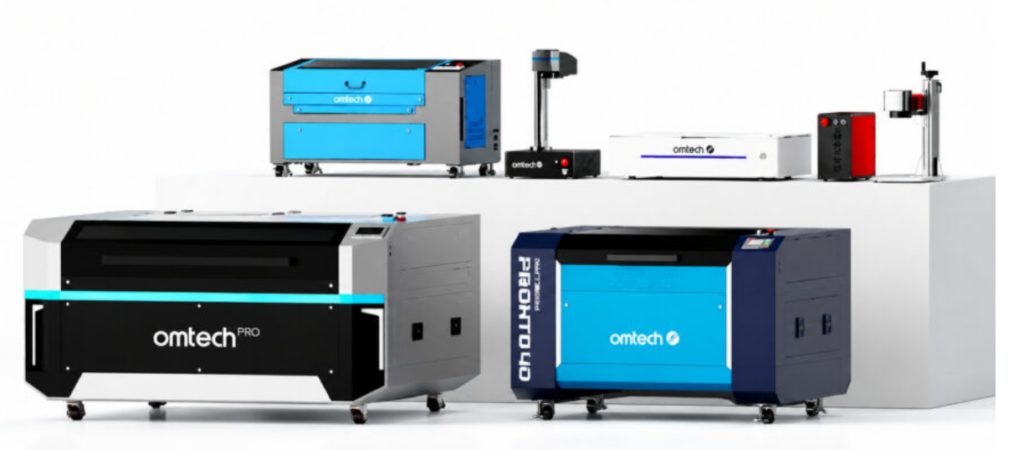
OMTech is a laser equipment company based in Anaheim, California. The company manufactures CO2 laser engravers and cutters, fiber laser cutting machines, and fiber laser marking systems for small businesses and production environments across the United States. Full product information is available at OMTech.
OMTech laser cutting systems are used by sign shops, sheet metal fabricators, acrylic product manufacturers, prototype shops, and mixed-material product businesses. The product line covers desktop CO2 systems through production-grade fiber laser cutters with US-based technical support.