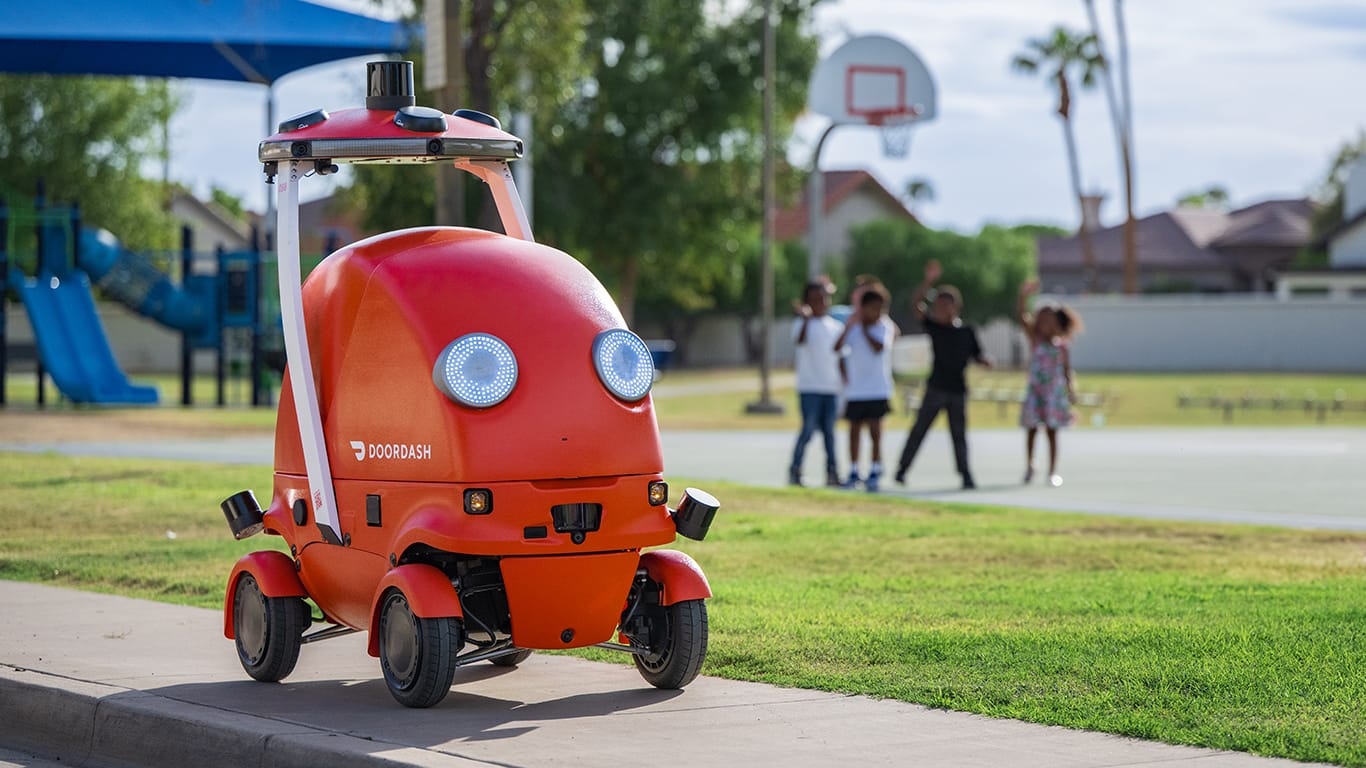
DoorDash’s little red food-delivery robots, Dot, cruise 3 to 6 miles per hour in East Valley bike lanes, sidewalks and neighborhood streets. The battery-powered devices are equipped with cameras, sensors, GPS and onboard computers that help them navigate.
Sometimes they misfire and cut into traffic lanes, roll through crosswalks, and weave around construction zones. Those incidents are dangerous for drivers and increase the possibility of crashes.
Olivia Lemorrocco, Phillips Law Group’s vice president of operations, said the devices are “short” and “hard to see.” That’s a recipe for a crash.
READ MORE: Phillips Law Group surpasses $2 billion in client recoveries
LOCAL NEWS: Want more stories like this? Get our free newsletter here
Arizona law classifies delivery robots like pedestrians. They’re allowed in bike lanes, on sidewalks, and on certain roads. But that rule doesn’t always match the robots’ behavior.
“Right now, we’re treating these robots like pedestrians,” Lemorrocco said. “But do they know what to do if there’s construction. Are they always following those rules?”
The law hasn’t caught up because the technology is so new. Arizona has no legal cases involving delivery robots. Nationally, there’s been only one — a Chicago case that settled privately, leaving no public guidance for future incidents.
“There’s a lot of gray area,” she said.
In the absence of legal precedent, determining responsibility after a crash is complicated.
Lemorrocco said several parties could be liable:
- The operating company, such as DoorDash, which deploys and manages the robots
- The manufacturer, if a mechanical or hardware failure contributed
- A remote human operator, because some robots are monitored or controlled by people
- The programmer: if a software glitch or coding flaw caused the incident.
Lemorrocco said sometimes it’s difficult to tell who’s at fault because “many different technologies and people are involved in making these robots work.”
She compared the situation to the early days of self‑driving cars, when lawmakers and insurers had little guidance until real‑world accidents forced the issue.
As the use of delivery robots increases, safety experts say awareness is essential. The robots can stop suddenly, reroute around obstacles, or misread construction zones. They’re easy to overlook.
Drivers involved in a robot crash should take steps similar to a vehicle incident, seek medical care if needed; take photos and videos of the scene, the robot and any damage; document the robot’s behavior, and report the incident.
“If you were to get in an accident with one of these robots, take pictures,” Lemorrocco said. “Take as many videos and photos as you can to really determine the liability. The big takeaway is to be aware,” Lemorrocco said. “This is all new for everybody. We just have to be hyper‑vigilant.”