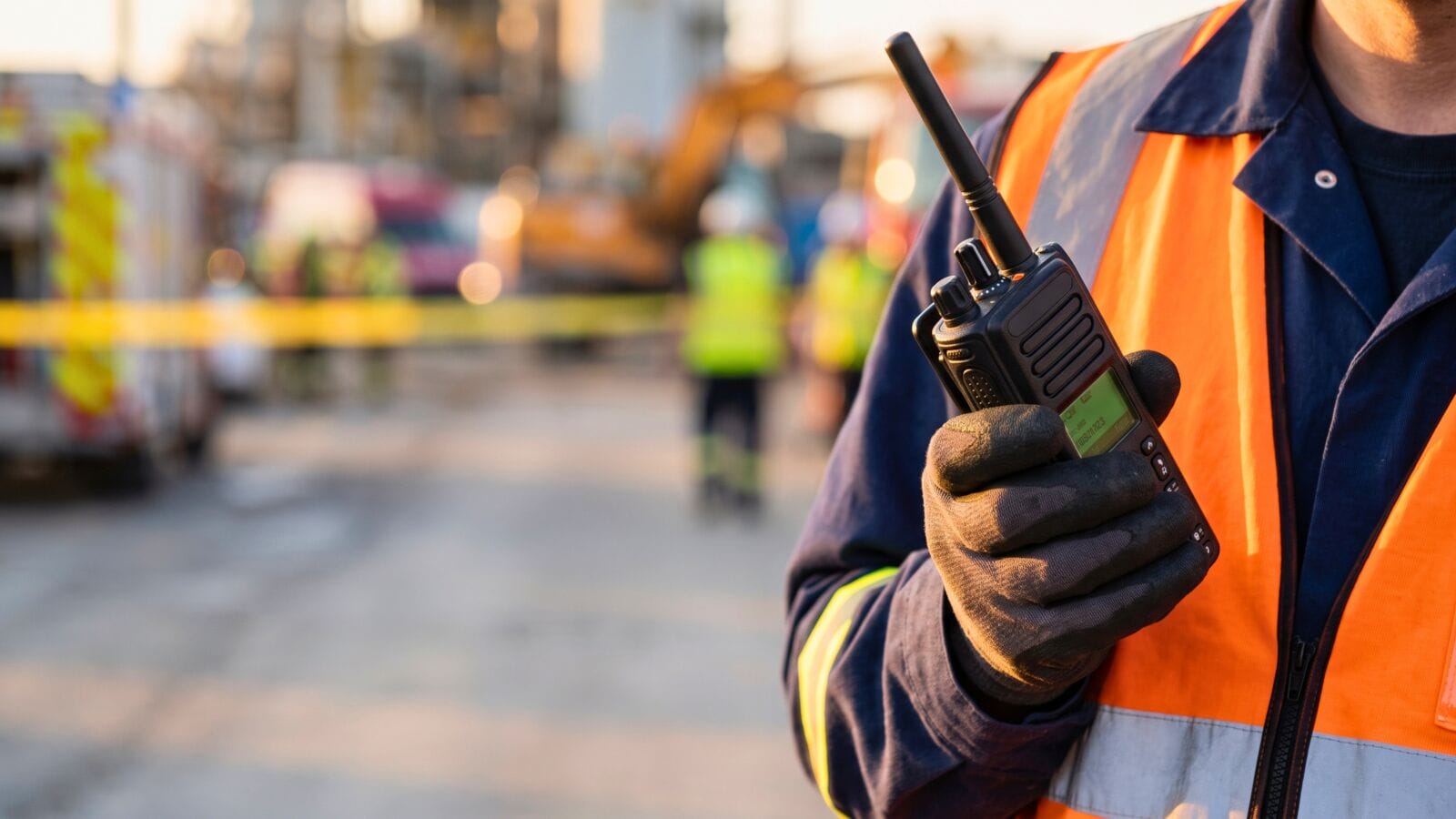
Between 1980 and 2005, the U.S. Chemical Safety and Hazard Investigation Board (CSB) documented 281 combustible dust incidents that killed 119 workers and injured 718 others. In multiple cases, investigators traced the ignition back to electrical equipment not rated for the hazardous environment — general-purpose wiring, switches, and fixtures installed where flammable dust or gas was present.
A standard two-way radio carries the same risk. Its internal circuitry produces small electrical arcs during normal operation, and its surface can heat enough to ignite surrounding gases or dust. In a refinery, chemical plant, or fuel storage facility, that is not a compliance footnote. It is an ignition source on every worker’s belt.
The Hazardous Area Communication Problem
Hazardous areas exist wherever flammable gases, vapors, or combustible dusts accumulate in quantities that could explode — refineries, chemical plants, oil and gas platforms, grain elevators, pharmaceutical manufacturing lines, and fuel transport operations.
Workers in these environments need instant communication to coordinate shifts, report leaks, and respond to emergencies. But the device they carry must itself be incapable of triggering the event they are trying to prevent. Regulators on both sides of the Atlantic — OSHA in the U.S. and the EU ATEX directive, enforced by HSE in the UK — require equipment used in classified hazardous areas to carry appropriate certification. Non-compliant equipment can result in fines, operational shutdowns, and fatal incidents.
Why Standard Radios Fail in Hazardous Areas
A conventional walkie talkie fails in three specific ways when brought into an explosive atmosphere.
Electrical arcs. Every push-to-talk press, channel switch, and power cycle produces tiny sparks inside the circuitry. In an office these are harmless. In an atmosphere containing propane, methane, or solvent vapors, they can ignite the mixture.
Surface heat. The battery, amplifier, and display generate heat during operation. If the external surface temperature exceeds the ignition temperature of surrounding gas or dust, the device becomes a thermal ignition source even without a spark.
Dust infiltration. The casing is not sealed against combustible powders — flour, sugar, coal dust, chemical residues. These accumulate inside on hot components, smolder, and trigger a primary explosion that lofts more dust into the air, causing a larger secondary blast. The CSB investigation of the 2003 West Pharmaceutical Services explosion found electrical fixtures in the production area were general-purpose and not rated for combustible dust environments.
What Explosion-Proof and Intrinsically Safe Radios Do Differently
Radios for hazardous areas prevent ignition through two primary mechanisms. Intrinsic safety limits electrical and thermal energy inside the device to levels below what is required to ignite the surrounding atmosphere — even under a single fault condition. Containment protection encloses electrical components in a housing that can withstand an internal explosion and prevent it from propagating to the outside atmosphere.
In practice, industrial radios may combine both approaches. The critical requirement is third-party certification matching the specific hazard class, zone, and gas or dust group of the area where the radio will be used.

Retevis E1: Communication for Gas and Dust Hazardous Areas
The Retevis E1 is built for industrial teams working where both flammable gas and combustible dust are present. Its intrinsically safe construction limits electrical and thermal energy to prevent ignition under fault conditions, covering gas and dust hazard types in one device. This matters in chemical plants, food processing facilities, and pharmaceutical sites where workers move between solvent-handling and powder-handling areas without changing equipment.
On the operational side, a superheterodyne receiver provides higher sensitivity and stronger signal selectivity than standard radios, reducing cross-channel interference in plants dense with metal structures, pipework, and motors. In a refinery or chemical plant, a distorted or missed instruction — a shutdown command, a leak report, an evacuation notice — can have immediate safety consequences.
The radio supports both DMR and NXDN digital modes alongside analog, helping sites migrating from older analog systems or operating mixed-vendor fleets. Digital mode includes noise cancellation that improves voice clarity in high-noise production areas.
For worker safety, the E1 includes three alarm functions: emergency alert, lone worker monitoring, and man-down detection. In solo inspection rounds, confined-space entries, and night shifts, the man-down function triggers automatically if a worker falls or becomes unresponsive, cutting the time between incident and response.
Durability is handled through an IP68 rating — fully dust-tight and submersible to one meter for one hour — and an ABS and PC housing resisting drops and abrasion. A 2450mAh battery delivers over 24 hours of continuous use, covering double shifts without a mid-shift charge.
Retevis E2: ATEX and IECEx Certified for Multinational Sites
For organizations operating across borders or on projects requiring international certification, the Retevis E2 offers an intrinsically safe radio with ATEX and IECEx certification. These standards are the most widely accepted proofs of compliance for explosive atmosphere equipment globally, simplifying procurement and site acceptance for multinational oil and gas companies, engineering contractors, and cross-border projects.
The E2 is certified for IIC gases — the highest gas group, which includes hydrogen and acetylene — broadening gas-group coverage in Zone 2 areas where IIB coverage is not sufficient. Built-in GPS adds location data to emergency and man-down alarms, and AES256 encryption protects voice communications from interception. The radio also meets MIL-STD-810G for shock, vibration, and temperature resistance, paired with an IP68 rating.
The E2 is a complementary option for sites specifically requiring ATEX/IECEx certification, IIC gas coverage, GPS, or encryption — not a replacement for the E1.
MORE NEWS: 10 cool Arizona offices worth the commute in 2026
Three Checks Before Buying
- Match certification to the actual hazard classification. Every area has a specific class, zone, and gas or dust group. A radio legal in one may be prohibited in another. Confirm classifications with the site safety officer before specifying equipment.
- Look beyond voice communication. In hazardous areas, the radio is also a safety device. Prioritize lone worker monitoring, man-down alerts, and — for large sites — GPS-enabled alarm localization.
- Test for the operational environment, not just the hazard rating. Dust, water, drops, extreme temperatures, and high ambient noise affect reliability regardless of explosion protection. Verify IP rating, durability standards, battery life for full shifts, and audio clarity in noisy areas.
Conclusion
Hazardous area communication requires certified equipment designed to prevent ignition — not consumer or general commercial radios repurposed for industrial use. The Retevis E1 addresses gas and dust explosive atmospheres with intrinsically safe construction, superheterodyne reception, dual-mode digital compatibility, triple-alarm worker safety, and 24-hour battery life. The E2 extends the range with ATEX and IECEx certification, IIC gas coverage, GPS, and encryption for multinational and higher-certification sites.
Matching the right certified radio to the specific environment is a safety decision, not just a procurement one. Explore the Retevis E1 and E2 product pages, or contact the Retevis team to discuss certification requirements for your site.