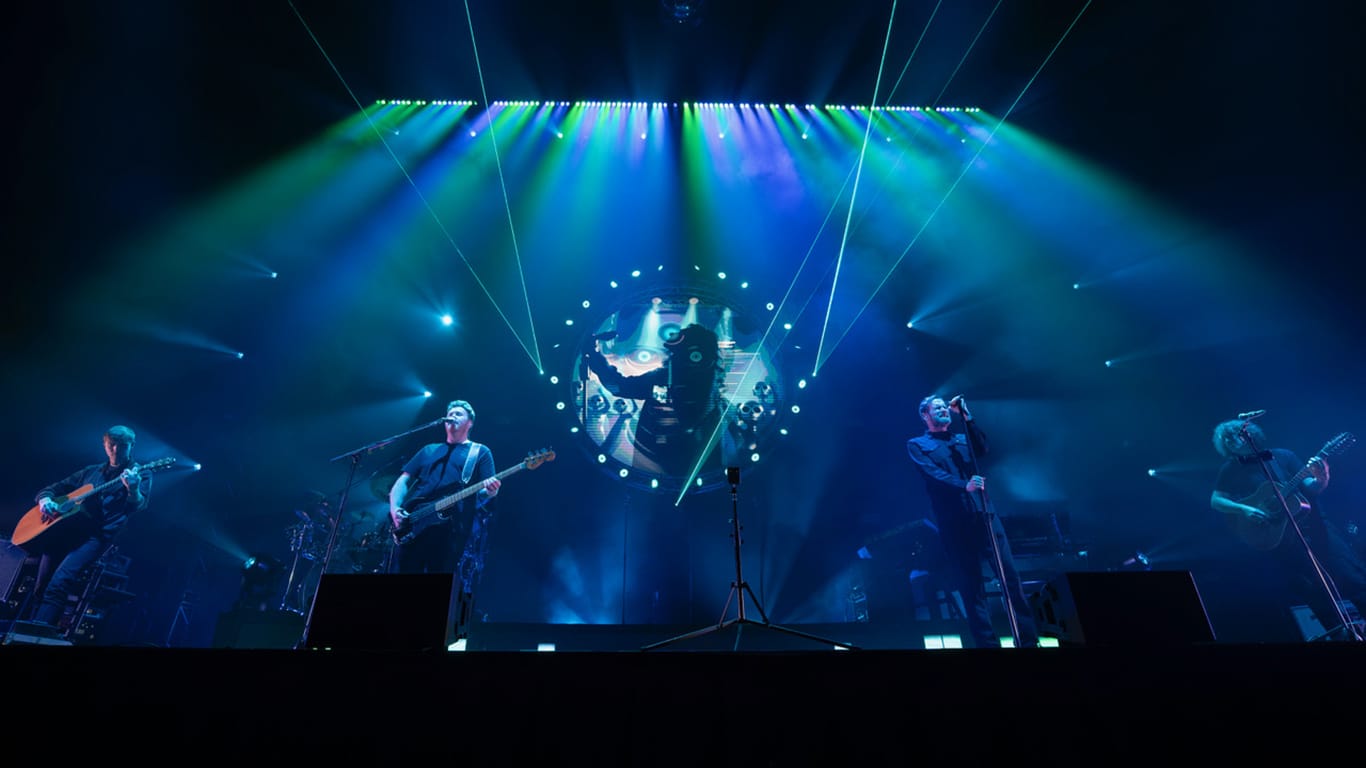
Australian Pink Floyd guitarist Dave Fowler describes his band’s tribute show with two words: “sensory overload.”
“That’s not only from the Floyd music, but the lights, lasers and videos,” he said. “Expect a sensory overload. I just wish I could see it myself.”
The show — which comes to the Mesa Arts Center on Sunday, Aug. 16 — celebrates the 1979 album “The Happiest Days of Our Lives.” Fowler, who, unlike his bandmates, lives in London, said band has Pink Floyd’s nuances down.
“It has the feel of Pink Floyd, but we try to keep it up to date. We think it’s what Pink Floyd would be doing now because, obviously, technology has moved on somewhat. If they did a show that was akin to what they would do in the ’80s or ’90s, it would probably look like this.”
Pink Floyd, itself, began to dissolve when Roger Waters left in 1985, thinking the band was finished. However, David Gilmour and Nick Mason continued making music and touring until 1994. There was one reunion in 2005 and Pink Floyd released a final archive-based album in 2014.
Presumably like Pink Floyd, Fowler craves improvisation. Sometimes that works for Australian Pink Floyd’s precision, consistency and a willingness to disappear behind the work.
“There’s a discipline in not straying from the format,” he said. “No one’s paid the ticket money to come and see what I sound like.”
That philosophy shapes the band’s culture and fan base. The musicians can’t drift too far from the album version.
“We’re not rock stars,” Fowler said. “People get a better show for their buck.”
Fowler’s connection to Pink Floyd began the way many teenage obsessions do: guitar solos. Through friends, he was in a band honoring the act he once paid to see.
“It all kind of came together,” he said. “The job was there, and I knew the songs and liked Pink Floyd.”
Australian Pink Floyd’s roots run deep, as the band was founded Down Under in 1988. The musicians were tired of waiting for Pink Floyd to perform in Australia.
Australian Pink Floyd’s lineup now includes British, French and American musicians, including Lorelei McBroom, who sang backing vocals for Pink Floyd in 1987 and 1989.
Fowler is very aware of the effort fans make to see Australian Pink Floyd.
They want a show that respects the money they spent.
“People vote with their money,” he says. “They don’t care whether you’re the original artist. They just want a good night of entertainment.”