When renovation and restoration crews recently opened a section of the Rialto Theatre’s ceiling, they didn’t just find aging plaster.
They discovered a fragment of an original “Amos ‘n’ Andy” poster, tucked away for decades in the dark.
That treasure was one more reminder that the Rialto is a building where history isn’t curated so much as discovered. And in Downtown Tucson, that persistence matters.
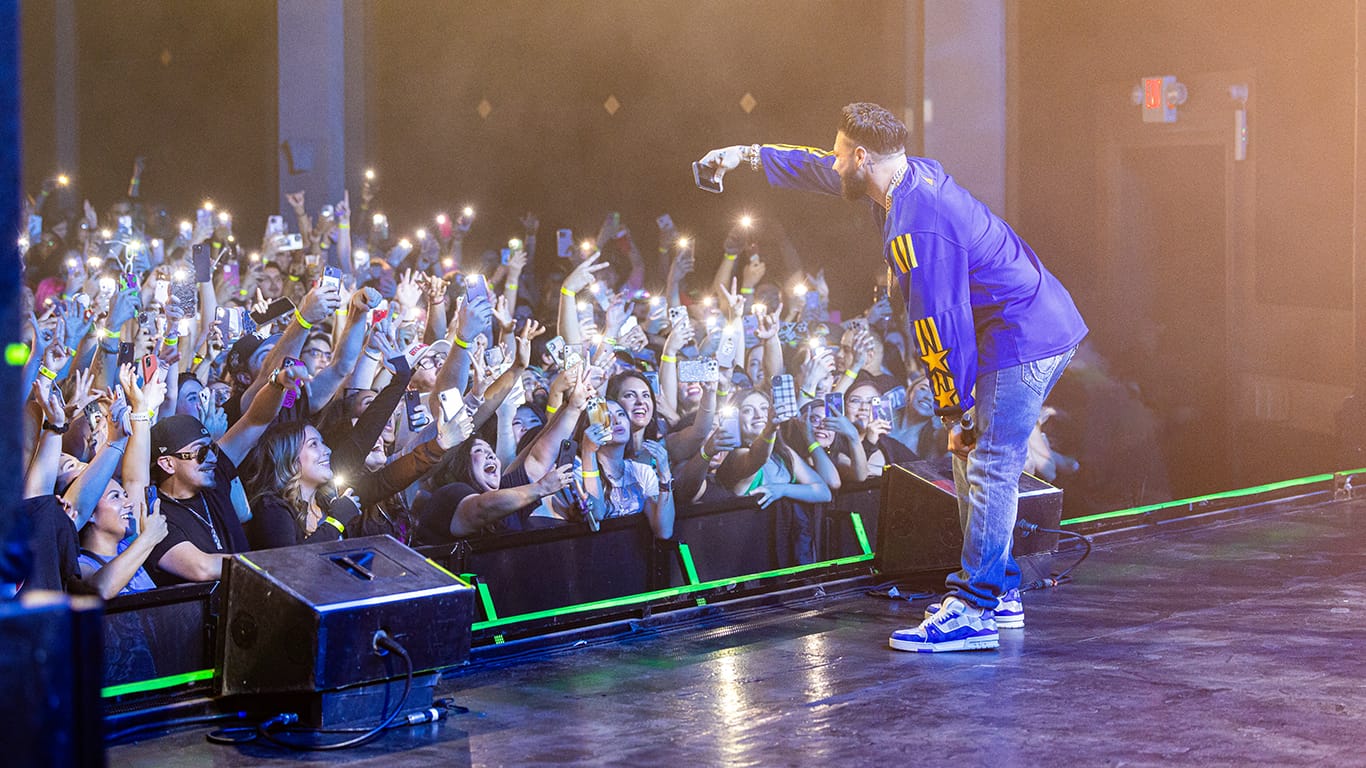
The Rialto, which recently celebrated its 106th anniversary, has become the rare institution that steadies the neighborhood around it with its periphery — the 500-capacity 191 Toole, the gift shop El Regalo and the red-light-hued R Bar.
DEEPER DIVE: Gibson Food Hall: Tucson’s new home for local flavor
For Valerie Richarme, who joined the Rialto three years ago, these discoveries are part of the job. Under her desk, she keeps a small “history box” with bits of molding, old handbills, and scraps of ephemera that surface whenever renovation crews pry open a wall.
Every time she opens it, she’s looking at evidence of how many people have passed through the theater throughout its years.
“There’s just things hiding everywhere,” she said. “It’s shocking how much is just sitting here.”
The box is a personal archive, but it’s also a reminder of the building’s continuity.
Richarme arrived at the Rialto from Bookmans, where she’d spent seven years working on community partnerships, including the long‑standing arrangement that allows customers to buy Rialto tickets at any Bookmans location.
Even before she joined the staff, she noticed gaps in how the theater connected with Tucson.
“I would see missing pieces,” she said. “I’d think, ‘Why aren’t they doing this? Why aren’t they doing that?’” When her former boss introduced her to Rialto executive director Cathy Rivers, the conversation clicked immediately.
“We both wanted to do the exact same things in the same way,” she said. “It was perfectly kismet.”
Her first year was spent learning the mechanics of a nonprofit venue — how shows are booked, how touring acts move through, how the building’s limitations shape what’s possible. But her instinct was always to widen the Rialto’s reach.
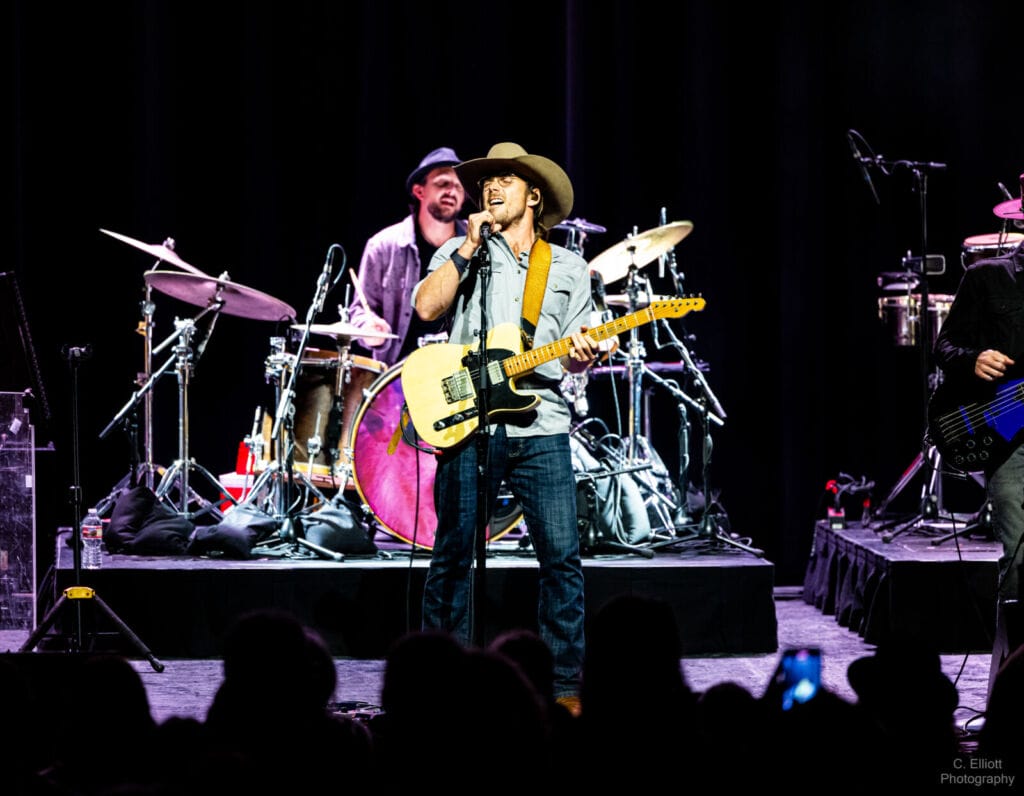
Her mission started with maintaining the Rialto’s ix of genres. The theater’s demographic is famously broad, spanning punk, metal, goth, pop, legacy acts and comedy.
“You’re not targeting anyone; you’re targeting everyone,” she said. “But individually everyone.”
She believes that challenge is part of what makes the Rialto essential to Downtown: it brings in audiences who might not otherwise spend their evenings in the city center.
The building’s history reinforces that role. Since opening in 1920, the Rialto has been a movie house, a live venue, a shuttered warehouse and a revived performance space. The common thread: Tucson residents insisted on keeping it alive.
“Nobody was ever willing to let it go,” Richarme said.
Even when it sat dormant as a furniture warehouse, people treated it like a sleeping landmark rather than a lost one.
“It felt like a perfectly functional car just sitting as an ornament,” she said. “You want to get in that car.”
The building still has secrets. Backstage, there’s a rocking horse lamp — called a “ghost lamp” in the industry — that gives light to anyone who visits the theater at night. It also keeps humans safe from ghosts.
The Rialto’s influence on Downtown is cultural and economic. A sold-out show means packed sidewalks, busy bars, and the momentum Tucson relies on.
Even on off‑nights, the building remains a gathering place. On days off, the theater takes on a living room vibe to show films for employees and their families.
An audio engineer runs the sound levels from a front-of-house console, as with a live performance.
“Everybody relies on each other so hard,” Richarme said. “It’s meaningful to know people have your back.”
Those nights also echo the building’s earliest years. The Rialto’s first film was the silent cowboy movie “The Toll Gate” starring William S. Hart in August 1920. “The Toll Gate” was accompanied by a live orchestra.
This year, on the 106th anniversary, staff watched “Teenage Mutant Ninja Turtles” and “The Last Dragon” on the same screen.
Richarme’s connection to live music runs deep. Growing up in Brooklyn, she was the youngest of four. She absorbed her older siblings’ tastes and snuck into clubs as a kid.
Her first self‑chosen concert was at age 11: Biohazard, which blends hardcore punk with heavy groove metal and rap-style vocals.
“Thank God those shows were all ages,” she said. She spent her adolescence roaming the city, catching bands at CBGB and L’Amour, the latter of which was a legendary heavy metal and rock music club.
That magic resurfaced at the Rialto. Before she worked there, her bucket‑list moment came when alt-rockers L7 played an under‑capacity show.
“I was obsessed with them from a very early age,” she said. “Women can do this.” She hadn’t seen them in New York, but Tucson delivered.
“It felt wrong that I avoided this band I love so much,” she said, laughing.
Since joining the staff, she’s watched the room transform during a performance by legendary new wave artist Gary Numan. The first time he opened for the industrial band Ministry, and then headlined the subsequent show.
When Numan returned as a headliner, he was impressive, she said.
“The drama of his music is present in the live show.” During the quiet highs, the room went still. “A whole room completely enthralled. Nobody walked out. Nobody went to the bar. Just standstill.”
Richarme sees the theater’s future as a continuation of its past: a place that adapts without losing its identity.
“It’s built for entertainment,” she said. “People always want to give it the life it was meant to have.”
Her job, as she sees it, is to maintain that connection and remind Tucson that the Rialto is a cultural anchor.
The building’s endurance is a testament to that relationship. It has weathered economic downturns, ownership changes, shifts in entertainment, and decades of physical wear. Today, it remains one of the few Downtown institutions that draws people in nightly.
“It’s still happening,” she said. “A hundred‑plus years later, people are still walking into this building to feel something together. And as long as they keep coming, we’re going to keep giving this place the life it was meant to have.”