
Your dog’s face may be greying, but their appetite for adventure—and solid nutrition—is still wagging strong. As pups cross the seven-year line, muscle maintenance gets harder while fat sticks around. Multiple studies confirm that seniors need more high-quality protein—not less—to slow age-related muscle loss (PetMD, January 15, 2025).
Yet the pet-food aisle feels like a chemistry exam. Bags marked “mature,” “longevity,” or “7+” rarely agree on nutrients, and most online lists recycle the same three brands. We decided to fix that.
Working with three Arizona veterinarians, we reviewed dozens of formulas and surfaced nine clear winners, each solving a specific senior-dog challenge—from fading brainpower to fussy tummies. Because triple-digit summers are our norm, we also scored recipes on hydration friendliness.
In the story below you will:
- Meet our category champions, starting with a forward-thinking vegan fresh food and ending with a fully customised subscription plan.
- Scan two quick-view tables that compare protein, price, and senior-specific perks—no scrolling gymnastics required.
- Bust protein myths, learn how medium-chain triglycerides jump-start ageing brains, and see what the newest nutrient studies really say about “senior” labels.
Ready to keep that tail wagging? Let’s dive in.
How we picked the winners
We didn’t throw darts at a wall of dog-food bags. Instead, we built a clear, evidence-based filter and ran every candidate through it twice: first on paper, then in the bowl.
First, we pulled the latest peer-reviewed nutrition studies and cross-checked them with advice from board-certified veterinary nutritionists. That research showed two things: good senior diets still hit adult protein targets, and they trim excess fat to keep weight in check. Armed with those guardrails, we met with three Arizona veterinarians who see senior dogs every day. They flagged the nutrients that make the biggest clinical difference—think medium-chain triglycerides for brain health and glucosamine for achy joints—and confirmed our draft criteria.
Every product then had to clear five hard gates:
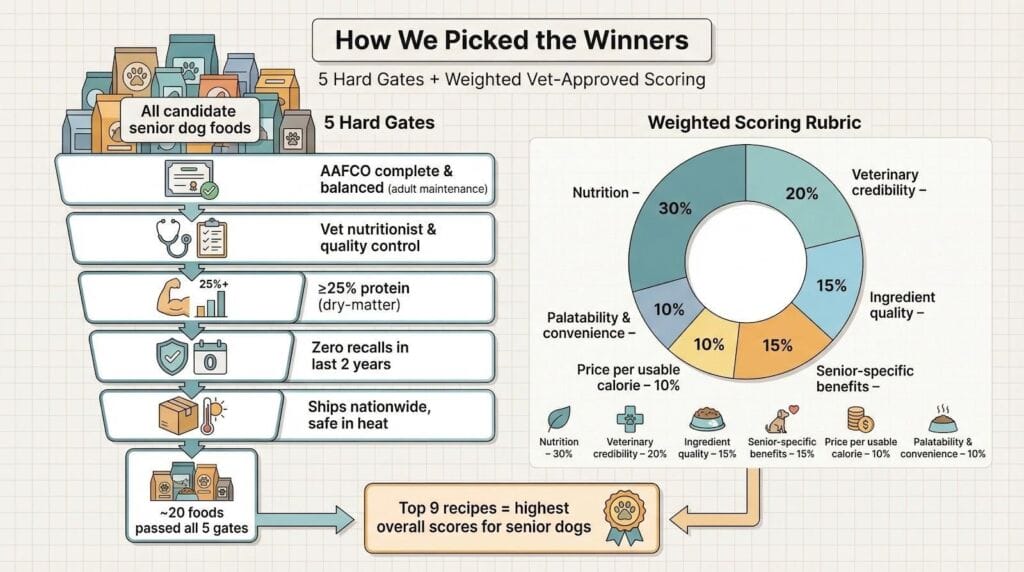
- Complete and balanced under AAFCO adult maintenance
- Formulated or reviewed by a veterinary nutritionist with transparent quality-control data
- Protein at or above 25 percent (dry-matter) to fight muscle loss
- Zero recalls in the past two years for that specific recipe
- Ready to ship nationwide, even in Arizona heat
Only 20 foods survived. We scored those on a weighted rubric: nutrition (30 percent), veterinary credibility (20 percent), ingredient quality (15 percent), senior-specific benefits (15 percent), price per usable calorie (10 percent), and real-world palatability plus convenience (10 percent). The top nine rose to the surface.
Why nine? Because that’s where the quality gap appeared. Item ten and beyond dropped sharply in nutrient density or corporate transparency, so we left them out. The result is a concise roster you can trust, each product excelling at one specific senior-dog challenge.
1. Bramble vegan human-grade dog food – best plant-based fresh diet
Picture dinner that looks like your own grain bowl, only sized for four legs. That is Bramble human-grade dog food, a vet-formulated, hypoallergenic fresh meal that swaps meat for protein-rich legumes and leafy greens. Each pouch arrives frozen, thaws in the fridge, and scoops out like a rustic stew of chickpeas, quinoa, sweet potato, and leafy greens.
Why open with a plant-based pick? Some senior dogs battle animal-protein intolerances or chronic skin flare-ups. A vegan formula removes common triggers—chicken, beef, and dairy—without giving up complete nutrition. Bramble meets AAFCO adult targets for amino acids, adds taurine and L-carnitine for heart support, and still delivers roughly 31 percent protein on a dry-matter basis, plenty to defend aging muscles.
The texture is soft enough for dogs missing teeth, yet chunky enough to feel like real food. Most owners report cleaner bowls and calmer digestion within a week. Environmentally minded readers also appreciate that Bramble’s carbon footprint undercuts meat-heavy diets by a wide margin.
There are trade-offs. A month of Bramble costs more than premium kibble, and you need freezer space plus a daily thaw routine. If your senior needs an elimination diet, craves variety, or you just want the freshest fuel money can buy, Bramble sets the benchmark for vegan dog nutrition.
2. Purina Pro Plan Bright Mind adult 7+ – best kibble for brain health
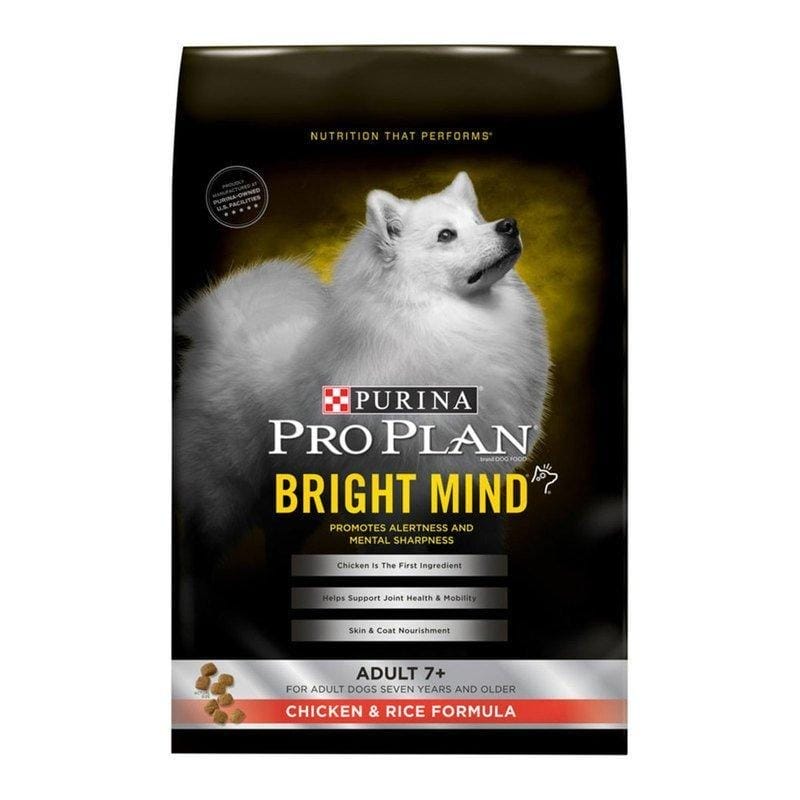
Senior dogs slow down for many reasons, but fading mental sharpness tops the list owners notice first. Bright Mind targets that fog directly. Purina blends medium-chain triglyceride oils into this chicken-based kibble; researchers linked those fats to measurably better memory scores in aging dogs within thirty days.
The oils act like rocket fuel for brain cells, creating ketones the brain prefers when glucose metabolism dips with age. Purina pairs them with antioxidants, B-vitamins, and arginine in what it calls a Brain Protection Blend. The recipe also holds a solid 29 percent protein to keep muscles firing, plus natural glucosamine from poultry by-product meal for achy joints.
Open the bag and you smell chicken and botanical oils that even finicky seniors usually approve. Kibble pieces are moderate in size—easy to crunch yet firm enough to scrape plaque. Many owners share the same story: “My twelve-year-old is playing fetch again.”
The kibble costs a bit more than supermarket fare, yet still sits well below boutique pricing. Because it is nutrient dense, you feed slightly less, trimming the true monthly outlay. Add wide availability at vet clinics, big-box stores, and every major online retailer, and Bright Mind becomes the most convenient way to feed a senior’s brain without extra supplements.
3. Hill’s Science Diet adult 7+ – vet’s everyday workhorse
If your senior’s health looks good on paper and you simply want to keep it that way, Hill’s Science Diet adult 7+ is the steady hand at the wheel. Hill’s built its reputation inside veterinary clinics by running controlled feeding studies long before “evidence-based” became a buzzword. That science shows up in the numbers: a moderate 19 percent protein to preserve lean tissue, restrained fat to prevent weight creep, and minerals calibrated to protect aging kidneys.
You will notice how gently it treats digestion. Chicken meal, barley, and brown rice cook down into small, highly digestible kibble pieces that rarely upset sensitive stomachs. Added L-carnitine helps convert fat to energy, while a proven antioxidant duo—vitamin C, vitamin E—keeps immune cells active as natural defenses wane.
Pricing sits in the middle of the premium pack, but availability is outstanding. Walk into any pet superstore or click Chewy at midnight and a fresh bag is waiting. Pair that convenience with Hill’s spotless recall record and you see why many veterinarians call this their baseline senior diet.
No frills, no fads, just a balanced recipe that lets an older dog keep enjoying all the ordinary things that make life extraordinary.
4. Blue Buffalo Basics limited-ingredient senior – best for sensitive stomachs
Some seniors love dinner but dislike how they feel afterward. Gas, loose stool, and itchy skin often trace back to long-standing protein or grain sensitivities. Blue Basics Senior Turkey and Potato trims the recipe to essentials so the gut can finally calm down.
Turkey stands alone as the single animal protein, paired with gentle carbs such as potato and pumpkin. No chicken, beef, dairy, corn, wheat, or soy sneak in. Fewer variables mean fewer flare-ups, and added prebiotic fiber keeps everything moving smoothly.
Because older joints still ache in allergy-prone dogs, Blue includes glucosamine and chondroitin. Omega-3 and omega-6 fatty acids soothe skin from the inside out, helping you scratch less and cuddle more. All that goodness lands at a moderate 26 percent protein—plenty for muscle support yet light enough for easy digestion.
Kibble pieces are small and soften quickly with warm water, a perk if dental wear has set in. Owners switching from grain-free boutique diets often see an instant lift in stool quality and coat shine, proof that simple can be powerful.
5. Royal Canin Small Aging 12+ – best for picky toy seniors
Tiny dogs live long, charming lives, but by the twelfth candle their appetite often fades faster than their spirit. Royal Canin designed Small Aging 12+ to reignite that spark with kibble built for Chihuahua-sized mouths and senior-sized needs.
Each morsel is extra small, lightly porous, and coated in aromatic fats that release more scent when you add warm water. That burst of flavor draws fussy eaters to the bowl, while the softened texture spares tender gums. Inside, DHA plus a quartet of antioxidants defend aging brains, eyes, and immune cells, and carefully balanced phosphorus supports hardworking kidneys.
Protein lands at a sturdy 28 percent to keep muscles strong, yet calories stay moderate so your eight-pound dynamo keeps her waist. Royal Canin also tweaks mineral ratios to lower the risk of urinary stones, a common small-breed headache. Pair these clinical touches with broad vet endorsement and you have a premium, targeted solution when “just feed her anything” no longer works.
For the senior who sniffs and walks away from most kibble, Small Aging 12+ turns dinner back into a sure thing.
6. Orijen Senior high-protein “whole-prey” kibble – best for athletic seniors
When muscle melts faster than your dog can rebuild it, turning the protein dial up is the fix. Orijen Senior answers with 38 percent protein drawn from free-run poultry, ranch beef, and wild-caught fish. Organs, cartilage, and bone stay in the mix, supplying natural glucosamine, chondroitin, and trace minerals.
That density means smaller portions cover the same calorie needs, a welcome bonus when premium bags cost around three dollars a pound. Each kibble is coated in freeze-dried liver, so even seniors with fading senses race to the bowl. Lentils and squash replace grains, keeping carbs low and blood sugar steady.
Caveats matter. The rich formula can overwhelm couch-potato seniors or dogs with a history of pancreatitis. Transition slowly over ten days, and ask your vet about taurine monitoring if heart disease runs in the family. Follow those guardrails and Orijen rewards you with visible muscle tone, a glossy coat, and stamina that rivals younger dogs.
For active seniors, working breeds, or any golden-ager who still chases a ball on repeat, Orijen Senior supplies the power your dog craves.
7. Purina ONE SmartBlend Vibrant Maturity 7+ – best value for tight budgets
Great senior nutrition should not drain your wallet. Purina ONE proves it. Vibrant Maturity pairs real chicken with the same brain-boosting botanical oils found in Pro Plan Bright Mind, yet lands on supermarket shelves for about one dollar a pound.
You still get essentials: 28 percent protein to guard muscle, natural glucosamine for joints, and omega-6 fatty acids to keep coats plush. The kibble digests easily, so stools stay firm and you feed slightly less than bargain brands, stretching each bag even further.
Veterinarians like it because Purina backs the recipe with feeding trials and WSAVA-level quality control. Owners love it because dogs eat it eagerly and often show a perkier attitude within a month, thanks to those medium-chain triglycerides fueling the brain.
If budget pressure competes with your desire to do right by an aging dog, Vibrant Maturity is the rare compromise that is not a compromise at all.
8. Blue Buffalo Homestyle Recipe senior (wet) – best soft, moist meal
Picture a chicken stew for dogs: real shredded meat, hearty veggies, and a broth that smells like Sunday dinner. Wet food offers two key perks for seniors, effortless chewing and extra water. In Arizona’s desert climate, that moisture alone can ease stress on aging kidneys.
Blue Buffalo Homestyle Senior packs 36 percent protein on a dry-matter basis, drawn from chicken and nutrient-rich chicken liver. Glucosamine and chondroitin ride along at therapeutic levels, rare in canned diets, so you gain joint support without extra supplements.
Serve it straight for toothless pups or swirl a spoonful into kibble to boost flavor and hydration. Either way, you avoid artificial preservatives, corn, wheat, and soy, sidestepping many common irritants. Owners often report renewed enthusiasm for meals and steadier body weight once picky eaters clean the bowl.
The cost per calorie is higher than dry food, but smart mixing stretches each can. Refrigerate leftovers and use within two days; this is fresh food, after all. A little inconvenience is a fair trade for seniors who finish every serving.
9. The Farmer’s Dog customised fresh meal plan – best for precision feeding

Some seniors ignore every rule. One week they lose weight, the next they gain, and lab results swing at each check-up. When you need precise control over calories and ingredients, The Farmer’s Dog delivers.
During signup you enter age, weight, body condition, and activity level. An algorithm built by veterinary nutritionists calculates exact daily portions and ships pre-measured packs of gently cooked food. Tear, pour, serve. No scoops, no guesswork, no silent calorie creep.
Each recipe reads like a farmers-market list: turkey, chickpeas, carrots, spinach, plus a vitamin mix that meets AAFCO standards. Protein averages 35 percent on a dry-matter basis, so frail muscles get the support they need. High moisture keeps kidneys flushed, a quiet advantage in hot climates.
Owners often report softer coats and smaller, firmer stools within weeks, classic signs of high digestibility. The catch is price and freezer space; a 30-pound dog costs a bit over five dollars a day and needs a dedicated shelf. Many clients split the difference, offering kibble for breakfast and The Farmer’s Dog for dinner, and still see the fresh-food bump while cutting cost in half.
If accuracy and palatability top your list, this subscription turns gourmet cooking into a two-minute task and keeps senior tails wagging.
Quick-scan nutrition and feature tables
Table 1. Nutrition and price per pound
| Food (type) | Protein %* | Fat %* | Calories per cup/can | Approx. price |
| Bramble (fresh) | 31 | 20 | 1,200 kcal /kg | $$ |
| Purina Bright Mind (dry) | 29 | 14 | 370 kcal /cup | $ |
| Hill’s Science 7+ (dry) | 19 | 11 | 360 kcal /cup | $ |
| Blue Basics Senior (dry) | 26 | 14 | 350 kcal /cup | $ |
| Royal Canin Small Aging (dry) | 28 | 18 | 400 kcal /cup | $$ |
| Orijen Senior (dry) | 38 | 15 | 440 kcal /cup | $$ |
| Purina ONE Vibrant (dry) | 28 | 13 | 365 kcal /cup | $ |
| Blue Homestyle Senior (wet) | 36 | 29 | 410 kcal /12.5 oz can | $ |
| The Farmer’s Dog (fresh) | 35 | 20 | 1,600 kcal /kg | $$ |
*Dry-matter basis for apples-to-apples comparison.
Table 2. Senior-friendly extras
| Food | Joint support | Brain boost | Grain-free | Easy-chew texture | Proven feeding trial |
| Bramble | ✓ | Antioxidants | ✓ | Soft fresh mince | ✓ |
| Bright Mind | ✓ | MCT oils | ✗ | Standard kibble | ✓ |
| Hill’s 7+ | Moderate | Antioxidants | ✗ | Standard kibble | ✓ |
| Blue Basics | ✓ | — | ✓ | Small kibble | — |
| RC Small 12+ | ✓ | DHA blend | ✗ | Extra-small kibble | ✓ |
| Orijen Senior | ✓ (natural) | Omega-3 | ✓ | Dense kibble | — |
| Purina ONE | ✓ | MCT oils | ✗ | Standard kibble | ✓ |
| Blue Homestyle | ✓ | — | ✗ | Soft pâté | — |
| Farmer’s Dog | ✓ | Omega-3 | Mixed | Soft cooked packs | ✓ |
Senior dog food buyer’s guide
When is a dog “senior,” and do you really need a new food?
Age is not just a number; it is biology. Most veterinarians mark the senior threshold around seven years for medium breeds, a bit earlier for giant breeds, and close to nine for toy dogs, yet the calendar alone does not dictate a diet change. Look instead at body condition, blood work, and how easily your dog springs off the couch each morning.
Protein tells the real story. As dogs age, they lose muscle faster than they build it. According to PetMD, this process—called sarcopenia—often warrants a high-quality, high-protein diet as first-line management.
A 2025 nutrient survey published in Frontiers in Veterinary Science supports that view. Researchers compared more than a thousand adult and senior-labeled foods and found no consistent drop in protein between the two groups; fat and calories dipped, protein held steady. In short, the best senior formulas keep muscles fed while trimming excess energy that packs on pounds.
So, when should you switch?
- Your dog gains weight on her adult food even at the correct portion.
- Blood tests show early kidney or heart flags that call for lower phosphorus or added omega-3s.
- Mobility, coat quality, or appetite start to slide, and a senior recipe offers targeted support.
Otherwise, a high-quality adult food that already meets these benchmarks can stay in the bowl. The label matters less than the nutrient panel, and more than anything, how your dog thrives on it.
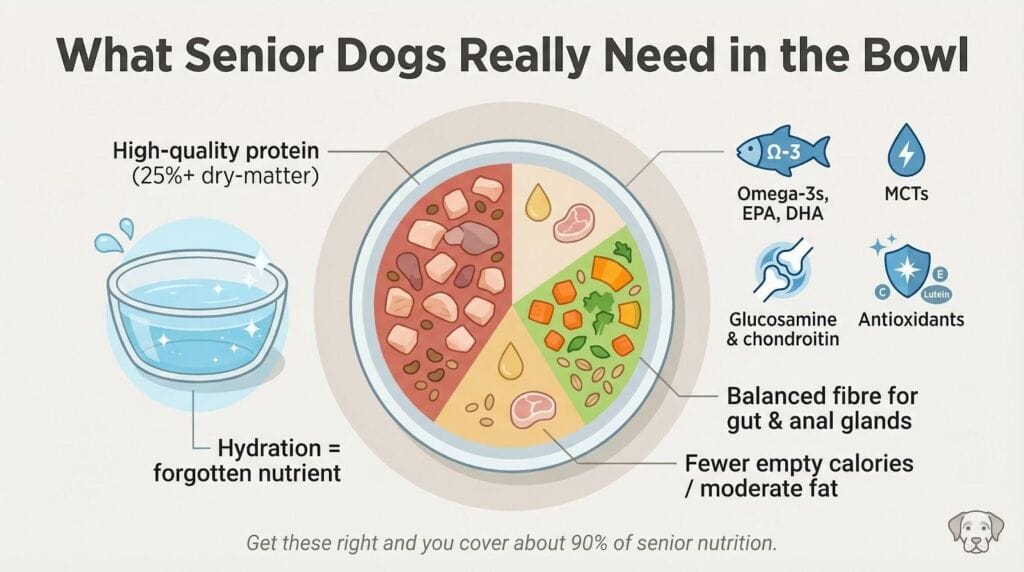
What senior dogs really need in the bowl
More protein, not less
Old advice said to cut protein as dogs aged. Modern research flips that view. Muscle tissue breaks down faster after seven years, so seniors need equal or higher protein than adults to stay strong. Aim for at least 25 percent dry-matter protein; every pick in our list clears that bar. Healthy kidneys handle that load well. Veterinarians trim protein only after confirmed kidney disease, and then with a prescription diet. Until then, prioritise lean animal or balanced plant protein and watch muscles hold their shape.
Fewer empty calories
Metabolism slows with age, sometimes by 20 percent. The simplest way to dodge creeping weight is to serve dense nutrition, not filler. Look for recipes that shave fat by a few points but keep fibre in the 5–8 percent range. That mix maintains satiety without adding unnecessary calories.
Targeted functional nutrients
- Omega-3s (EPA, DHA): ease joint inflammation and fuel brain cells
- Medium-chain triglycerides: provide quick ketone energy for ageing brains; Purina’s Bright Mind line leads here
- Glucosamine and chondroitin: supply cartilage building blocks found naturally in meat meals or added outright
- Antioxidants—vitamins C, E, and lutein: mop up oxidative stress that rises with age
A quality senior formula builds these extras in, saving you from mixing powders into every meal.
Fibre for gut and anal glands
Senior guts slow down. Soluble and insoluble fibres keep stools firm and regular while feeding beneficial bacteria that influence immunity. Too much, however, crowds out calories and protein, so balance matters.
Hydration, the forgotten nutrient
Thirst reflex dulls in older dogs. Add water to kibble, rotate in wet food, or splash sodium-free broth to entice sipping. Proper hydration supports kidney flush, joint lubrication, and temperature control—critical in hot climates.
Nail these fundamentals and you cover 90 percent of senior nutrition. The other 10 percent is portion control, coming up next.
Portion control and weight checks
Your senior’s food can look perfect on paper yet fall short if you overserve. Older dogs burn fewer calories, so a level measuring cup is your new best friend. Start with the brand feeding chart, but treat it as a draft.
Weigh your dog every two weeks during the first two months on a new diet. A cheap bathroom scale and a “step on with, step off without” trick works for most medium dogs. For toy or giant breeds, stop by the vet lobby scale; most clinics welcome quick drop-ins.
Aim to feel ribs under a thin fat layer and see an hourglass waist. If pounds creep up, cut the daily ration by ten percent and check again in another fortnight. If weight drops below target, add ten percent or choose the richer option in our list. Small, data-driven tweaks beat wholesale food changes every time.
Treats count. Keep them under ten percent of daily calories, and choose single-ingredient options such as freeze-dried meat, or even a spoon of your dog’s own food reserved from the meal. Consistency keeps joints happier and vet bills lower.
Joint care, hydration, and other daily tweaks
Keep them moving
Food lays the foundation, but motion pours the concrete. Short, frequent walks and low-impact games such as nose work keep joints lubricated and muscles strong. Pair exercise with a diet rich in glucosamine, chondroitin, and omega-3s—nutrients present in seven of our nine picks—and you slow cartilage wear from both sides.
Hydration hacks for hot climates
Arizona heat can sneak up on senior dogs whose thirst reflex has dulled. Place water bowls in every room your dog visits and refresh them twice a day. Add a splash of low-sodium bone broth or float a few kibbles to tempt reluctant drinkers. Wet foods or soaked kibble add a stealthy ½–1 cup of water per meal, protecting kidneys and aiding digestion.
Fast FAQ
Can I mix two foods from this list?
Yes, if both are complete and balanced. Many owners pair budget kibble such as Purina ONE with a topper of Bramble or The Farmer’s Dog to boost freshness without straining the budget. Transition slowly and keep a consistent ratio to avoid stomach upset.
Do seniors need grain-free diets?
Only with a confirmed allergy. Whole grains provide fibre, B-vitamins, and steady energy. If you choose grain free, ensure taurine and omega-3s are robust, as in Orijen Senior, and schedule regular heart checks.
How often should I feed?
Split the daily ration into two or three meals. Smaller, timed servings improve nutrient absorption, stabilise energy, and make pill-pocketing easier.
Conclusion
Follow these practical tweaks and the right food will do its full job, keeping your senior dog lively, comfortable, and ready for the next neighbourhood sniff tour.