
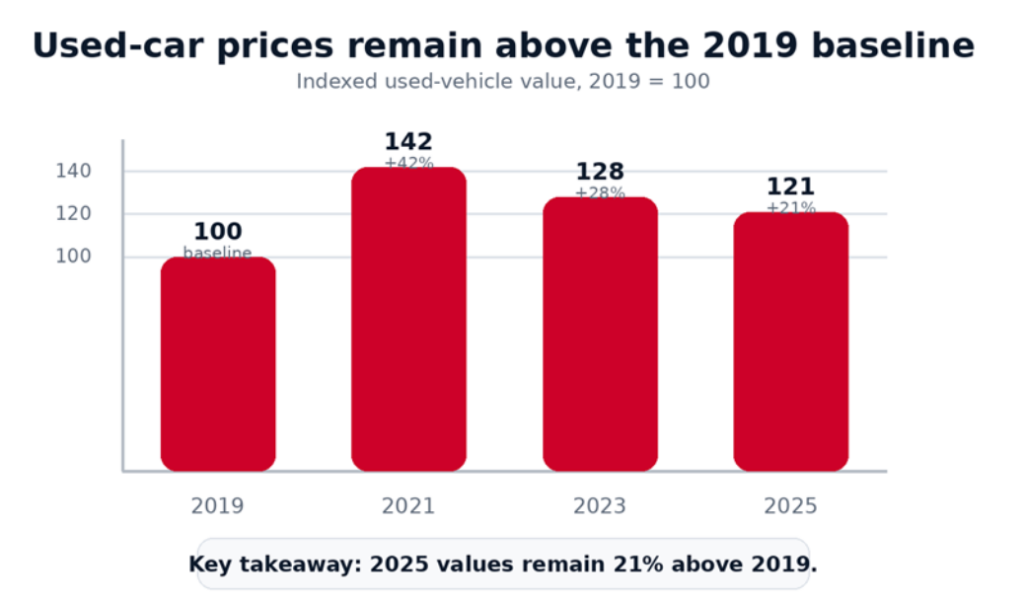
Arizona’s used-vehicle market has been one of the more revealing corners of the post-pandemic economy. Prices spiked when new-car inventory dried up, and while they have eased from their peak, they remain elevated against historical norms. For buyers, that means a used car is now a serious capital outlay. For dealers and private sellers, it means the cost of a buyer’s mistrust is higher than ever.
In that environment, information has real economic value. The single most efficient piece of due diligence a buyer can perform is also one of the cheapest: a vehicle history check tied to the
car’s VIN. It reframes a purchase that often runs on instinct into one grounded in a documented record.
Why history data moves the price
Every used vehicle carries two prices: the one on the windshield and the one justified by its actual condition and past. The distance between them is set by information asymmetry, the classic market problem in which the seller knows more than the buyer. A title brand, an unrepaired recall, or an odometer that doesn’t add up can swing a fair value by thousands of dollars.
A history report from a service such as zilocar.com narrows that asymmetry. It pulls accident records, title status, odometer history and ownership changes into one document, letting the buyer price the car on evidence rather than hope. Buyers who arrive with that information negotiate from a stronger position, and the data increasingly shows they are arriving with it.
DEEPER DIVE: Arizona races to reskill workforce before wave of 700,000 new jobs hits
INDUSTRY INSIGHTS: Want more news like this? Get our free newsletter here
The shift toward ‘report-first’ buying
Consumer behavior has been moving steadily toward verification. A substantial and rising share of used-car buyers now run some form of history check before committing, and younger buyers in particular treat it as a default step rather than an optional extra. The habit mirrors the broader expectation that any major purchase should come with a verifiable record behind it.

A growing share of buyers now check a vehicle’s record before purchase.
For sellers, this is not a threat but an opportunity. A dealer who proactively provides a clean history report removes the buyer’s single biggest source of hesitation. Transparency shortens the sales cycle and supports the asking price. The sellers who resist are, in effect, signaling that they have something to hide, and informed buyers read that signal accordingly.
Comparing the tools
Not all reports are created equal. Coverage varies by provider, particularly on cross-state title records and auction data, and so does price. Buyers and small dealers weighing which service to standardize on can consult an independent comparison such as the breakdown at bestvehiclehistoryreport.com, which lays out what each major provider includes. For a business buying or reselling multiple vehicles, those differences compound quickly.
The bottom line for buyers and sellers
The economics here are straightforward. The cost of a history report is trivial relative to the price of the asset it describes, and the downside it guards against, a branded title, a rolled-back odometer, an undisclosed structural repair, can erase a substantial fraction of the vehicle’s value in an instant. Measured as risk management, the return on that small spend is hard to beat.
What the numbers mean for small dealers
For independent dealers and small lots, the calculus is slightly different but points the same direction. Margins on used inventory are thin, and reputation is everything in a market where buyers share experiences online within hours. A single sale that goes bad, an undisclosed branded title, a customer who discovers a rolled-back odometer after the fact, can generate reviews and word-of-mouth that cost far more than the deal was ever worth. Sourcing inventory with verified histories and passing that verification on to the buyer is, in effect, reputation insurance.
The same data also sharpens acquisition. A dealer buying at auction or from trade-ins who runs histories as a matter of course avoids overpaying for vehicles whose records don’t support the price. In a tight-margin business, the avoided losses on the buying side often matter more than the marketing advantage on the selling side.
Information as the market’s equalizer
Economists describe markets with severe information gaps as prone to a ‘lemons’ problem, where buyers, unable to tell good cars from bad, discount everything and the best vehicles get driven out. Accessible history data works against that dynamic. When any buyer can verify a specific car’s record cheaply, honest sellers can credibly distinguish their inventory, and the market rewards quality rather than punishing it. That is a quietly significant shift, and it benefits the buyers and sellers who lean into it first.
A buyer’s practical takeaway
For the individual Arizona buyer, the lesson translates into a simple discipline. Before committing to any used vehicle, treat a history check as a non-negotiable line item in the budget, no different from registration or insurance. Read the report’s title, odometer and accident sections against the asking price, and let any discrepancy drive the negotiation. In a market where the typical used car costs more than it did a few years ago, the buyers who price on evidence rather than appearance are the ones who consistently avoid overpaying, and who sleep easier after the keys change hands.
The broader point is that information has stopped being optional. As verification tools have become cheap and fast, the expectation has shifted: a documented history is now part of what a fair used-car transaction looks like. Buyers who internalize that, and sellers who meet it, are simply operating the way the modern market already works.
As Arizona’s used-car prices stay elevated, the buyers who treat history data as a routine input rather than an afterthought will consistently make better deals. And the sellers who supply that data without being asked will close more of them. In a market defined by scarcity and high prices, transparency has quietly become the most durable competitive advantage on the lot.