By 6:30 on a Friday morning, a diesel pickup on the loop 202 is doing exactly what it was bought to do: hauling a trailer loaded with lumber, or block, or whatever a jobsite in Mesa or Buckeye needs before the crew shows up. By 6:30 the next morning, that same truck might be idling at a trailhead off the Table Mesa Road heading into the Sonoran Desert National Monument, this time towing nothing but a couple of dirt bikes or a small camper, with the driver’s coffee in the same cupholder it sat in twenty-four hours earlier.
That is not a coincidence unique to one truck owner. It is close to the default life of a diesel pickup in Arizona, and it says something about why this state has one of the most active overlanding and desert-touring cultures in the country: the truck that makes a living doesn’t get a separate truck for the weekend.
Two Jobs, One Truck
Arizona’s construction and trades economy runs almost entirely on trucks that tow and haul for a living. A superintendent’s Duramax pulls a gooseneck loaded with equipment across the Valley all week. A framing crew’s Power Stroke hauls material to a job site in Queen Creek on Monday and a different one in Surprise by Thursday. None of that is unusual for a state where the built environment is expanding faster than almost anywhere else in the country.
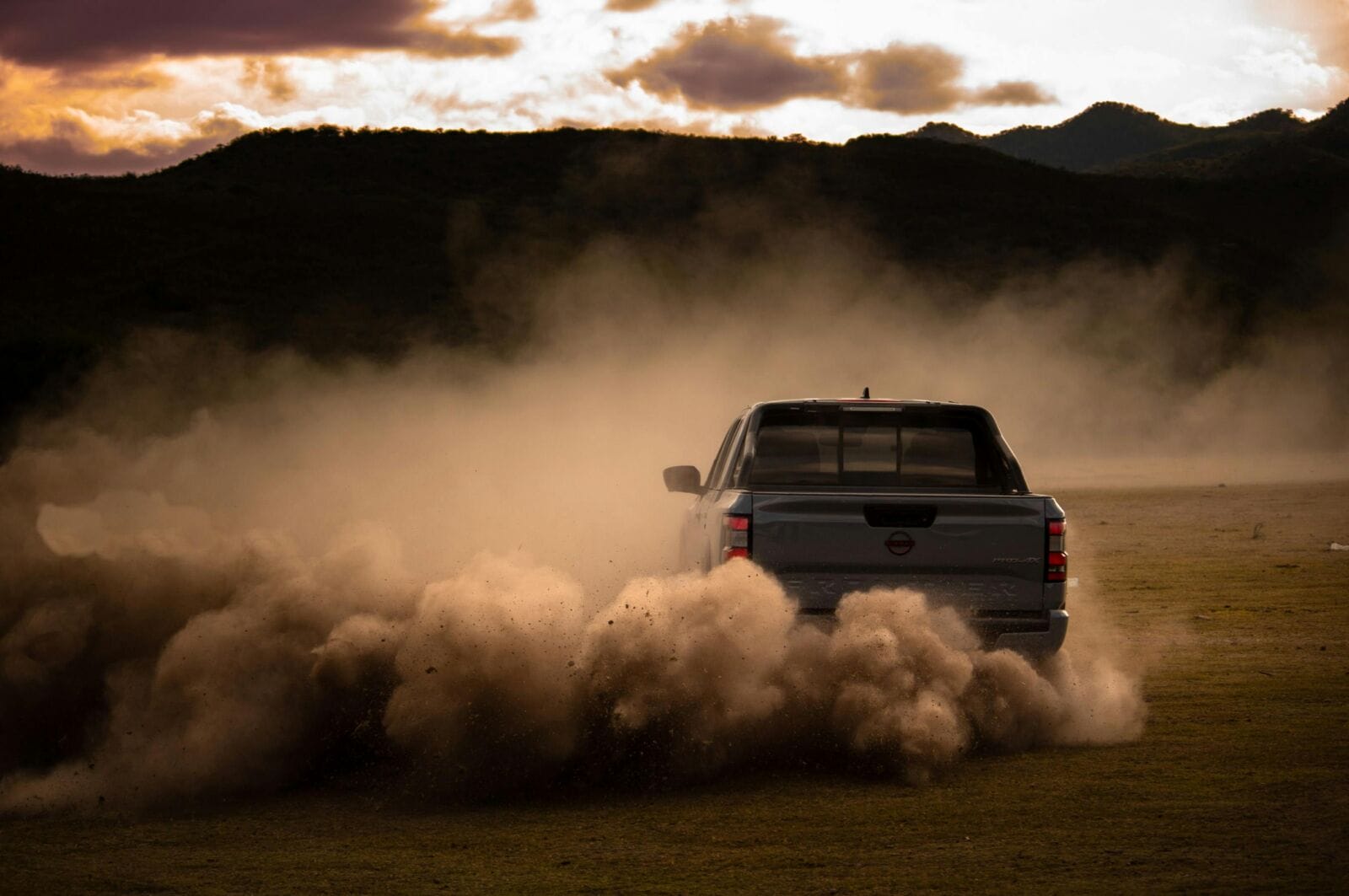
What is a little more specific to Arizona is what happens to that same truck on a Saturday. The Sonoran Desert, the Superstitions, the trails around Florence and the washes out past Wickenburg are close enough to a metro-area jobsite that a truck can go from hauling rebar to crawling over rock in the same weekend, sometimes literally driving straight from a Friday delivery into a Saturday morning meetup with a group of overlanders at a trailhead. The desert doesn’t require a special vehicle built only for recreation. It rewards the same truck that already knows how to move real weight, because most of what overlanding and desert touring actually demand, low-end pulling power, a stable platform under load, a drivetrain that doesn’t strain — is the same thing a jobsite demands from Monday to Friday.
Why the Desert Doesn’t Ask for a Different Truck
A gas half-ton can certainly get into the desert, but the diesel advantage that matters on a jobsite is the same one that matters on a rutted wash or a rocky climb: torque delivered low in the RPM range, right where a truck needs it crawling over uneven ground or pulling itself up a loose grade, rather than power that only shows up once the engine is already revving. A truck that spends its weekdays pulling a loaded trailer without straining is, almost by definition, a truck that isn’t going to feel overwhelmed climbing a rocky two-track on a Saturday with a much lighter load behind it.
That overlap is part of why Arizona’s desert-touring scene skews so heavily toward trucks that also do real work. Talk to enough people at a trailhead staging area outside Florence or Superior and the ratio of “this is my only truck” to “I have a separate rig for this” leans heavily toward the former. The truck a person bought to run their business or get through their actual job is, with very little modification, already most of the way to being the right truck for the trail.
Where a Double Life Starts Asking More of the Truck
The gap shows up once towing and hauling stop being occasional and start being constant on both ends. A truck pulling a loaded equipment trailer five days a week and then pulling a camper or a trailer of dirt bikes into the desert on the weekend is putting more cumulative load-bearing duty on that drivetrain than the factory calibration was written to assume, since a factory tune has to work acceptably for a truck that tows twice a year, not one working two separate jobs every week of the year.
That’s usually the point where an owner living this exact double life starts looking at what can be adjusted rather than what needs to be replaced. Owners in this spot are generally better served by a tuner calibrated for towing and load-bearing performance rather than a generic setting, since the calibration doing the most work for a jobsite trailer on Tuesday is the same one doing the work getting up a loose grade in the Sonoran Desert on Saturday.
DEEPER DIVE: Here are Arizona’s Most Admired Companies of 2026
Fitment Still Matters More in the Desert Than People Expect
The one place this double-duty life punishes shortcuts is fitment. A tune built for one engine code, transmission, and model year does not transfer cleanly to a different year of the same badge, and a mismatch that might just feel odd on pavement can turn into a real problem forty-five minutes from the nearest paved road, where a shifting issue or a fault code is a bigger deal than it would ever be on a jobsite with a shop down the street. Getting that match right matters as much for the truck’s Saturday life as it does for its Monday one, since a truck sitting in a wash with a drivetrain issue doesn’t care which job it was supposed to be doing that day.
That is the reason EngineGo builds its tuner catalog around exact engine code and model year rather than nameplate alone, so an Arizona truck owner living this exact split life isn’t guessing at compatibility before either a Tuesday delivery or a Saturday trailhead meetup.
The Same Truck, Either Way
Talk to enough people who tow for a living in this state and camp in the desert on their days off, and the same sentiment comes up again and again: the truck doesn’t know the difference between a construction load and a desert trip, and it shouldn’t have to. Arizona’s overlanding culture didn’t grow up around trucks built exclusively for recreation. It grew up around trucks that were already working hard all week, driven by people who saw no reason to own two. That’s still the most honest description of a huge share of the diesel trucks parked at trailheads across the Sonoran Desert on any given Saturday morning: the same truck that was on a jobsite the day before, doing what it was already built to do, just somewhere with better scenery.