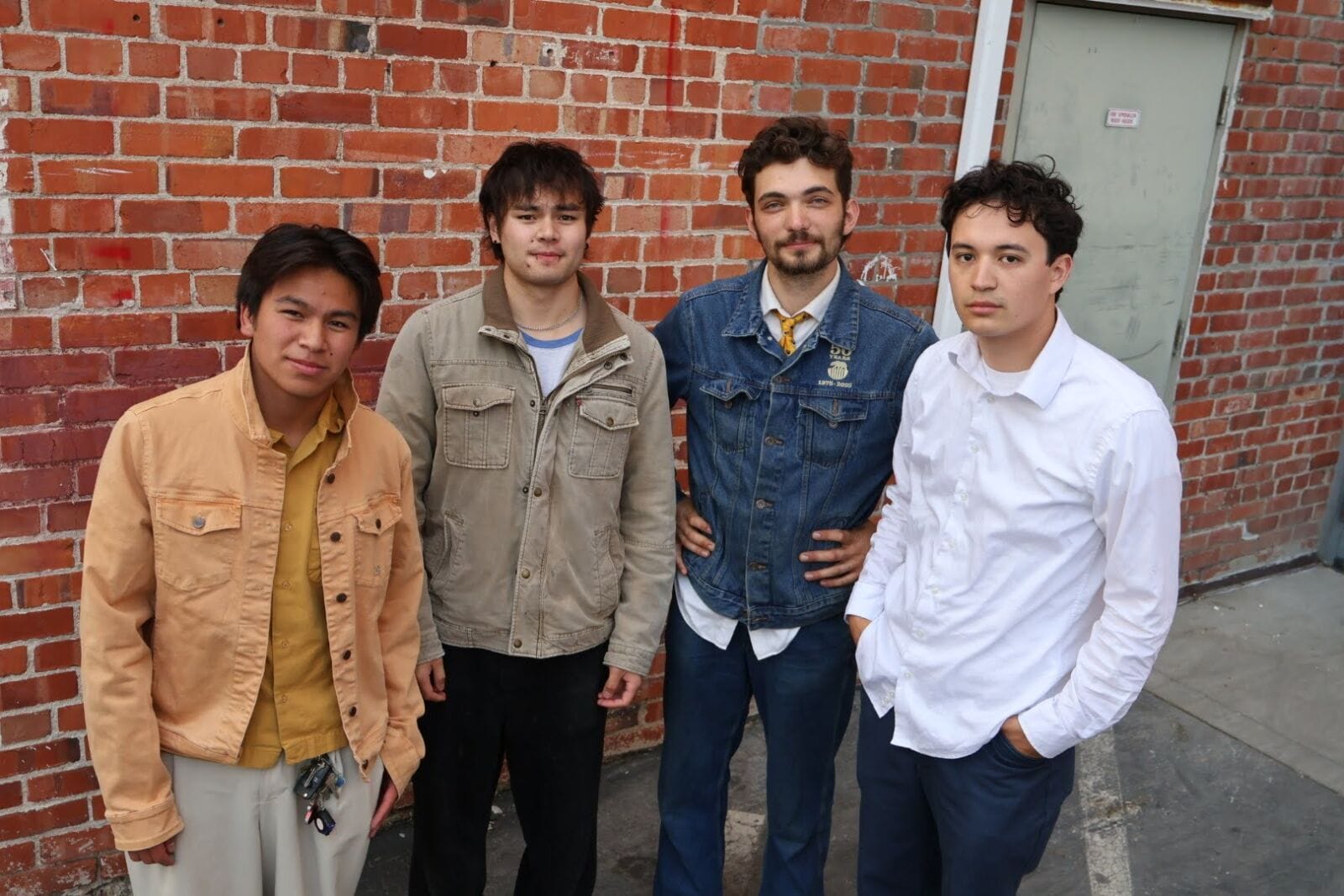
The name “Crying Uncle” may come from a childhood game, but the band’s young musicians aren’t ready to surrender. If anything, an early sibling rivalry between brothers Miles and Teo Quale forged the competitive spark that still drives Crying Uncle.
“None of us wants to fall behind,” Miles said. “That inspires each of us to perfect our craft.”
The act, like most, is honing its skills for recordings and live shows. Locally, the quartet performs at the Musical Instrument Museum on Thursday, July 30.
Crying Uncle’s roots run deep in Arizona, as it won the 2018 Pickin’ in the Pines band contest in 2018. As part of its prize, Crying Uncle played an hour-long set in 2019 at Flagstaff’s Pepsi Amphitheater at Fort Tuthill County Park. The act includes Miles (fiddle), Teo Quale (mandolin and fiddle), Andrew Osborn (upright bass) and Ian Ly (flatpick guitar).
READ MORE: New entertainment venue The Nox will break ground in Mesa
DEEPER DIVE: Arizona Musicfest 2026-27 lineup includes Bill Murray and Kristin Chenoweth
Entertaining at influential venues is nothing new to Crying Uncle. They performed at the Grand Ole Opry, a milestone that Miles calls a dream and a turning point.
“I think playing at the Opry is a goal that every band in the bluegrass / folk / country sphere has,” he said. “That was certainly true for us. I believe it opened a lot of doors for us and definitely gave us a confidence boost.
The four musicians were raised in California’s bluegrass community, a scene that is often misunderstood by outsiders.
“Most people underestimate just how much traditional bluegrass exists in California,” Miles said. He and Teo spent countless hours at California Bluegrass Association jams, absorbing the Appalachian-rooted sound.
Their earliest mentors — Chad and Catherine Manning, Tristan Clarridge, Sharon Gilchrist — taught Crying Uncle to treat music as a spiritual and experimental experience. The Mannings own a studio in Berkeley, California.
“While it’s important to work on technical ability (chops) and you want to wow the audience sometimes with flashy solos, the focus should be on listening to the people you’re playing with and modeling what you play off of that,” Miles said.
Along with Crying Uncle’s mentors, Miles expanded his musical worldview even further. He traveled throughout Europe, learning from local musicians. Finishing his tune “Annalina” with Swedish folk musician Roger Tallroth, formerly of Väsen, brought new textures into Crying Uncle’s writing. The fellowship also sharpened his sense of fairness in the industry.
“The folks at the Whippoorwill Foundation are doing an amazing thing for musicians everywhere — and not just with their grants,” Miles said.
“I think that their message of seeking fair compensation for the arts greatly influenced how I approach negotiations. In terms of the fellowship itself, the amount of knowledge I got from traveling to so many different countries and learning from the local musicians made me want to bring some of that back into the music we write.”
Crying Uncle bassist Andrew Osborn brings his own versatility to the band, as he once “unexpectedly” played trombone with country legend Marty Stuart.
“I cannot say that playing trombone with Marty Stuart was in good taste — especially as it was not planned or expected,” Osborn said.
“There is a balance that has to be made between a pure novel entertainment factor and what is enjoyable to listen to. While the trombone is a wonderful instrument, its darker tone and slide are not best suited to ripping bluegrass tunes. Some of the more folkish ballads, especially a lot of the new songs that Teo has written for Crying Uncle, have room for a lot of non-bluegrass instruments.”
Osborn is also an award-winning lemons race car driver and builder. His team, Fanchero, won the judge’s choice prize for the 2025 Smells Like AMC Spirit Race and hopes to race at Sonoma Raceway in December.
Balancing college with touring hasn’t been easy for any of them. Osborn, an engineering major, negotiated test schedules around tours and sacrificed extracurriculars.
“I could only succeed by communicating very early and often with professors, figuring out tests and signing up for classes already making sure the final would be before a tour,” Osborn said.
“While I still was able to work at the Cal Poly machine shops and be a part of leadership in some clubs and ensembles, Crying Uncle usually came first. I was always more of an outsider of both worlds as I made a compromise between school and engineering.”
Miles, juggling astrophysics and global jazz, faced even tougher conflicts.
“Unfortunately, the scheduling of exams made it such that it was extremely difficult to plan tours without risking failing classes due to strict grading policies,” he said.
“While I do think it’s possible to pursue both academics and music, I think that you have to come to terms with the fact that it’s going to be extremely difficult.”
Ian Ly is a flatpick guitarist who makes his home in San Francisco. Drawing upon the influence of guitar greats like Clarence White, Tony Rice, Doc Watson, and Norman Blake, Ian’s picking demonstrates both a reverence for the rich history of American acoustic guitar and a sense of violent, reckless abandon.
Decades from now, they hope people say they helped widen the boundaries of bluegrass while honoring the tradition that built it. “Our goal is to share the music we love writing and performing with as many people as possible,” Miles said. “And hopefully it inspires others to challenge what’s possible within the genre.”