
A smooth bike path can make suspension seem unnecessary. A commute full of patched asphalt and uneven pavement can make it considerably more appealing. The answer depends less on whether suspension looks impressive than on what happens beneath your tires most days.
When comparing electric bikes, start with the surfaces you ride and the discomfort you want to address. Suspension can soften certain impacts, but it cannot correct every cause of an uncomfortable ride. Nor does adding a rear shock automatically make one bike better than another.
What Suspension Actually Changes
A suspension fork allows the front wheel to move relative to the frame as it encounters bumps. Full suspension adds controlled movement at the rear wheel. A hardtail has a rigid rear frame, typically paired with a suspension fork; a fully rigid bike has neither front nor rear suspension.
That difference matters because a bump does not reach the rider through just one point. Front-wheel impacts can be felt through the bars, while rear-wheel impacts can be particularly noticeable through the saddle when seated. A fork can help at the front without doing the job of a rear shock.
Good suspension manages movement rather than merely feeling soft. The spring supports the load; damping, where provided, controls how the suspension moves and returns. A bike that bounces easily when pressed in a showroom has not necessarily demonstrated good control on the road.
When a Simpler Bike May Be Enough
For predominantly smooth pavement, a rigid bike or a model with front suspension may meet your needs without adding a rear suspension system to maintain. If the occasional rough section is short and easily avoided, it need not determine the entire purchase.
Consider your riding position too. A rider leaning forward puts different demands on their hands and arms from someone sitting more upright. Time in the saddle matters: a surface that feels acceptable for a short errand may become tiring over a longer journey.
Before blaming the frame, check the basics. Tire pressure should suit the bike, tires, load, and intended conditions. Saddle position and handlebar reach should let you ride without straining. More suspension will not fix a saddle set at the wrong height or bars that leave you stretched out.
If numbness or pain persists, get help with fit rather than assuming a new component will resolve it.
When Full Suspension Deserves a Closer Look
Repeated rough patches are a stronger reason to consider full suspension than a single pothole. If your permitted riding routes regularly include broken pavement or uneven unpaved surfaces, rear suspension may reduce some of the impacts you feel while seated and help the wheel follow irregular ground.
Its value depends on the design and setup. A poorly matched spring or unsuitable adjustment can leave a bike feeling harsh, unsettled, or excessively bouncy. More available suspension travel is not automatically better for ordinary riding, either. Compare how the complete bike behaves on a representative surface.
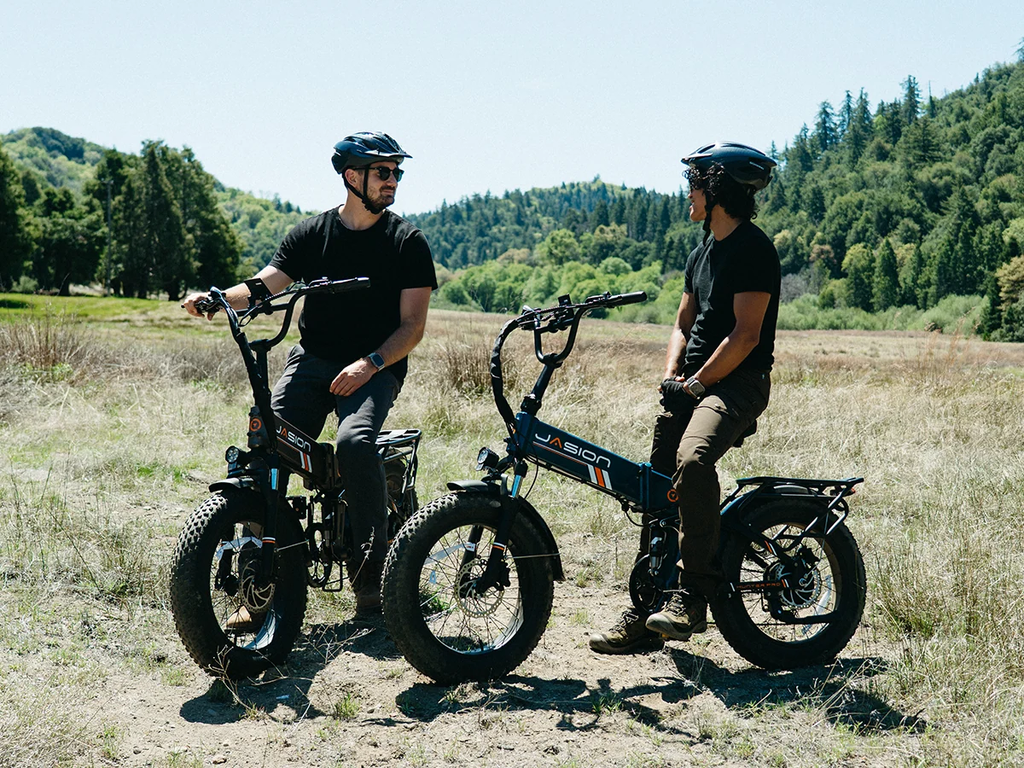
The Hunter Pro Folding Ebike is one example of a model combining a foldable frame with front and rear suspension. Jasion’s published product description identifies a full-suspension layout and fat tires. That combination is worth considering for riders who want bump absorption alongside a frame that folds for storage or transport.
It is not a promise that every surface will feel smooth. Suspension does not remove the need to slow down for hazards, choose a sensible line, or stay within the bike’s intended use. A full-suspension folding model should not be assumed to have the same capabilities as a purpose-built trail mountain bike.
Can Fat Tires Replace Suspension?
Tires are part of the comfort system. Their air volume, construction, and operating pressure affect how they respond to small surface irregularities. That can make them useful partners to suspension, but they work differently from a fork or rear shock.
A tire deforms at the contact patch. Suspension allows the wheel to move relative to the frame. Both can influence the ride, yet neither makes the other irrelevant.
Lowering pressure beyond an appropriate range to imitate a softer suspension is a poor substitute for proper setup. Too little pressure can compromise handling and increase the risk of tire or rim damage. Use the guidance for the actual tire, wheel, bike, and load; a pressure that suits another rider may not suit you.
When comparing two bikes, note their tire pressures. A firm tire on one and a much softer tire on the other can distort your impression of what their suspension is doing.
Folding and Suspension Solve Different Problems
A folding ebike may occupy less space when stored, while suspension addresses movement over uneven ground. These are separate benefits, and buyers should assess both separately.
Measure the space you actually have, including the doorway or car opening the folded bike must pass through. Then check the bike’s weight and whether you can manage it safely. Folding changes its shape; it does not remove the weight of the frame, motor, or suspension parts.
There is a maintenance question as well. Compared with a rigid rear frame, rear suspension introduces additional moving parts. Ask what inspection and service the fork, shock, and pivots require, and where that work can be done. Use the manufacturer’s procedures rather than applying generic adjustment advice to unfamiliar hardware.
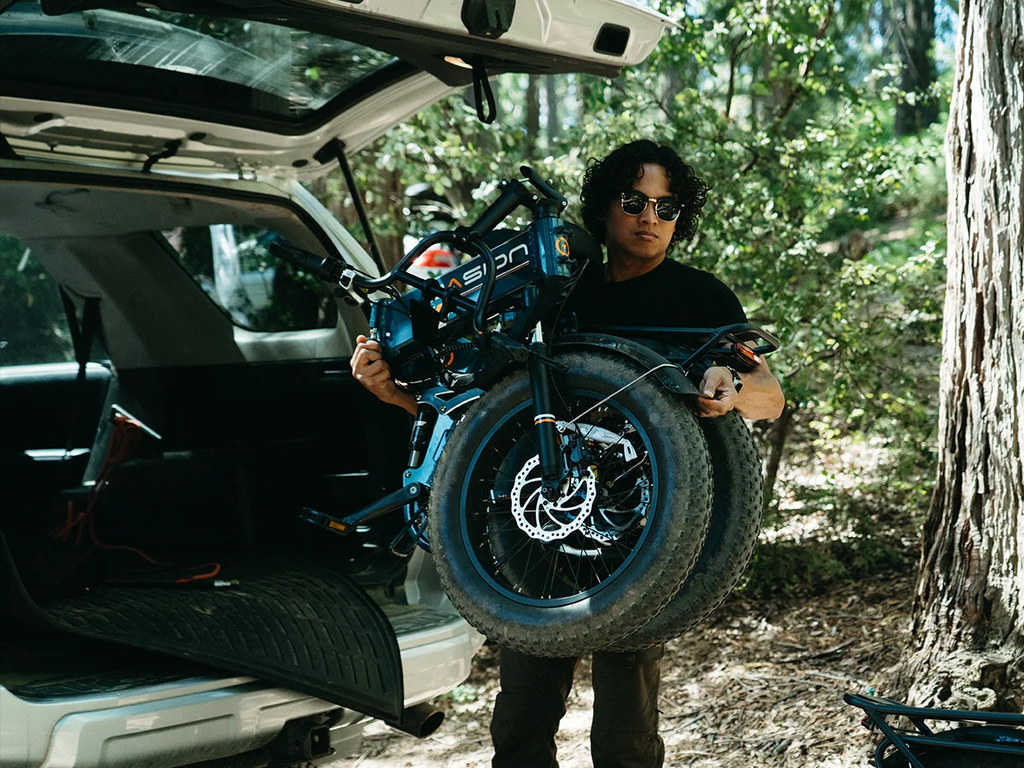
A folded Hunter Pro is held beside an open vehicle hatch.
Compare the Ride You Will Actually Take
If a demonstration is available, describe your normal route to the seller. Ask to ride an approved section with the kind of modest surface unevenness you encounter, rather than seeking out a dramatic obstacle. Keep speed and conditions comparable between bikes.
Notice where the impacts reach you. Are your hands more comfortable? Does the saddle feel less jarring? After a bump, does the bike settle predictably, or continue bouncing? Have the seller check the setup before deciding that an unfamiliar sensation is simply how suspension should feel.
For smooth routes, simplicity may be the more useful purchase. For consistently rough journeys, the extra comfort and control of an appropriately designed suspension system may be worth its weight and upkeep. Bring the decision back to the stretch of road you ride every week. That is where the feature needs to earn its place.