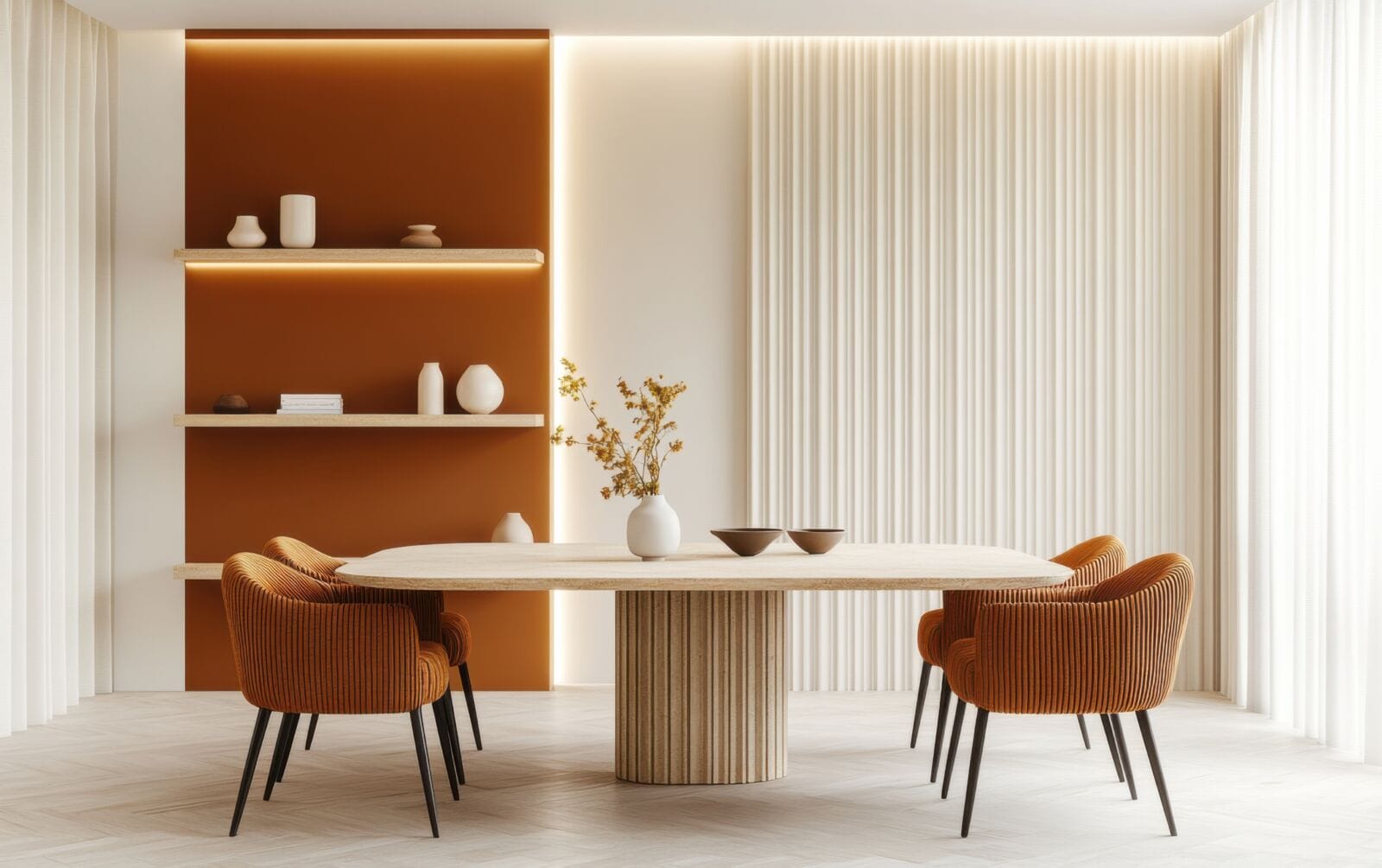
Yes, a travertine dining table can be a great choice if you want a warm, natural, high-end look and are comfortable with a little upkeep.
It is especially appealing in organic modern, Mediterranean, and neutral interiors because it adds texture and presence without feeling overly formal.
The trade-off is that a travertine dining table is porous, heavy, and more sensitive to spills and acidic foods than low-maintenance surfaces.
What Is Travertine?
Travertine is a natural limestone formed by mineral-rich water deposits that gradually precipitate calcium carbonate. Its surface is marked by small pores, pits, and soft banding—features that give the stone its signature earthy texture and explain why it is typically filled and sealed before use in furniture.
In design terms, travertine dining tables feel softer and more relaxed than marble. Marble reads as polished and formal; travertine has a quieter, more grounded presence.
From a material perspective, travertine dining tables balance beauty and practicality. It is denser than it appears, yet still porous enough for liquids to penetrate if the surface is not properly sealed. This means it is not a “zero-care” surface, but it is also not as delicate as many assume.
Key material facts:
- Travertine is a sedimentary stone, not a manufactured surface.
- Its core chemistry is calcium carbonate, which makes it more reactive to acids than synthetic alternatives.
- It can take a good polish, but for dining use a honed or matte finish is more practical.
- Its porosity is a design feature, not a defect—but it does mean sealing matters.
Where Does It Fall Short?
The biggest drawback is porosity.
Without proper sealing and quick cleanup, liquids can soak in and cause stains.
Travertine can also etch when exposed to acidic foods or cleaners, and edges may chip or scratch if handled roughly.
On top of that, it is much heavier than wood, glass, or engineered alternatives, so delivery and placement take more planning.
Best Use Cases
Travertine makes the most sense in homes that value style and are comfortable with basic care.
It is a strong fit for:
- Formal dining rooms.
- Design-led spaces.
- Adults-only homes.
- Homes that already use placemats and coasters.
- People who want a stone table with a softer, more relaxed look.
It is a weaker fit for:
- Busy family homes with frequent spills.
- Renters or people who move often.
- Shoppers who want a carefree surface.
- Anyone looking for the lowest possible maintenance.
Travertine vs Other Materials
| Material | Look | Maintenance | Best For |
| Travertine | Warm, textured, natural | Medium to high | Design-focused dining rooms |
| Marble | Elegant, dramatic, classic | High | Formal spaces |
| Wood | Warm, familiar, versatile | Medium | Everyday family dining |
| Sintered stone | Sleek, modern, stone-like | Low | Busy homes |
A travertine dining table is warmer and softer-looking than marble, but it asks for more care than a wood or sintered stone dining table.
If your top priority is practicality, another material will likely serve you better.
How to Choose the Right One?
Focus on construction before color. The most important combination is filled, honed, and sealed. These three details matter more than the exact shade of stone.
A filled surface is smoother and more practical for dining; it prevents crumbs and liquids from settling into pores. A honed finish offers a soft matte look that hides minor wear better than glossy polish. Sealing is essential, as it reduces the risk of staining and makes cleanup easier.
When buying, ask two specific questions: how often the brand recommends resealing, and whether the table arrives pre-treated. That information tells you how much ongoing care you will need versus how much is already handled.
Care Basics
Travertine care is simple, but it relies on consistency rather than intensity.
Use a soft cloth with mild dish soap or a pH-neutral stone cleaner. Wipe spills immediately, especially from acidic or pigmented liquids like wine, coffee, citrus, and tomato sauce. Avoid vinegar, lemon, bleach, ammonia, and abrasive pads.
For everyday dining, coasters, placemats, and trivets are not optional extras—they are part of the maintenance routine. Heavy dishes, hot pans, and condensation all need a barrier to protect the surface over time.
To know when resealing is needed, use a simple water test. Place a few drops on the tabletop. If the water beads, the sealer is still working. If the stone darkens quickly or absorbs the water, it is time to reseal.
Final Verdict
Travertine is a good dining table choice if you want a beautiful natural stone piece and you are willing to maintain it.
Travertine is also easy to style around. Upholstered chairs soften its stone surface, wood reinforces its warmth, and black metal adds contrast without competing. In rooms with neutral walls, linen textiles, or natural finishes, travertine feels especially natural because it supports the space rather than overpowering it.