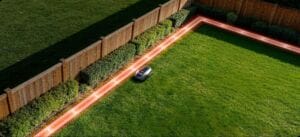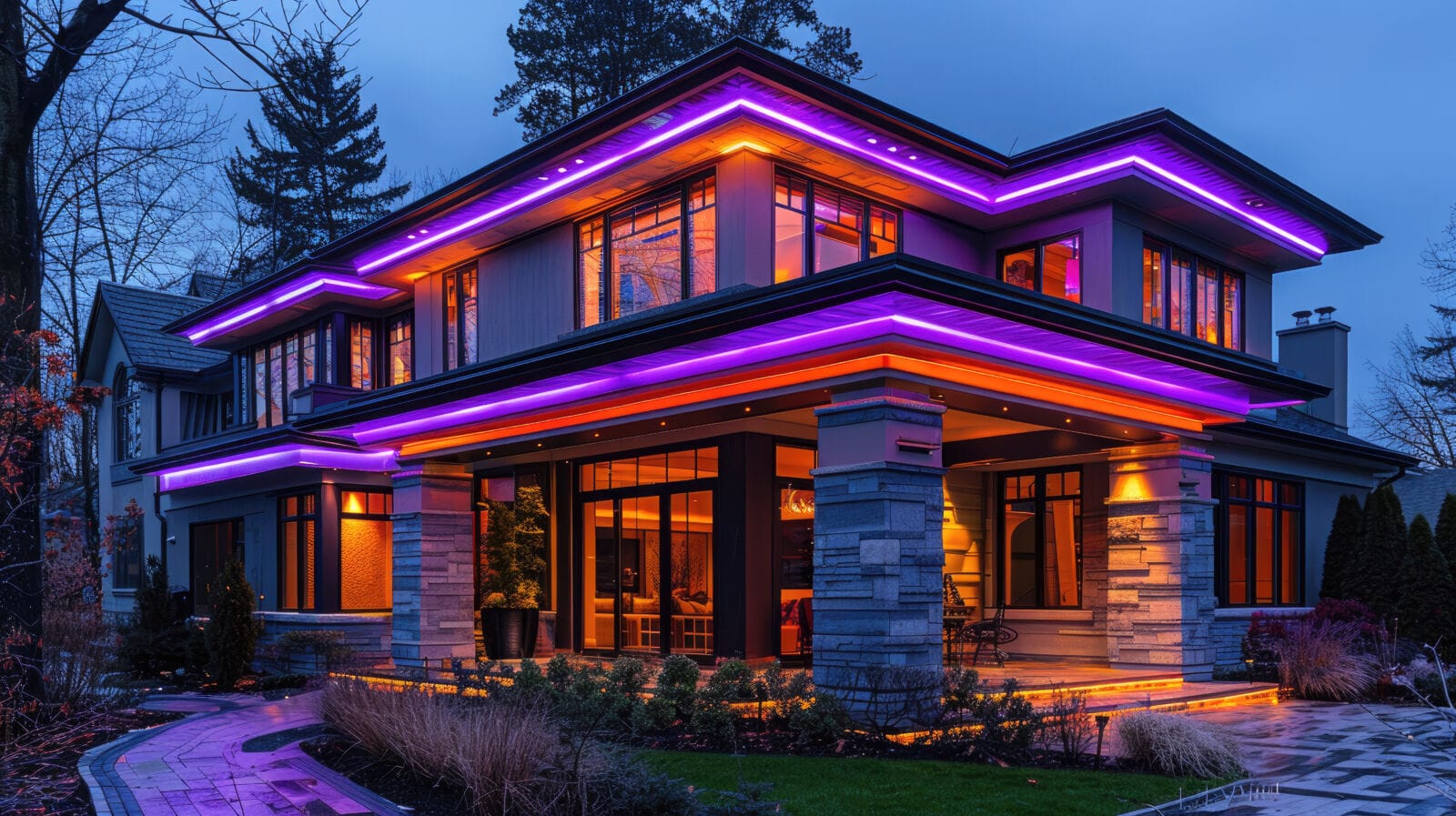
The best smart LED light scenes make specific outdoor routines easier without making the whole yard brighter. They should help with the moments that actually cause friction: getting home with full hands, taking out the trash, walking the dog, or checking a motion alert after dark. Keys disappear at the door. Grocery bags block your view of the step. A noise near the garage feels more annoying than alarming, but you still want to see what caused it. This guide covers entry lighting, late-night chores, security scenes, permanent outdoor lights, and seasonal lighting ideas.
Table of Contents
- Make Arrivals Easier With Entry Lighting
- Late-Night Chores Need Light That Does Not Wake the Yard
- Smart LED Lights Give Security Scenes a Clear Job
- Permanent Outdoor Lights Make Daily Scenes Easier to Keep
- Seasonal Lighting Scenes Build on Everyday Outdoor Routines
- Conclusion
Make Arrivals Easier With Entry Lighting
An arrival scene does not need to flatter the whole front yard. It needs to cover the route people actually use. If everyone comes in through the garage, the driveway edge and side entrance matter more than the flower bed. If packages land near the porch, keep the steps, label area, and door hardware readable without turning on every fixture outside.
Start with the places where people slow down or use their hands.
- Driveway edge for curbs, parked bikes, and bags set down beside the car
- Porch steps for footing when someone is carrying groceries or holding a child
- Door hardware for keys, keypads, and delivery labels
- Garage side for the shadowed area people often cross before reaching the door
For a predictable commute, use a simple evening schedule. If arrival times change from day to day, use app control, motion triggers, or location-based automation that brings the lights up as you approach, not after you are already standing at the door.
Late-Night Chores Need Light That Does Not Wake the Yard
Trash runs, dog walks, and quick checks on a side gate happen after the house has quieted down. That is when many outdoor lights start to feel like too much. A standard floodlight is bright, but it can ruin night vision, bother a neighbor, or make a small chore feel like a parking lot inspection.
For late chores, the useful setup is low, warm, and close to the path. The job should decide the light, not the other way around.
One way to plan it is to picture the errand before choosing the brightness.
| Night task | Better lighting choice | Why it helps |
| Taking trash bins out | Low side yard path light near the bins | Shows the walking line and bin handles |
| Walking the dog | Warm, ground-facing light near the usual patch of grass | Keeps footing visible without shining across the lawn |
| Checking a side gate | Targeted light on the latch and the next few steps | Shows the hardware and footing |
| Finding a package | Porch and step light at moderate brightness | Helps with labels and footing without glare |
Set the porch and side yard differently. The side yard can stay low and warm. The porch should be brighter because steps and packages need more detail. If most of your outdoor lighting needs sit around the porch, driveway, side yard, and backyard, the eufy outdoor lights give you a way to plan those areas without asking one fixture to cover everything.
Brightness does not need to stay the same all night. Use a brighter setting while people are still coming and going, such as 7 to 10 p.m., then drop to a lower setting after bedtime. In a home setup, keep porch steps and the garage edge visible while turning off decorative yard lighting or reducing it to a soft outline.
Smart LED Lights Give Security Scenes a Clear Job
Security lighting earns attention when it is specific. A light that flashes every time a branch moves soon becomes background noise. A light that turns on in the right zone when someone approaches the driveway or side yard is harder to ignore.
Motion triggers need a clear purpose
Set each motion trigger around the place where light is actually useful. A driveway trigger brightens the garage edge. A porch trigger lifts the light around the door. A backyard trigger stays lower when animals pass through, or a neighbor’s window sits nearby.
Camera-linked lighting helps the right area respond
Camera-linked lighting works differently from a basic timer. If a camera or doorbell detects activity near a gate, garage, or entry path, the lights in that area can brighten because something is actually happening there. The benefit is not just lighter. It is better timing.
- For the person outside, the sudden change makes it clear that the area is being watched
- For the camera, the extra light gives the lens a better chance at clear color detail
- For you, the alert comes with a visible cue outside, not just a phone notification
Separate zones avoid overreaction
Separate zones keep one small trigger from turning into a whole-yard response. A person near the side gate can raise that zone for a short check. Movement in the backyard can stay softer when animals pass through. Save the brightest setting for specific events, and keep normal evening lighting lower.
Permanent Outdoor Lights Make Daily Scenes Easier to Keep
Temporary string lights are fine for a party. Daily scenes are different. They work better when the hardware is already in place, especially around the front walk, garage, side approach, and backyard edges. No cords across the ground. No ladder every season.
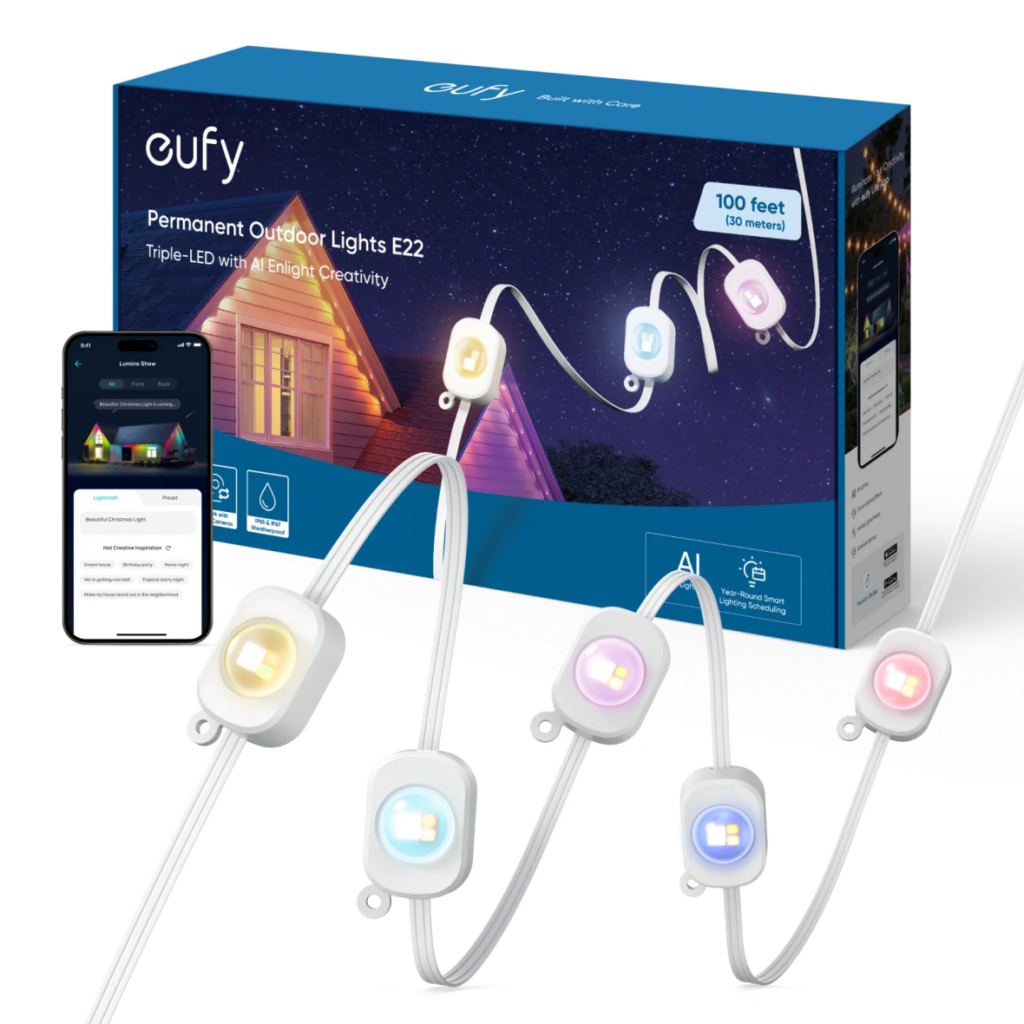
A permanent roofline setup has to earn its place on normal nights, not just during holidays. The eufy Permanent Outdoor Lights E22, 100 ft fits the everyday scenes discussed above, because the same installed lights can be adjusted for different routines.
- Front entries need clear white light first: RGB, warm white, and cool white LEDs, up to 90 lumens, and a 1500K to 9000K color temperature range leave room for practical choices. Use clearer white light for steps and packages, then save warmer, lower settings for late paths or patio time.
- Outdoor hardware has to sit through ordinary weather: IP65-rated light strings and controllers, UV resistance, and an IP67-rated power adapter matter after installation day. The same lights still need to handle rainy weeknight arrivals, damp side-yard chores, and seasonal color scenes without temporary cords or repeated ladder work.
- App control keeps normal nights separate from guest nights: In the eufy Life App, more than 80 preset lighting themes sit alongside custom patterns, colors, and brightness levels. The porch can stay steady and warm on a normal night, then the yard can change for guests without rebuilding the setup. Alexa and Google Assistant support is useful when the change needs to happen from inside the house.
Once the lights are in place, the setup becomes something to adjust over time instead of a project to rebuild each season.
Seasonal Lighting Scenes Build on Everyday Outdoor Routines
Seasonal scenes are much easier once the normal-night setup already works. The same lights that guide you to the front door in October can shift to a warm winter outline, a soft spring patio scene, or a brighter backyard setting for guests.
Keep everyday scenes separate from holiday scenes
Decorative lighting does not have to start with boxes, ladders, and tangled cords. It can sit on top of the daily scenes you already use. The porch can keep its normal arrival setting while the roofline changes color for a weekend gathering.
Choose hardware by coverage
When comparing options, look at the parts of the property that need repeatable lighting. Roofline coverage, side yard visibility, app control, camera integration, and weather resistance matter more than a long list of effects. Compare different fixtures and formats against the areas you actually need to cover.
For example, a Halloween scene can keep the porch steps in a steady warm white while the roofline shifts to orange and purple. A winter scene works better with a soft, warm white outline, around 2700K to 3000K, instead of saturated color every night. The daily porch setting stays unchanged; the seasonal layer changes around it. Compare different fixtures and formats against the areas and scenes you actually need to repeat.
Conclusion
Smart LED lights work best when they remove a repeated outdoor hassle. Start with the route from the car, the late trash run, the side gate, and the porch steps. Build scenes around those moments first, then add color or seasonal effects on top. The right setup should make the evening simpler, not give you another control panel to manage.