Some furniture looks good for a season and then quietly fades from rooms a few years down the line. Live edge epoxy tables have done just the opposite. Instead of disappearing, they’re hanging around homes, restaurants, offices and design projects that seek something less ordinary than standard mass-produced furniture.
Some of this is the materials themselves. Live edge wood has shape, texture and unpredictability before any glue is put. When epoxy is used, the table is no longer a piece of furniture and appears more like something you might find formed by time and nature.
That’s why so many are attracted to live edge epoxy tables. They don’t feel quite regulated, or factory manufactured. The lines are irregular, the grain shifts abruptly and every slab takes the resin differently.
It’s not industrial furniture, it’s more like utilitarian art that people can genuinely live with.
The Way the Wood Looks Does Half the Work
Furniture is straight cut boards, predictably. The margins are neat, the corners crisp, the lines the same. Everything seems measured and controlled.
Live edge slabs behave differently from the start.
You can still see the natural edge of the tree and the slab retains its inherent curves and flaws. Some edges bend gently, some drop, twist or narrow suddenly. That natural movement adds character to the table even before the epoxy is introduced.
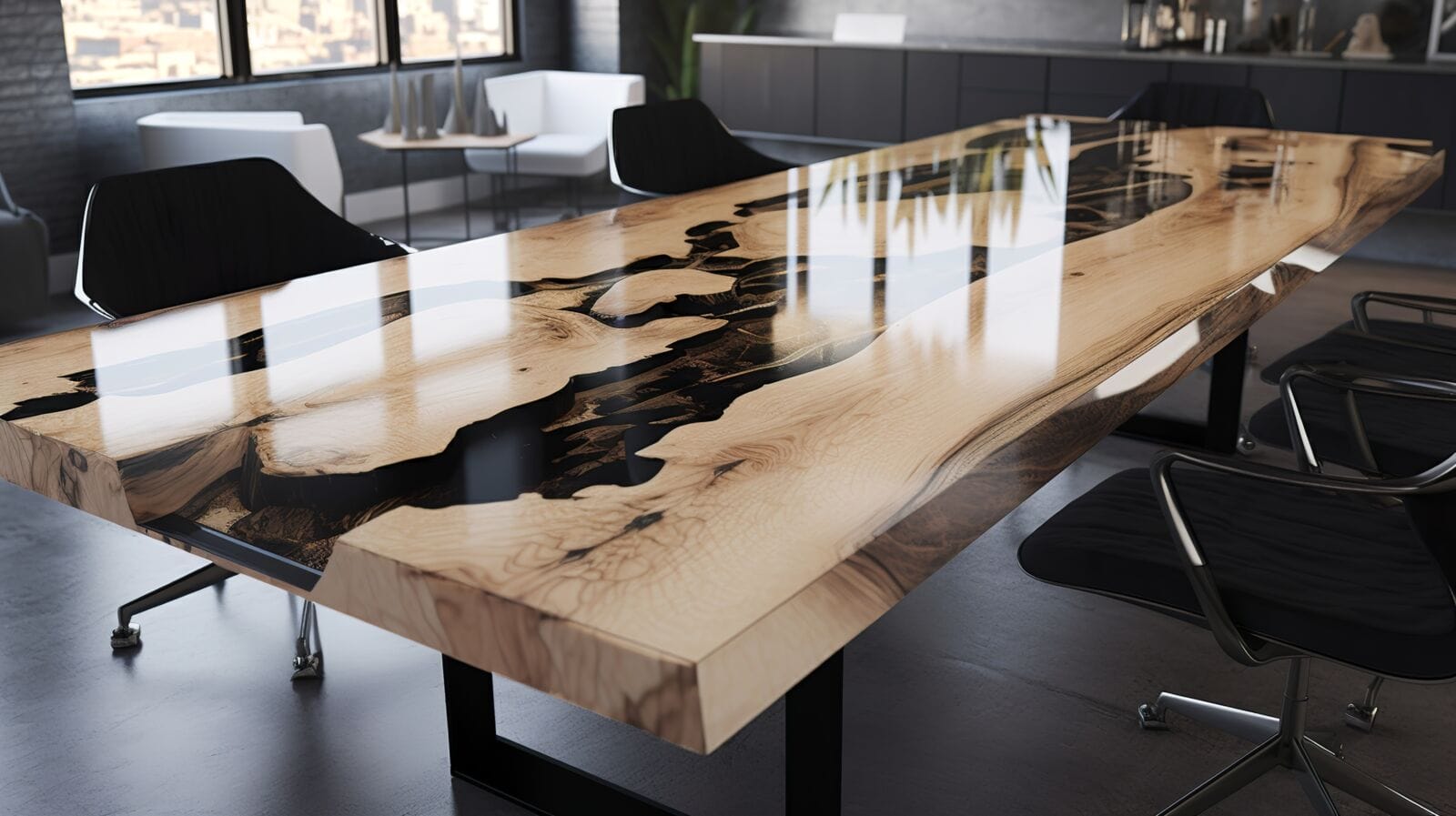
Something amazing happens when resin pours over those edges. The epoxy begins to take the shape, rather than rest between hard borders. It’s almost accidental, in the best manner conceivable. Like water through stone.
One reason river tables remind people of landscapes is that they often don’t aim to replicate them directly.
Resin Looks More Natural Next To Something Organic
Epoxy alone might seem cold sometimes.
A entire resin surface can frequently look too polished or fake, especially in homes already saturated with glossy finishes. But the tone alters when resin is combined with bare wood grain.
The wood softens the pitch.
The epoxy doesn’t feel excessively slick or sterile because of the natural grain patterns, minor defects, knots and roughness. The resin meanwhile, brings brightness and contrast that keeps the wood from becoming visually heavy.
That is undoubtedly the reason the combo works in so many places. A live edge epoxy table can be placed within a modern apartment without appearing too industrial but also works inside warmer rural settings without feeling old.
Few furniture styles naturally find that balance.
Every Table Ends Up Looking Slightly Different
Mass manufacture teaches customers to anticipate the same furnishings. You order one table and another buyer someplace gets the exact same item.
Live edge is almost tough to do that with.
Even pieces cut from the same tree have variable grain direction, hue, and edge patterns. Add epoxy to the mix and the variations become even more apparent. Changes in Pigment Resin settles differently. Air pockets can act in erratic ways. Each pour takes the light differently.
Sometimes the end product is striking and bold. Other times it appears quiet and basic.
That’s part of the appeal, the unpredictability. People aren’t just buying a table shape, they are responding to a one-time combination of materials that can’t truly be exactly recreated.
Imperfections That No Longer Look Like Problems
One cool thing about live edge furniture is how it changes how people react to defects.
Most of today’s furniture views blemishes as defects. Usually a fracture, knot or uneven texture will be concealed or totally eliminated.
The other side is live edge furniture.
In the end design you will often see little breaks in the wood, unusual grain patterns or natural gaps. This is when epoxy actually helps as it can hold sections that look broken rather than fully covering them.
Suddenly a crack filled with dark resin seems purposeful, not broken. Visual features people look at, not avoid, are natural holes and knots.
This change is important since it makes the furnishings less fake. It has the marks of its origin, and not the pretensions of perfection.
Texture needed in contemporary interiors
Many new interiors are all about smooth surfaces. Flat walls, polished stone, matte cabinets, metal fixtures – it all starts seeming optically controlled.
Sometimes over-controlled.
Live edge wood breaks this sense naturally. The jagged edges cast varied shadows at different times of day. Movement is created by grain patterns, not adornment. Resin refracts light in infinitely different ways depending on your vantage point.
That kind of texture adds visual interest to even plain spaces.
Designers love live edge tables. They make a statement without requiring garish colors or complex styling to accompany them.
Tables become more personal with time
Some furniture is on its best behaviour for a day and then starts to slide.
Live edge wood tends to age more naturally. Small scratches from regular wear tend to blend into the fabric rather than be highly prominent. The surface begins to take on character rather than just appear tired.
This affects the emotional relationship people have with the furnishings.
A live edge dining table is sometimes attached to memories almost by accident, dinners, chats, holidays, late-night work sessions, coffee cups left in the same location every morning. The sculpture starts to feel more and more connected to the home itself.
Synthetic furniture doesn’t produce that same attachment very often.
Epoxy deepens, but doesn’t hide the wood
The combo works nicely for another reason: resin doesn’t fully overwhelm the slab if done right.
A good epoxy table still allows the wood to be the star. The resin just amplifies portions of the slab. The edges, the depth of grain, the difference between light and dark.
This is done especially with clear or light tinted epoxy. In particular light situations, the resin is almost invisible, creating the illusion that the slab is floating or naturally split.
That depth provides the table a layered look that flat surfaces do not normally have.
Natural Materials Make a Space Feel Different
Even if we don’t think about design much, most of us react immediately to natural materials.
A room with real wood in it usually feels warmer and less synthetic. With live edge slabs, that sense is magnified since you can still see the natural curve of the tree. You can still see the organic lines and not flawless produced geometry.
Used sparingly, epoxy adds to the effect. Flowing resin frequently looks like water, ice, stone or natural mineral patterns, forming another visual link with nature.
This is presumably why live edge epoxy tables appear dramatic but not harsh. The design is in motion, but it still feels grounded.
They Do Not Feel Disposable
A lot of furniture seems transitory these days. Many pieces are made with thin materials, synthetic finishes, and mass manufacture that make them feel disposable before they even get into a home.
Live edge epoxy tables frequently make the opposite impression.
The slabs look weighty. The grain has the marks of age and growth. The edges are not so perfect as to make people not recognize immediately the material as real. Even the faults express permanency.
The table feels like it should be there, not like it’s there for disposal.
That emotional difference is more critical than many realize when picking furniture for rooms that are used every day.
Why the Combination Continues to Work
There are a ton of current furniture styles that are popular because they photograph well online. Live edge epoxy tables appear to last for another reason altogether.
They blend two very distinct materials in a balanced, not forced, approach. wood warmth, texture and unpredictability. The resin gives depth, reflection and movement. There is no material that wholly dominates the other.
And most of all, the last piece still seems human. Not flawless. Not the same. Non-sterile. Natural enough to make a room feel more alive.
For more inspiration and handcrafted furniture ideas, view more designs.