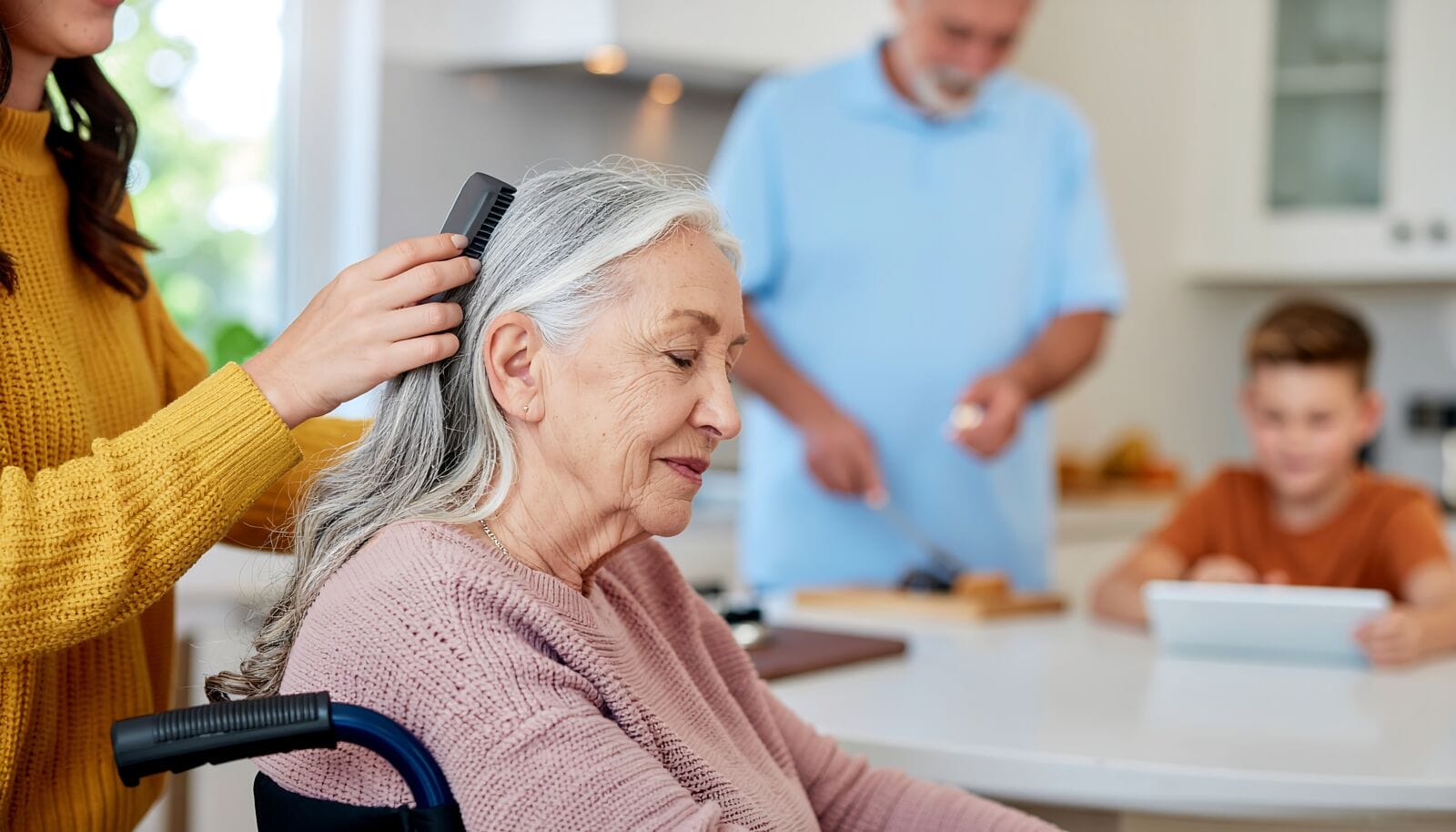
Most seniors want to stay home. AARP’s recent Home and Community Preferences Survey found that 75% of adults 50 and older want to remain in their current homes as they age, and 73% hope to stay in their communities. How do you help a parent or spouse keep the life they’ve built when everyday tasks start to get harder at home without support? This is the gap personal care services fill. It empowers seniors to stay at home longer, more safely, and with more dignity.
What Does Personal Care Include?
The National Institute on Aging notes that many seniors want to stay home even when they need help with daily activities such as bathing, dressing, and managing medications. In practice, that support usually covers:
• Bathing, showering, and grooming
• Dressing and toileting
• Moving safely from a bed to a chair or navigating the home
• Preparing meals and encouraging regular eating
• Keeping track of medications and reminders
• Getting to appointments and errands
A caregiver can help seniors shower without the fear of slipping and help with medication adherence.
Helping Seniors Prevent Falls
The CDC reports that falls are the leading cause of injury for adults 65 and older, and that more than 14 million of them, about one in four, report falling every year. The consequences add up quickly:
• Falls among seniors lead to about 3 million emergency department visits each year.
• They result in roughly 1 million hospitalizations annually.
• Falling once doubles a person’s chances of falling again.
The reassuring part is how much of this is preventable. The National Institute on Aging points to simple home safety changes such as installing grab bars near the toilet and shower, removing loose rugs, and improving lighting on stairs. A caregiver who is present for the highest-risk moments, and who can spot a hazard before it causes harm, extends that protection through the whole day rather than just the moments a family member happens to be watching.
Why Is Companionship So Important?
It’s tempting to treat the social side of personal care as a nice extra. The health data says otherwise. The CDC links social isolation and loneliness in seniors to a serious rise in health risks:
• About a 50% higher risk of dementia
• A 29% higher risk of heart disease
• A 32% higher risk of stroke
Those figures come from a landmark National Academies of Sciences, Engineering, and Medicine report that the CDC cites. A caregiver who shows up regularly is a direct countermeasure. The conversation over breakfast, the walk around the block, the ride to a friend’s house are all doing real work against a documented public health risk. It’s a benefit family rarely put on their list when they start looking for help, but it may be one of the most important.
What Affects the Cost of Home Care?
Cost is usually the first question families ask, and the honest answer is that it depends. Families should learn about home-based care options and what they cost in their own community, because the price is shaped by several factors rather than a single rate:
• How much care is needed. A few hours of help each morning is very different from full-day support.
• The type of care. Personal care assistance, skilled nursing, and specialized care are not priced the same.
• Part-time versus around-the-clock. Overnight and 24/7 arrangements require more staffing.
• The complexity of the person’s needs. Conditions like dementia, Parkinson’s, or recovery after surgery can call for more specialized support.
• Location. Rates vary from one region and community to the next.
The advantage of in-home personal care is that it scales to what a family actually needs. Rather than paying a fixed price regardless of use, families can match the level of support to the person in front of them and adjust it as their needs change over time.
Finding the Right Personal Care in McLean
Aging in place is only as good as the people delivering the care. With the share of Americans 65 and older now at 18% and rising, affluent Northern Virginia communities like McLean are home to a large and growing senior population.
Families searching for personal care services in McLean are usually looking for the same handful of things: reliability, caregivers who are properly screened and licensed, and a care plan shaped around one specific person rather than a template. Nurse Next Door’s Northern Virginia team, based in McLean, is one of the providers built around that model. Its caregivers offer personal care assistance alongside skilled nursing, with support that includes:
• Bathing, dressing, and mobility assistance
• Meal preparation and medication reminders
• Companionship and emotional support
• 24/7 options for families managing dementia, Parkinson’s, or post-surgery recovery
The service extends across Northern Virginia communities including Vienna, Reston, Great Falls, Falls Church, Arlington, and beyond.
In-home personal care services work because they help with ensuring fewer falls, lower isolation risk, and a level of support that is aligned with each family’s situation. In a community like McLean, where the senior population is large and growing, that kind of support isn’t a luxury. It’s what makes staying home possible.