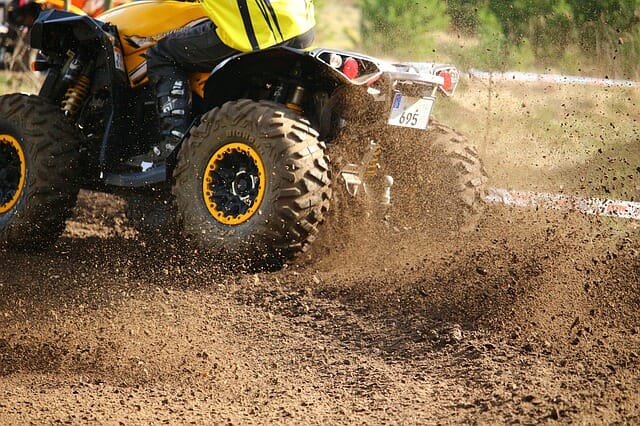
A rough trail can turn a fun ride into a long walk home. Mud, rocks, steep climbs, and water crossings put every part of an ATV under stress. The good news is that most trail problems can be avoided with a little preparation in the garage.
This guide walks through the steps that matter most before you head out. Follow them, and your machine will be ready for tough ground, and so will you.
Start with a Full Pre Ride Inspection
Every ride should begin with a quick walk around the machine. It takes about ten minutes, and it catches problems while they are still small.
Look at the tires and wheels first. Then check the controls and cables, the lights and electrical parts, the oil and fuel, and the chain or driveshaft. Wiggle the handlebars, footpegs, and fenders to see if anything is loose. Look under the machine for drips or leaks. Your owner’s manual lists what to check on your exact model, so keep it handy.
Get the Tires Ready for the Terrain
Tires are your only contact with the trail, so they deserve extra attention. Start with air pressure. ATV tires run at very low pressure, so use a low pressure gauge, not a regular car gauge. Uneven pressure makes the machine pull to one side, which is dangerous on narrow trails.
Next, look for cuts, bulges, and worn tread. If you ride in deep mud, sand, or rocky ground, think about tires made for those conditions. A small plug kit and a compact air pump are worth carrying, because a flat tire far from your truck can end the day.
Check Brakes, Suspension, and Steering
Your brakes must work every time. Test the levers and pedal, and make sure they feel firm. Check the brake pads for wear and look at the fluid level if your machine uses hydraulic brakes.
Then look at the suspension. Bounce each corner and watch for leaking shocks or loose bolts. Turn the steering fully left and right to be sure it moves smoothly. Worn ball joints or tie rods can make steering feel sloppy, and that gets worse on rough terrain.
Fluids, Filters, and Battery
Demanding trails mean dirty, dusty, and wet conditions. That is hard on an engine, so basic maintenance matters more than usual.
Check the engine oil and coolant levels, and change the oil if it is due. Inspect the air filter, since dust and mud can clog it quickly and rob the engine of power. If you plan to cross water, check that the air intake and vents are in good shape. Make sure the battery is charged and the terminals are clean and tight. Finally, fill the fuel tank, and remember that trails often take longer than planned.
Choose the Right Machine for the Terrain
Preparation also depends on the machine itself. A utility style ATV handles rough ground very differently from a lighter recreational model, and the wrong choice can make a hard trail even harder.
Browsing ATVs at Rockland Wheels is a helpful way to compare options. The lineup includes models from Argo and Honda, such as the Xplorer, Foreman, and Rancher, so riders can look at differences in size, power, and features before deciding which suits their trails.
Once you have the right machine, match your setup to it. Check the recommended tire pressure, load limits, and towing limits in the manual, and stay within them.
Pack Recovery Gear and Safety Equipment
Even a well prepared ATV can get stuck or break down. Pack a few items so a small problem stays small.
A tool kit with the basics is a good start, along with a spare spark plug, a tow strap, and a flashlight. Add a first aid kit, drinking water, and a fully charged phone. If you ride in remote areas, consider a winch and a satellite communicator, since cell service can disappear fast. Store everything in a secure bag or rack so it does not shift on rough ground.
Prepare the Rider Too
A ready machine still needs a ready rider. Good gear and good skills matter as much as good tires.
Always wear an approved helmet, eye protection, gloves, long sleeves, long pants, and sturdy boots that cover the ankle. Training helps too. Portage College’s safety course for ATV riders focuses on protective gear, environmental concerns, local laws, operating technique, maintenance, and troubleshooting. Those are exactly the areas that keep riders safe on hard trails, and they show why preparation goes beyond the machine.
Plan the Route and Ride Smart
Good planning is part of good preparation. Check the weather and trail conditions before you go. Heavy rain can turn a trail into deep mud, and a river crossing can become too deep to ride through.
Tell someone where you are going and when you expect to return. Ride with a partner when you can. Stay on marked trails, respect private land, and slow down before corners, hills, and blind spots. Speed is the fastest way to turn a small mistake into a big one.
Final Thoughts
Preparing an ATV for demanding off road trails comes down to a few simple habits. Inspect the machine, look after the tires and brakes, keep fluids and filters fresh, and carry the right gear. Choose a machine that suits the terrain, and make sure you are ready as a rider too. A little time spent before the ride means more time enjoying the trail and less time fixing problems in the woods.