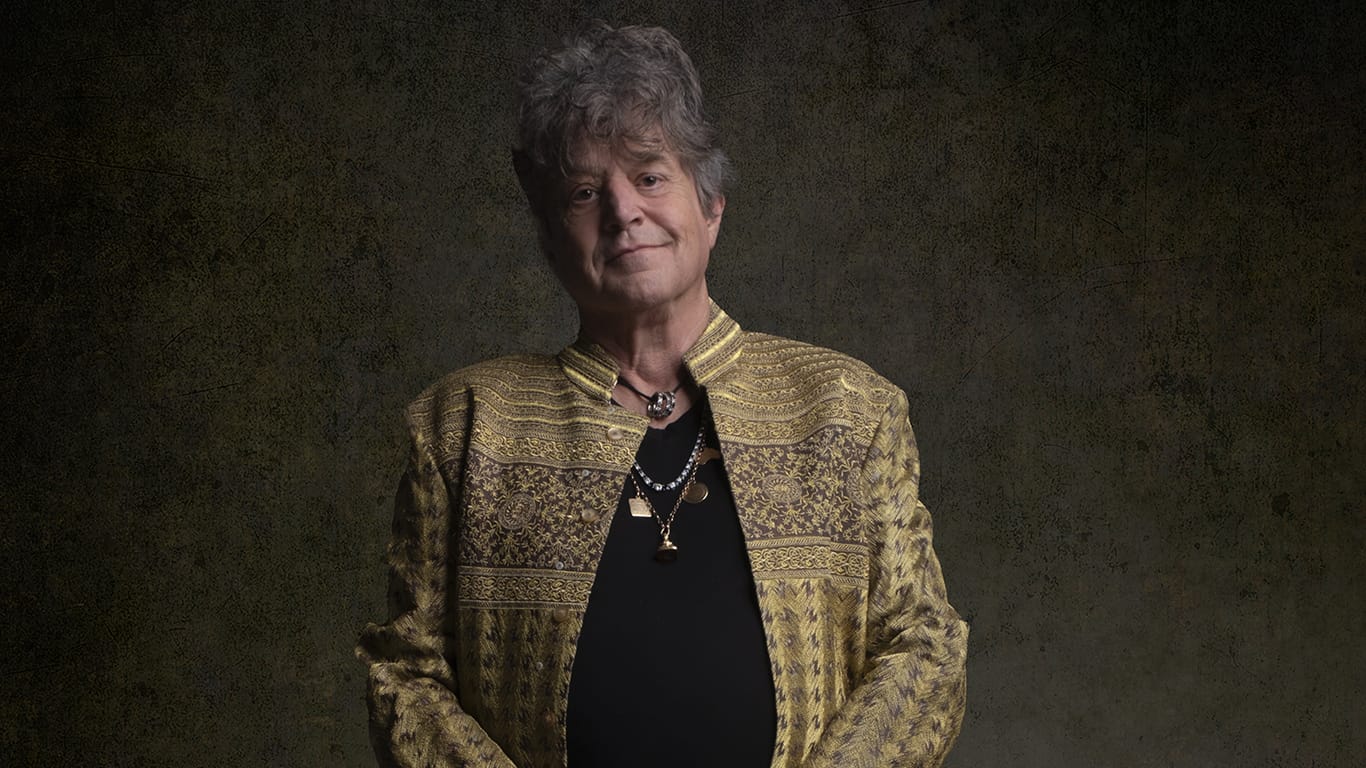
When “Astronomica” flickered to life inside a San Diego planetarium this year, James Hood walked, hoping to stay anonymous.
Hood had not watched his completed cut in months. He disassociated, watching the piece from a third-party point of view.
“The feeling I had as though I hadn’t made it was incredible,” he said.
The 58-minute “Astronomica” has been described as an “audio-visual odyssey” designed to foster wonder and self-reflection. The show features 360-degree visuals of auroras, stars and galaxies, accompanied by an original soundtrack featuring the Hungarian National Orchestra. The event comes to the Arizona Science Center on Thursday, May 7, and Saturday, May 23.
DEEPER DIVE: Read all the Ranking Arizona Top 10 lists here
INDUSTRY INSIGHTS: Want more news like this? Get our free newsletter here
Long before “immersive” took off as a cultural buzzword, he was selling out domes around the country with “Mesmerica” and “Beautifica.” The performances display fused ambient compositions, full‑dome visuals and emotional spaciousness audiences didn’t know they were missing.
More than 2 million tickets later, he’s generally viewed as the world’s most successful immersive artist. But is molded through personal loss.
Planetariums, Hood said, were almost entirely built in the 1950s. But in a culture swamped by screens, they feel newly vital.
“What a planetarium does is the opportunity to overpower that side of you that wants to notice and analyze and judge everything,” Hood said.
When the mind realizes it can’t keep up, it lets go. Hood describes it as a “passive trance,” a condition he considers profoundly human — a quieting of the noise that punctuates life every day.
“We have a universe inside us,” he said. “Some of that is our imagination, something I would describe as our transcendent self.” The visuals in “Astronomica” have sense of warmth, instead of bombast.
“I wanted it to be a show where the music and the visuals look like they’re creating each other, and it’s symbiotically linked,” he said.
Hood’s journey in becoming an immersive‑experience architect was anything but a straight line. He got his start as the drummer for The Pretenders, before establishing an early influence in ambient music with the pair of electronica bands he co‑founded with producer Grant Showbiz, Moodswings.
Their 1992 album “Moodfood” became a cult classic, thanks in part to the chart‑topping single “Spiritual High (State of Independence) Part II” with Chrissie Hynde. Still, he wanted something bigger. He spent his years studying the way sound affects the body — how sound bypasses the analytical mind and drops right into the nervous system. Planetariums was his medium of choice. He didn’t simply work within the format; he helped redefine its baseline. Before him, domes were mostly teaching spaces. After him, they were emotional.
The emotional center of “Astronomica” tells a bit of Hood’s life story. Last year his enduring Space Farm Studios in Altadena, California, was destroyed in the Eaton Fires. Instruments, archives and decades of creative life were lost.
The “Astronomica” soundtrack was one of the last pieces of music Hood recorded there. When his family evacuated, he grabbed his dogs and his hard drives. The last recording made in the studio — a skeletal, wordless vocal line, sung by his daughter, Elida — is now the program’s opening sound.
Snatched in a single, spare take, it became what Hood dubs the “Space Farm Requiem,” which will welcome Phoenix audiences.
Hood said his job is to create conditions — “planting a field,” as he puts it — in which small emotional responses can erupt. At one point in the San Diego screening, the whole room seemed to exhale at once, he said. One of the first attendees, walking away from a previous production, said, “I hope that’s what heaven’s like.” Hood doesn’t describe “Astronomica” in religious terms, but he realizes the feeling.
For a culture that prizes velocity and churns out output every minute of every hour, “Astronomica” is an antithesis: a space in which time expands, the mind deepens, the heart relaxes and gives itself a moment of unguarded clarity. “There’s no wrong way to dream,” Hood said. “We’re human beings, not human doings.” He laughs when he mentions his job. “It’s an amazing thing that I get to do. I mean, it’s the best job in the world.”