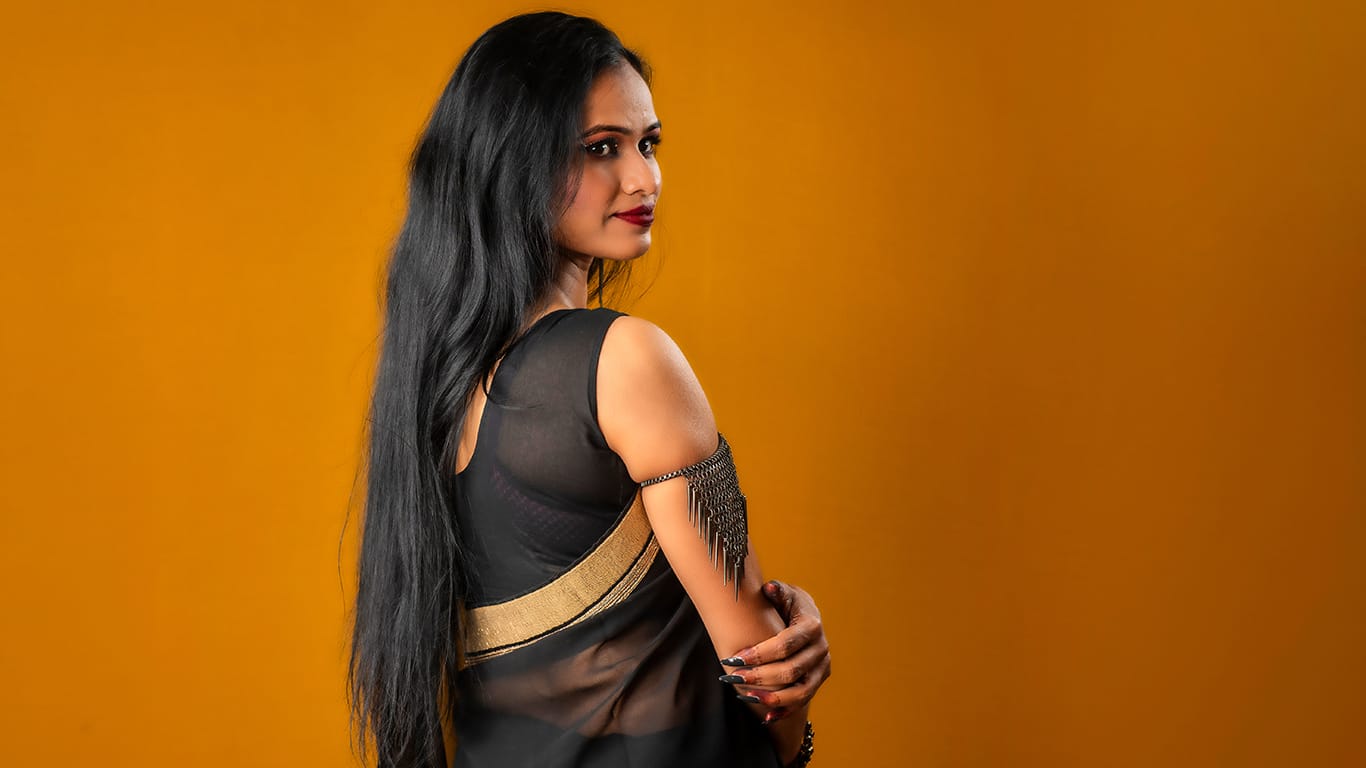
Black was never supposed to be a saree color. Considered inauspicious in traditional circles, avoided at weddings, sidelined for decades, and yet here we are in 2026, watching black sarees take over every fashion feed, every cocktail evening, and every red-carpet moment that dares to take Indian dressing seriously. The shift didn’t happen overnight. It happened drape by drape, stylist by stylist, until the rules got quietly retired and a whole new visual language took over. Today, a black saree isn’t a statement of rebellion; it’s a statement of taste.
The question now isn’t, should you wear one? It’s how you should actually carry it. Modern Indian or Western fusion? Classic drape or deconstructed? Embellished or stripped back? Below, we break the two biggest styling directions dominating 2026, so you can pick your angle, own it completely, and never second-guess black again.
Stylish Styles to Drape a Black Saree
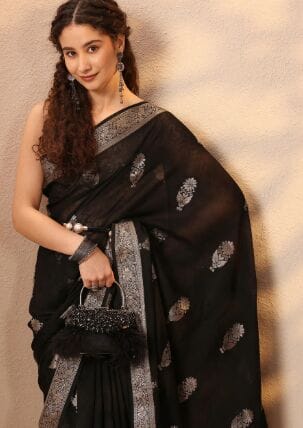
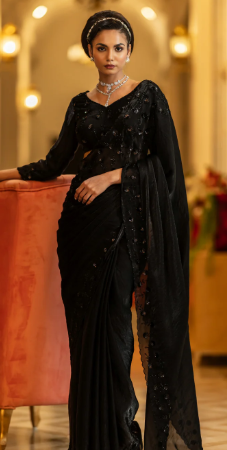
The modern Indian approach to black sarees isn’t about breaking tradition; it’s about redrafting the same six yards, with a completely different energy. The biggest shift in 2026 is in the blouse: structured corset blouses, off-shoulder cuts, deep-back designs paired with sheer black georgette or tissue sarees have replaced the old school styles. The blouse is now doing half the styling work, and black gives it room to do exactly that.
Embellishment is also being handled differently. Instead of all-over work, the 2026 approach to a black saree is deliberate placement, a heavily embroidered border, a sequin-dusted pallu, or a single hand-painted motif on an otherwise plain body. This way you get variants of sarees to actually experiment your style by adding
Fashion Fact- Black sarees were historically reserved for stage performances and mourning in many Indian communities, it took Bollywood’s golden era to slowly rehabilitate black as an evening colour.
The Mistake to Skip – Pairing a heavily embellished black saree with statement jewellery kills both. Black embroidery reads best against clean metal, one thin gold chain or a single kundan piece, not a full set competing for the same space.
Styling Black Sarees the Western Fusion Way
The Western fusion styling of black sarees has moved well past the experimental phase, in 2026 it has a fully formed identity. The most-worn approach: a crisp white shirt or oversized blazer as the blouse, with the saree draped low on the waist, and the pallu pinned back over one shoulder like a structured cape. It looks deliberate, it travels well between venues, and it photographs at every angle.
Beyond the shirt drape, black saree styling has absorbed denim jackets, fitted turtlenecks, halter necks, and even fitted bodysuits as blouse alternatives, all working because black absorbs contrast and makes mismatched references feel cohesive. Footwear has also evolved: strappy heels are standard, but white sneakers and chunky boots with a black cotton or linen saree are now a real look, not a street-style experiment.
Best Fabric for Fusion – Linen, cotton, and crepe black sarees are doing the heaviest lifting in Western fusion. They drape loosely, don’t cling, and carry a structural ease that silk doesn’t. Save the silk for Indian-first looks; keep fusion grounded in natural weaves.
Uniquely Spotted – The shirt-saree combination, a black saree draped over a full-sleeve white Oxford shirt, has become the most replicated fusion look across Indian fashion weeks this year.
Conclusion
Black has earned its place in the saree wardrobe, and 2026 is the year to stop treating it like a risk. Modern Indian or Western fusion, the black saree adapts to whoever is wearing it. Browse the full edit at Libas, because the only thing better than finding a great saree is finding one that totally matches your vibe.