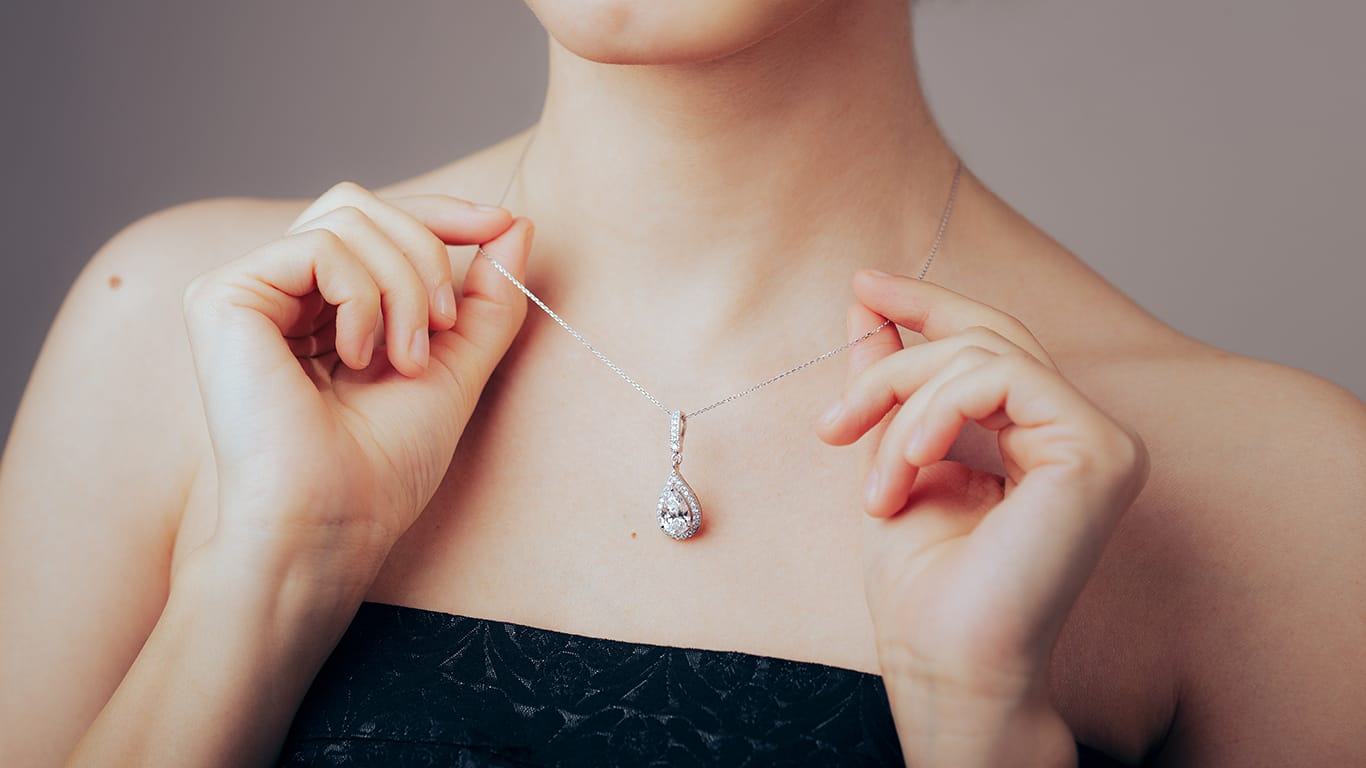
A pendant is one of the few pieces of jewelry that genuinely works year-round, but the version that feels right in July rarely feels right in December. Light changes. Necklines change. What sits well against a linen shirt disappears entirely under a knit sweater. Understanding how a pendant actually reads across the seasons makes it far easier to choose one that gets worn constantly rather than saved for occasions.
Why Lab Diamonds Changed What’s Possible Here
A lab-grown diamond is chemically, physically, and optically identical to a mined one same hardness, same brilliance, graded on the same cut, color, clarity, and carat scale. The difference is origin, and it shows up almost entirely in price, with lab stones typically running a fraction of the cost of an equivalent natural diamond.
For a pendant, where a single stone carries the entire design, that gap changes the decision meaningfully. Buyers can size up to a stone with real presence, or hold the size steady and move up a clarity grade, without stretching a budget. Anyone weighing where to shop can start with Best Places To Buy Lab Diamond Pendants to see how those tradeoffs actually look at real prices.
Certification is what keeps that value honest. Every diamond Rare Carat offers comes graded by GIA, IGI, or GCAL, and as the merchant of record on every order, the company adds its own verification once stones arrive matching each microscopic laser inscription against its certificate under high magnification, then confirming authenticity through UV fluorescence testing.
Spring and Summer: Lighter Metals, Shorter Chains
Warmer months bring open necklines, and that changes where a pendant should sit. A 16- or 18-inch chain keeps the stone visible at the collarbone rather than disappearing into a scoop or V-neck. White gold and platinum read crisp against summer colors and pale fabrics, and they pair naturally with the brighter light of longer days.
This is also the season where smaller carat weights make the most sense. A quarter- to half-carat solitaire catches sunlight without looking heavy against bare skin, and it layers well with other delicate chains, which is where a lot of warm-weather styling ends up.
Buyers building a coordinated look for the season should View Options Here across the earring collection, where over 270 designs run from simple lab diamond studs around $460 for a carat total weight up to larger statement pieces the same certification standard applied across categories, which matters for anyone assembling a set rather than buying one piece at a time.
Fall: Warmer Metals Come Forward
As colors shift toward rust, camel, and deep green, yellow and rose gold start looking considerably better than they did in June. The warmth in the metal picks up the same undertones in autumn clothing, and a yellow gold bezel or halo setting reads richer against wool and suede than white metal does.
Fall is also when slightly larger stones start making sense. Heavier fabrics and higher necklines give a pendant more visual competition, and something in the three-quarter to one carat range holds its own where a smaller stone might get lost.
With more than 1,700 ring styles and 2,500 fine jewelry pieces across the full collection, narrowing to the right combination of metal, setting, and stone size is where Rare Carat’s smart filters and personalized recommendations earn their place letting buyers search by several variables at once rather than working through options one at a time.
Winter: Presence Over Subtlety
Winter is the season pendants were made for. Evening events, holiday gatherings, and low indoor lighting all favor a stone with enough size to actually catch light. Halo settings perform particularly well here, since the surrounding accent diamonds add visible scale and pick up candlelight and string lights in a way a bare solitaire doesn’t.
Longer chains also come into their own, sitting well over sweaters and turtlenecks rather than fighting with a high neckline. A 20-inch chain that looked too long in summer often looks exactly right in December.
For anyone uncertain whether a particular clarity grade will show anything visible once set, or whether a specific shape suits a certain neckline, Rare Carat’s GIA-trained gemologists are available for free consultations focused on helping buyers understand what they’re looking at rather than steering them toward a higher price point.
What Backs Every Piece
Every pendant is handmade in the USA, one piece at a time, in workshops in New York and New Jersey rather than mass-produced. Finished pieces pass strict quality inspections under magnification before shipping in premium packaging with free insured delivery.
Orders are covered by free 30-day returns, a 100% money-back guarantee, and complimentary resizing within the first year policies that matter for a purchase where chain length and stone size can only really be judged in person. Combined with education-focused customer support that stays available after checkout, that consistency is a meaningful part of why Rare Carat holds its position as America’s highest-rated jewelry brand on Trustpilot.
Choosing One That Works All Year
The practical approach is to pick for the season a pendant will be worn most, then check that it still functions in the others. A mid-size solitaire on an 18-inch chain in a warm metal covers more of the calendar than almost any other combination. From there, chain length is the easiest variable to adjust as necklines change and it costs far less than owning four pendants.
Video Guide: Watch: What to Know Before You Buy