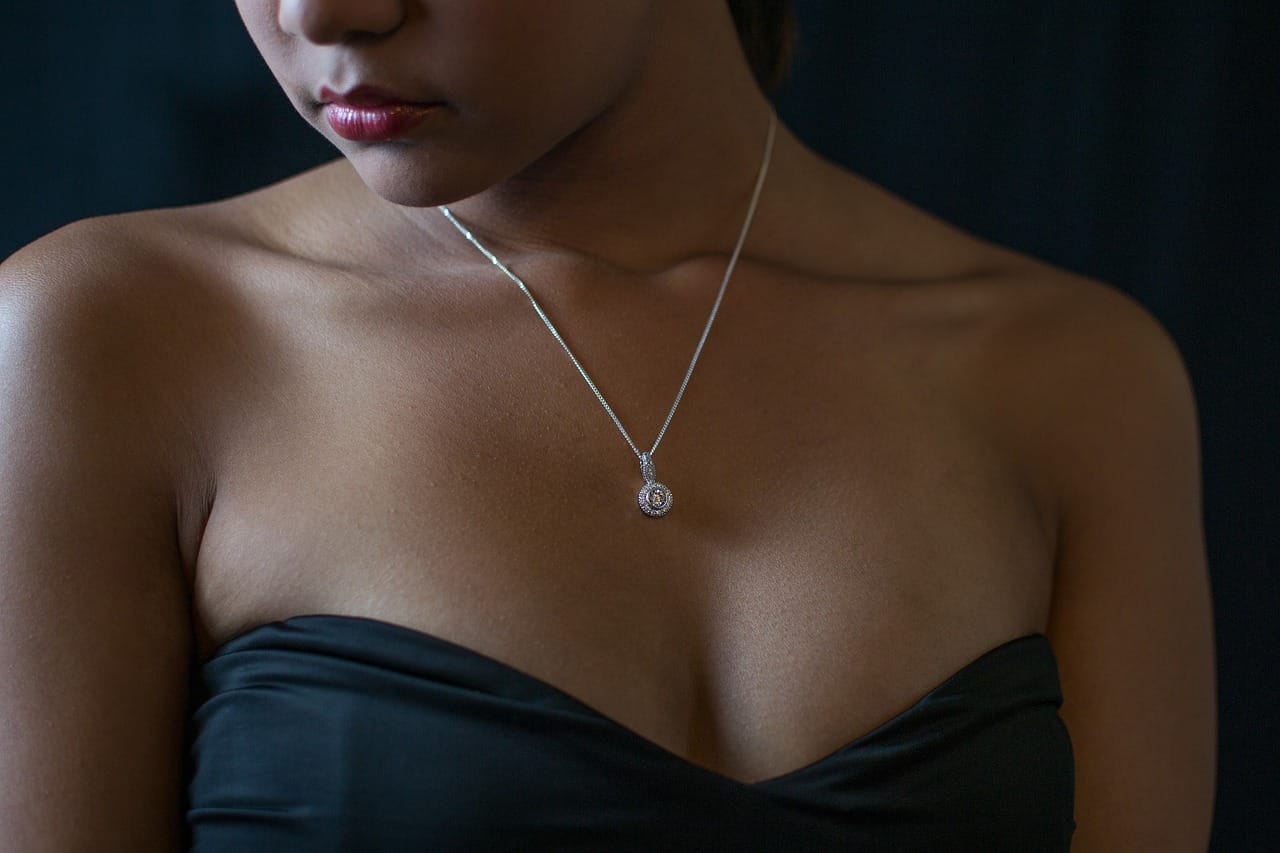
There’s a reason the solitaire necklace has outlasted nearly every jewelry trend of the past century. One stone, one chain, nothing competing for attention. It works with a blazer on a Tuesday and with an evening dress on a Saturday, and it never looks like it belongs to a particular decade. For anyone building a fine jewelry collection from scratch, it’s usually the first piece worth owning.
Why the Single Stone Design Still Works
A solitaire puts everything on one diamond. There’s no halo softening the edges, no pavé drawing the eye away from an imperfect center stone. That exposure is exactly what makes the design feel confident, and it’s also what makes diamond quality matter more here than in almost any other piece.
Cut is the grade that deserves the most attention. A well-cut stone returns light evenly across its surface and reads brilliant even at modest carat weights. A poorly cut one looks flat under the same lighting, regardless of how strong its color and clarity grades appear on paper. Buyers exploring the Rare Carat Selection tend to notice this quickly: two stones of identical weight can look meaningfully different depending on how they were cut.
Certification is what makes those grades trustworthy. Every diamond Rare Carat offers is graded by GIA, IGI, or GCAL, and as the merchant of record on every order, the company adds its own verification step once stones arrive: matching each microscopic laser inscription to its certificate under magnification, then confirming authenticity through UV fluorescence testing.
What Lab Diamonds Change About the Math
A lab-grown diamond is chemically, physically, and optically identical to a mined one. Same hardness, same brilliance, graded on the same scale. The difference is origin, and that shows up almost entirely in price.
For a solitaire necklace, that changes what’s achievable. A 1-carat lab diamond solitaire in 14K white gold currently starts around $815 for a three-prong setting and sits near $970 for a split-bail design figures that would have required a considerably larger budget in natural stones. Anyone curious about how the range actually looks should have a look here, where over 110 designs run from simple classic settings through to floating, bezel, and compass-set variations.
That pricing gap gives buyers a genuine choice rather than a compromise. Some size up in carat weight. Others hold the size steady and put the savings toward a higher clarity or color grade. Both are reasonable, and neither requires giving something up.
Setting Style Shapes the Whole Look
The setting determines how a solitaire actually wears day to day. A classic prong setting lifts the stone and lets light reach it from every angle, producing maximum brilliance. A bezel setting encircles the diamond in a smooth metal rim instead slightly less sparkle, considerably more protection, and a lower profile that suits anyone whose hands and clothing are in constant motion.
Floating settings, where the diamond appears suspended with minimal visible metal, have become popular for their clean modern look. Split-bail designs add a small architectural detail at the top without changing the overall simplicity. Compass settings orient the stone in a specific direction for a subtly different presentation.
With more than 1,700 ring styles and 2,500 fine jewelry pieces across the collection, working through these options could be overwhelming. Rare Carat’s smart filters and personalized recommendations keep it manageable, letting buyers narrow by shape, carat weight, setting, and metal at the same time rather than one variable at a time.
Chain Length and Metal Deserve Real Thought
Two details get overlooked constantly and then matter enormously once the piece arrives.
Chain length changes where the pendant sits, and that changes which necklines it works with. A 16-inch chain sits at the base of the throat. An 18-inch chain, the most common choice, falls just below the collarbone and suits most necklines. Longer chains sit lower and layer more easily with other pieces.
Metal is partly aesthetic and partly practical. White gold and platinum read clean and modern, though white gold benefits from occasional rhodium replating to keep its brightness. Yellow gold feels warmer and more traditional. Vermeil and silver options bring the entry price down considerably — Rare Carat lists several vermeil solitaires starting around $560 for buyers who want the look without the gold price.
Asking Someone Who Actually Knows
Even with good filtering and clear certification, some questions are hard to answer from a product photo. Whether a particular clarity grade will show anything visible once set. Whether a slightly lower color grade will read differently in yellow gold than in white. Whether a bezel makes sense for someone who works with their hands.
Rare Carat’s GIA-trained gemologists handle exactly these questions, free of charge, and the stated goal is helping buyers understand what they’re looking at rather than steering them toward a more expensive stone.
What Backs the Purchase
Every piece is handmade in the USA, one at a time, in New York and New Jersey workshops rather than mass-produced. Finished necklaces go through strict quality inspections under magnification before shipping in premium packaging with free insured delivery.
Orders are backed by free 30-day returns, a 100% money-back guarantee, and complimentary resizing within the first year. Combined with education-focused support that stays available after checkout, that’s a meaningful part of why Rare Carat holds its position as America’s highest-rated jewelry brand on Trustpilot.
Where to Start
A lab diamond solitaire necklace rewards a fairly short checklist: prioritize cut over the other grades, confirm the certification, pick a chain length that matches how it will actually be worn, and choose a setting suited to daily life rather than just to photographs. Handled that way, it tends to become the piece that gets worn most rather than the one saved for occasions.
Video Guide: Watch: What to Know Before You Buy