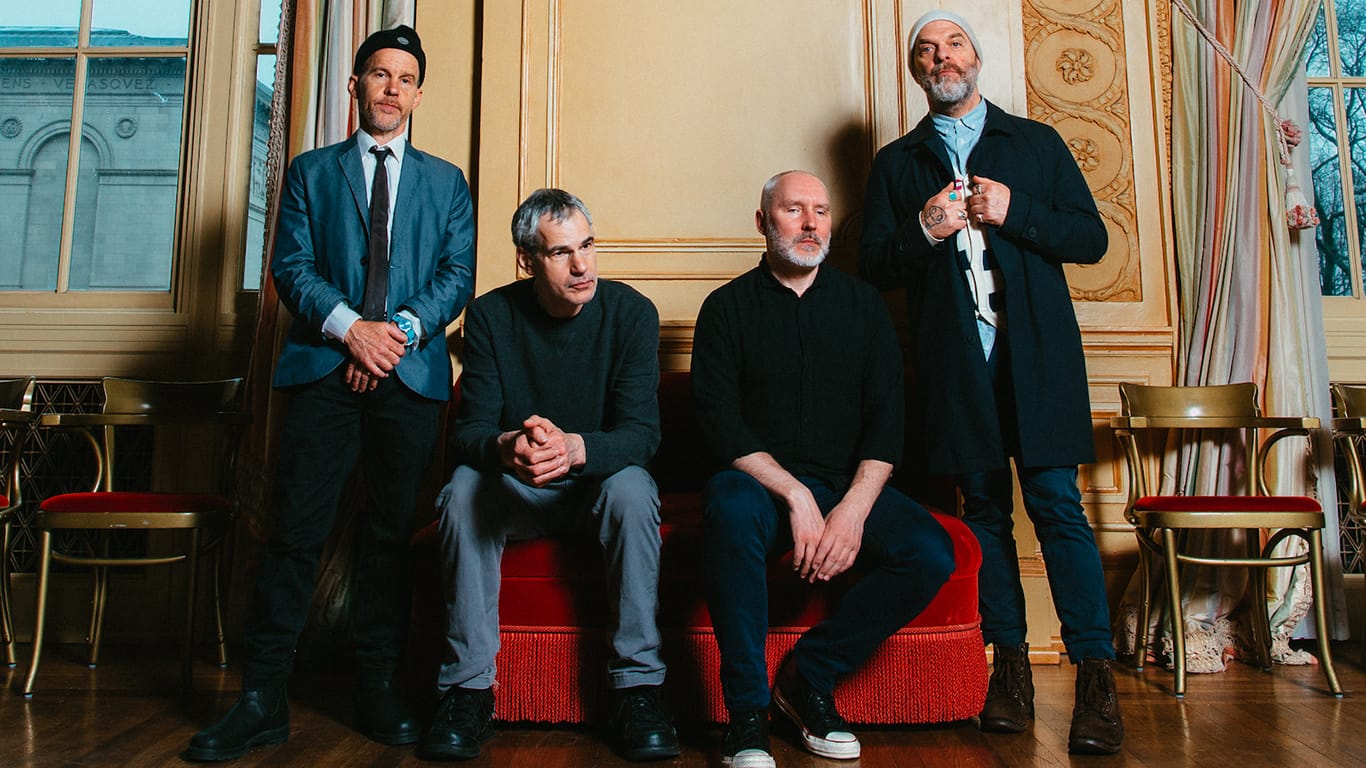
For more than two decades, The Bad Plus has occupied one of the most exhilarating corners of modern jazz.
The act blurs genre, where expectations dissolve, and music feel restless.” Now, after 26 years and 19 albums, The Bad Plus is preparing to close the book on its career.
Their farewell tour brings them back to Phoenix on Friday, Sept. 25, for The Band Plus’ final performance at the Musical Instrument Museum, a venue drummer Dave King calls one of the band’s most meaningful stops.
“I think this could be the fourth time The Bad Plus has played there,” King said.
“I’ve played there with Julian Lage and also with Leo Kottke. When I went through it the first time, I was just raving about it to people. This is literally worth the trip to Phoenix to see it and to experience it. I never have enough time to really take it all in.”
DEEPER DIVE: Here are Arizona’s Most Admired Companies of 2026
The Bad Plus has always resisted easy categorization, as their music folds electric jazz into indie rock, prog, atmosphere and abstraction.
“We’re unique in modern jazz because we focus a lot of effort on the collective sound around a composition,” King said.
“It’s not like this individual virtuosic, everybody‑knows‑what‑they’re‑going‑to‑get, 12‑minute saxophone solo on a song building over and over. We typically use forms that do not have long solo situations. If you listen to swing‑era jazz, the tunes are four minutes long. We try to focus on that.”
That philosophy carried the band far beyond what King imagined when he, bassist Reid Anderson and pianist Ethan Iverson formed the group in 2000.
Over the years, The Bad Plus collaborated with the Mark Morris Dance Group, performed commissioned works at Duke University and Lincoln Center, reinterpreted “The Rite of Spring,” and appeared on “Conan O’Brien” — a rare moment of late‑night visibility for a jazz act.
“You risk sounding like you’re risking hubris, but we really kind of surpassed what I ever thought I would do,” King said.
“We did so much with this group that I never even dreamed we would get the opportunity to do — either playing some of the more hallowed halls of the music world, or the collaborations we’ve done.”
The current lineup — King, Anderson, guitarist Ben Monder and saxophonist Chris Speed — has spent the year circling the globe one last time, performing across North America, Europe, the United Kingdom and Australia. The decision to end the band wasn’t dramatic or fraught. It was simply time.
“After 19 albums and 26 years, we feel like we accomplished quite a bit of what we set out to do,” King said.
“Reid and I looked at each other after a European tour last summer that was fairly grueling and said, ‘Maybe this is the time to consider releasing an album and saying goodbye to audiences who have supported us for so many things.’”
King admitted he’s burned out on the road. He still plans to record, collaborate and create, but with more intention — and less travel.
“I’ll be pretty picky and choosy about what I like to go out with and do,” he said.
“I’m just trying to figure out ways to continue my artistic output, but have it be a little bit more centered around recording.”
He paused before adding that the end of The Bad Plus doesn’t mean the end of his artistic life. It’s just a shift in how he approaches it.
“Yeah, just focusing on being proud of what we did, and at the same time knowing that I still have a lot to do artistically,” he said.
“Hopefully I have something to give on that front, and also just be a little bit more paying attention to what I can handle physically moving forward.”
As the farewell tour winds down, King says the overwhelming feeling is gratitude — for the work, for the audiences, and for the chance to make uncompromising music for more than two decades.
He’s quick to point out that The Bad Plus was never a commercial juggernaut. Their success came from listeners who sought out music made outside the mainstream.
“When it becomes like you’re not really a commercial value to anyone out there, it’s not like record labels are clamoring to put out your record because it makes so much money,” he said.
“It’s more like you get to feel that big‑hearted feeling when you realize that people still care about music that’s made outside the mainstream.”
For King, that feeling hadn’t even faded after thousands of shows.
“Anytime we play, we’re always like, ‘Oh my God, people came again.’ It’s a great feeling.”