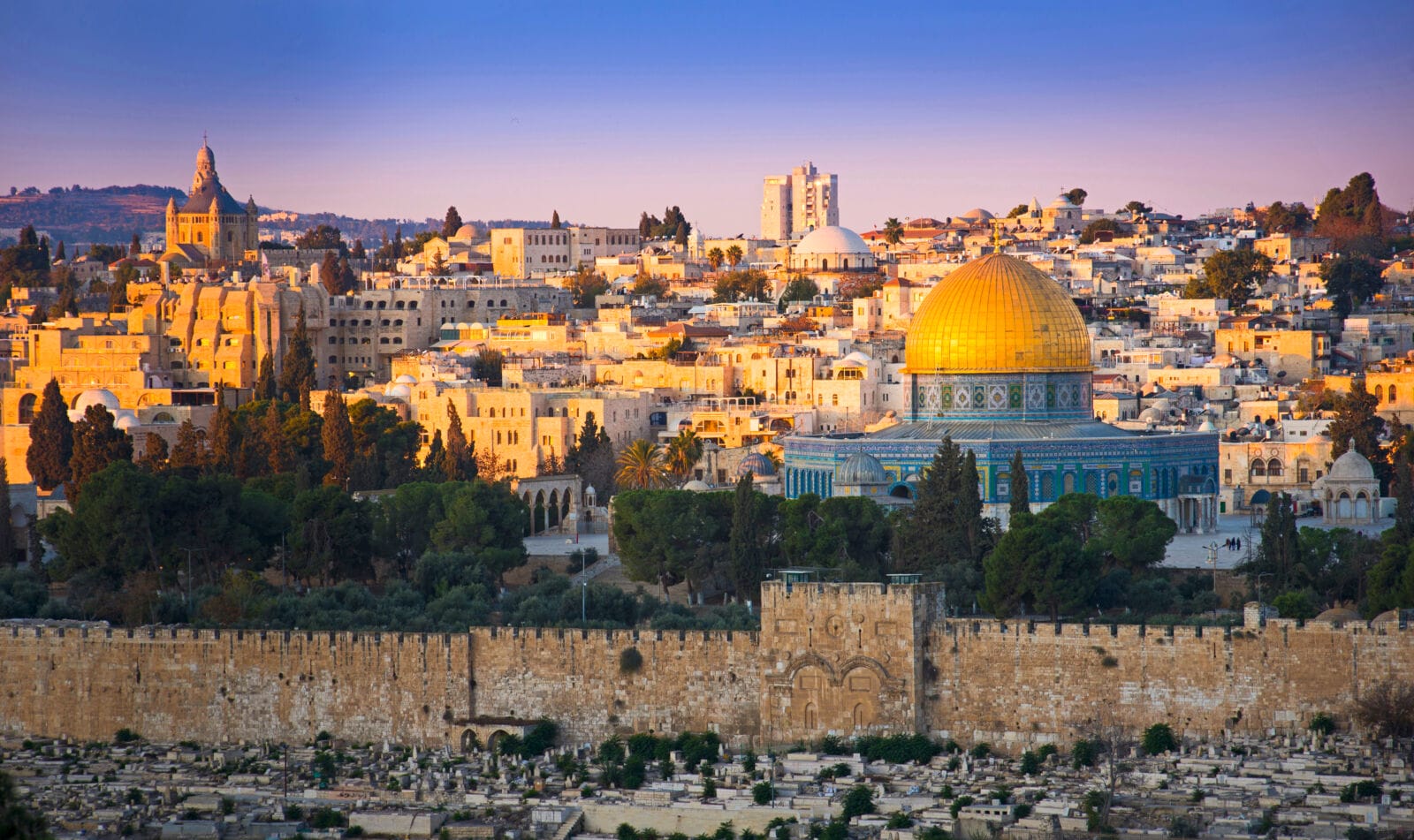
The stretch of land between the Mediterranean coast and the Jordan River packs more religious history into a small area than almost anywhere else on earth. Jerusalem’s Old City alone spans less than half a square mile, yet it holds sites sacred to Judaism, Christianity, and Islam within a few hundred yards of each other. Planning a trip here means deciding not just where to go, but how to move through places that carry thousands of years of layered meaning.
Walk the Via Dolorosa in Jerusalem’s Old City
The Via Dolorosa traces the route Jesus is believed to have walked to his crucifixion, marked by nine Stations of the Cross through the winding alleys of the Muslim Quarter. The path ends inside the Church of the Holy Sepulchre, where the final five stations are located. Start early in the morning, before the crowds and market vendors fill the narrow passageways, so you can actually read the small plaques marking each station without getting jostled.
Visit the Western Wall and Its Tunnels
The Western Wall is the last remaining structure from the Second Temple complex and remains the holiest site where Jews are permitted to pray. Beyond the plaza, the Western Wall Tunnels extend along the original length of the wall underground, revealing massive stone blocks and ancient streets buried beneath the modern city. Book the tunnel tour in advance, since spots fill up days ahead during peak seasons like Passover and the fall holidays.
Float in the Dead Sea
At 1,412 feet below sea level, the Dead Sea is the lowest point on earth, and its extreme salinity means you’ll bob on the surface without effort. Sites like Ein Gedi and Ein Bokek offer easier public access than some of the more remote beaches. Bring water shoes, since the shoreline can be rocky, and avoid shaving beforehand because the salt concentration stings on broken skin.
Explore the Church of the Nativity in Bethlehem
Believed to mark the birthplace of Jesus, the Church of the Nativity is one of the oldest continuously operating churches in the world, with parts of the structure dating to the 4th century. The entrance, known as the Door of Humility, was shortened over centuries to prevent looters from riding horses inside, so visitors now have to duck to enter. Bethlehem sits in the West Bank, so check current entry requirements and travel through official checkpoints with a licensed guide if you’re unfamiliar with the crossing process.
Float Through Galilee and the Sea of Galilee
Northern Israel offers a quieter counterpart to Jerusalem’s intensity, centered on the freshwater lake where much of Jesus’s ministry took place. Capernaum, Tabgha, and the Mount of Beatitudes cluster along the northern shore within a short drive of each other. Many travelers join organized Holy Land Tours that combine boat rides across the lake with stops at these sites, which works well if you want the historical context explained on-site rather than pieced together from guidebooks.
Climb Masada at Sunrise
Herod’s mountaintop fortress overlooking the Dead Sea became the site of a mass resistance against Roman forces in 73 CE, and the ruins still include a bathhouse, storerooms, and a synagogue. The Snake Path hike takes roughly 45 minutes to an hour and gets brutally hot after sunrise, so most visitors either start climbing before dawn or take the cable car up. Either way, arrive early enough to catch the sunrise over the Jordanian mountains from the summit.
Wander the Old City Markets
The shuk in Jerusalem’s Old City and Machane Yehuda market in the newer part of the city both reward slow browsing over quick photo stops. Spice vendors, bakers selling fresh bourekas, and stalls of religious souvenirs sit side by side, and prices are often negotiable outside the fixed-price shops. Set aside at least two hours if you want to actually sit down for food rather than just walk through.
Visit Yad Vashem
Israel’s official Holocaust memorial and museum in Jerusalem covers the historical lead-up to the Holocaust through personal testimonies, artifacts, and the Hall of Names archive. The Children’s Memorial, a darkened space lit by candles reflected infinitely through mirrors, is one of the more affecting parts of the site. Entry is free, but the museum recommends at least three hours to move through it properly, so build that into your schedule rather than squeezing it between other stops.
Taste the Regional Food Beyond the Tourist Menus
Falafel and hummus get most of the attention, but regional specialties like musakhan in the West Bank, shakshuka for breakfast, and freshly baked malawach are worth seeking out at family-run spots rather than hotel restaurants. Nazareth and Akko both have strong reputations for local cooking that doesn’t cater specifically to tourists. Ask hotel staff or guides for their personal recommendations rather than relying solely on review apps, since some of the best spots don’t have much of an online presence.
Attend a Service or Prayer at a Site That Matters to You
Whether that means Friday prayers near the Dome of the Rock, Shabbat services at the Western Wall, or a Sunday mass in Bethlehem, witnessing active worship adds a dimension that sightseeing alone doesn’t provide. Dress modestly and check specific site rules beforehand, since some locations restrict entry during active prayer times regardless of religious affiliation.
Pace matters more than checklist completion here. Trying to see everything in four days usually means rushing through sites that reward slower attention, so pick five or six priorities from this list and build in unstructured time around them.