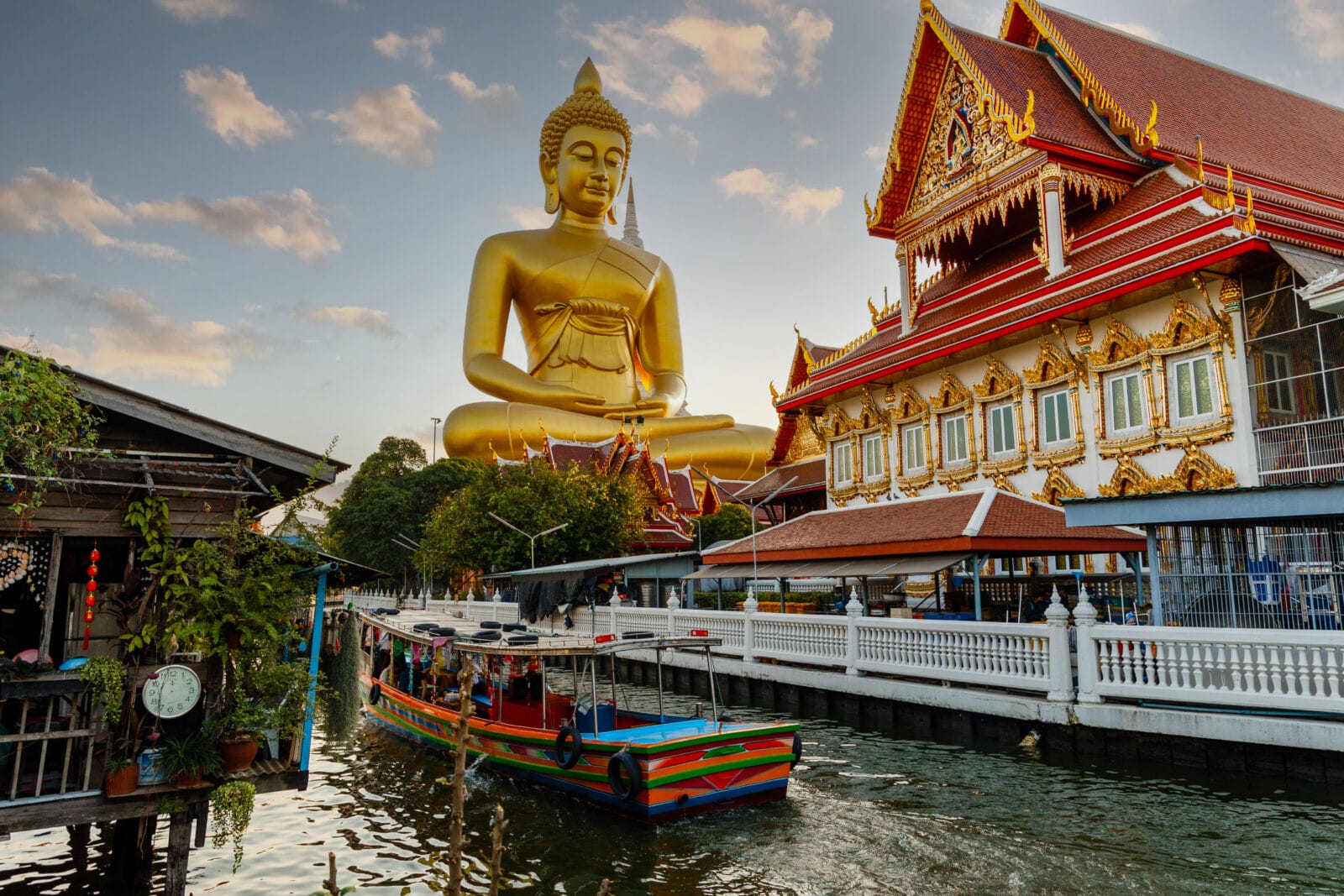
From the neon chaos of Bangkok’s street markets to the limestone cliffs rising out of the Andaman Sea, Thailand packs an unusual amount of variety into one country. Visitors often arrive expecting beaches and temples, then leave talking about a cooking class in Chiang Mai or a night spent on a rickety long-tail boat. The country rewards travelers who mix the obvious highlights with a few less predictable stops. Here are ten experiences worth building a trip around. And in order to see as much as you can see, consider shopping around for door to door transfers.
Explore the Temples of Bangkok at Dawn
Wat Arun and Wat Pho draw enormous crowds by mid-morning, so arriving right at opening time changes the experience entirely. The Temple of the Reclining Buddha at Wat Pho houses a 46-meter gold-plated statue that’s easier to appreciate without shoulder-to-shoulder tourists. Cross the Chao Phraya River by ferry to reach Wat Arun, where the tiled spires catch the early light in a way that photographs never quite capture. Budget about three hours to see both sites without rushing.
Take a Cooking Class in Chiang Mai
Chiang Mai has become the country’s unofficial capital for hands-on cooking instruction, with dozens of schools offering half-day and full-day courses. Most classes start with a visit to a local market to identify ingredients like galangal, kaffir lime, and Thai basil before moving to an open-air kitchen. Dishes typically include pad thai, tom yum soup, and a green curry made from scratch, paste and all. The skills transfer surprisingly well once you’re home, assuming you can track down fresh lemongrass.
Snorkel or Dive the Similan Islands
Located off the coast of Phang Nga province, the Similan Islands rank among the best diving destinations in Southeast Asia. Visibility often exceeds 20 meters, and the granite boulder formations underwater create swim-throughs and channels packed with reef fish, turtles, and the occasional manta ray. The islands are only open to visitors from mid-October through mid-May, since monsoon conditions make the crossing unsafe the rest of the year. Liveaboard boats run multi-day trips for those who want more than a single day of diving.
Wander the Night Markets
Every Thai city seems to have its own version, but Chiang Mai’s Sunday Walking Street and Bangkok’s Rot Fai Market stand out for scale and variety. Vendors sell everything from handwoven textiles to grilled skewers, phone cases, and secondhand vinyl records. Bargaining is expected, though vigorously, and starting at 40 to 50 percent of the asking price is a reasonable opening move. Arrive hungry, since the food stalls are often better than anything served in a restaurant nearby.
Visit an Elephant Sanctuary
Riding elephants has fallen out of favor as awareness of the practice’s impact on animal welfare has grown, and most reputable operators now focus on observation-based visits instead. Places like Elephant Nature Park near Chiang Mai let visitors feed, bathe, and walk alongside rescued elephants without riding them. A day visit typically includes transportation, lunch, and several hours of direct interaction. Booking a few weeks ahead is smart, since the well-regarded sanctuaries fill up fast, especially during high season.
Relax on the Beaches of Koh Lipe
Koh Lipe sits far enough south, near the Malaysian border, that it sees fewer crowds than Phuket or Koh Samui despite having some of the clearest water in the country. Sunrise Beach and Pattaya Beach both offer soft white sand and calm, swimmable conditions most of the year. The island has no cars, just motorbikes and pickup trucks, which keeps the pace slow. Those planning a longer, more indulgent itinerary often pair Koh Lipe with a stay at one of the country’s high-end resorts, and travel agencies specializing in Thailand luxury trips can arrange private boat transfers between islands to skip the standard ferry routes entirely.
Hike Through Khao Sok National Park
Khao Sok protects one of the oldest rainforests on the planet, older than the Amazon by some estimates, and its limestone karsts rising out of Cheow Lan Lake create scenery that looks almost artificial. Guided treks range from easy two-hour walks to full-day hikes through dense jungle where gibbons and hornbills are commonly spotted. Staying overnight in a floating raft house on the lake adds a memorable layer to the visit. Bring insect repellent and expect humidity that makes even short hikes feel strenuous.
Take an Overnight Train to Chiang Mai
Rather than flying between Bangkok and Chiang Mai, the overnight sleeper train offers a slower, more scenic alternative that takes about 12 to 14 hours. Second-class cabins convert into bunk beds with curtains for privacy, and the dining car serves basic Thai meals throughout the evening. Waking up to rice paddies and mountain fog rolling past the window is a different kind of arrival than stepping off a plane. Tickets should be booked at least a few weeks in advance during peak travel months.
Sample Street Food in Bangkok’s Chinatown
Yaowarat Road transforms after dark into one of the densest concentrations of street food in Asia, with vendors setting up carts serving grilled satay, oyster omelets, and shark fin soup side by side. Many stalls have operated from the same corner for three or four generations, developing loyal followings for a single dish. Prices remain low, often under 100 baht per plate, even as the neighborhood’s reputation has grown internationally. Going with an empty stomach and a plan to share plates makes it possible to sample far more in one evening.
Visit the Ancient City of Ayutthaya
About 80 kilometers north of Bangkok, Ayutthaya was once the capital of the Siamese kingdom and one of the largest cities in the world during the 18th century before Burmese armies destroyed it. The ruins that remain, including the famous Buddha head entwined in tree roots at Wat Mahathat, offer a quieter, more contemplative alternative to Bangkok’s busier temples. Renting a bicycle to move between the scattered temple complexes makes the most sense, since the archaeological park spans a fairly large area. A day trip works well, though staying overnight allows for a sunset visit when the crowds thin out.
Thailand rewards travelers who resist the urge to cram every region into one trip. Picking two or three areas, whether that means pairing Bangkok with Chiang Mai or combining an island stay with a national park, tends to produce a far better experience than rushing through a checklist. The country’s infrastructure makes it easy to move between very different landscapes in a single day, so the real planning challenge is deciding what to leave for next time.