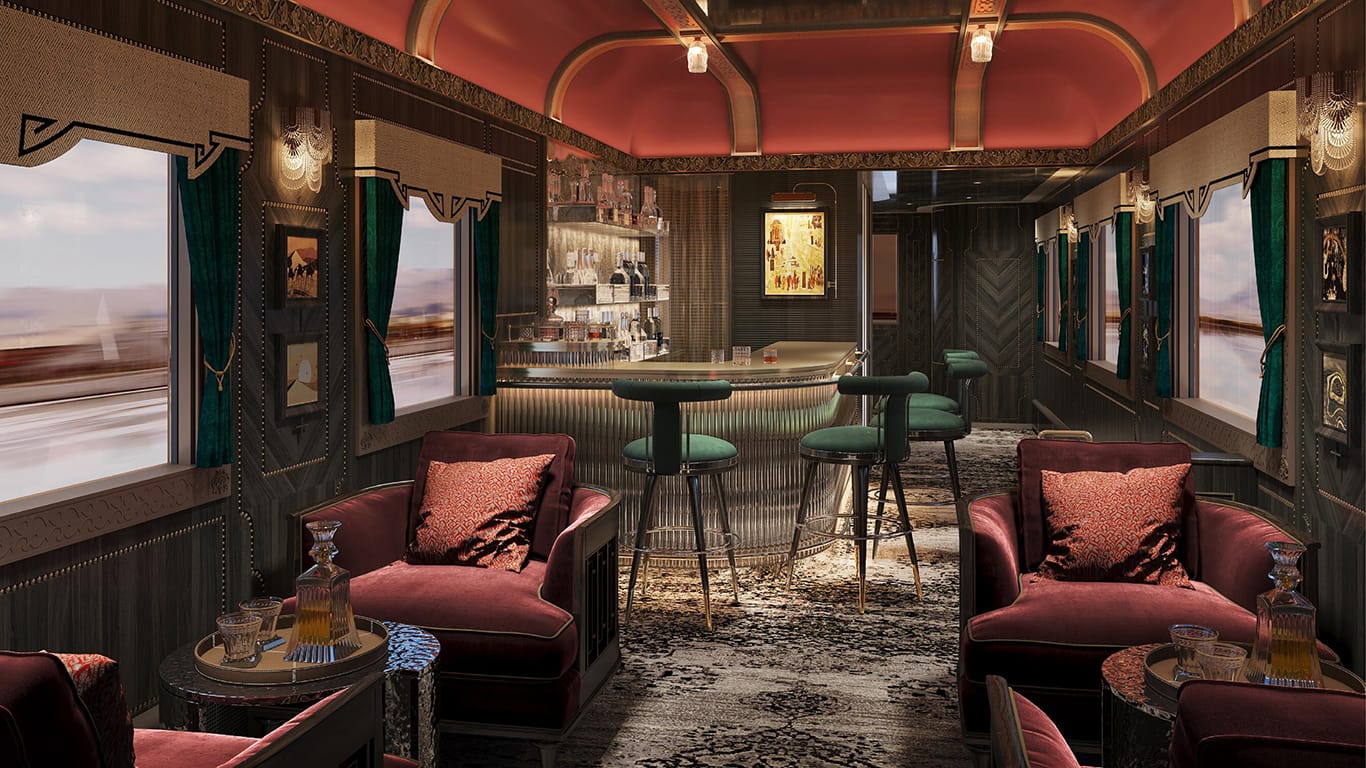
The Silk Road Express has quickly become one of the most talked about luxury trains in Asia, and for good reason. Operated by Glamour Trains, the railway tourism brand under Fosun Infrastructure Group, this train carries just 80 guests in 38 private suites, serves Michelin-inspired cuisine in two dining cars, and travels through some of the most dramatic landscapes in China.
But here is the question every traveler faces after falling in love with the train itself: which route should you actually book? The 2026 season offers more itineraries than ever, from short desert escapes to a 17-day grand tour of Xinjiang, plus brand new journeys through Yunnan and even across the border toward Vietnam.
This guide breaks down the main Silk Road Express routes in plain terms, so you can match the right journey to your travel style, your schedule, and your bucket list.
The Classic Silk Road Routes
These are the journeys the train was born for. They follow the ancient trade corridor through northwest China, where camel caravans once carried silk, spices, and ideas between East and West.
Bustling Beginning: Xining to Dunhuang
If you want a taste of the Silk Road without committing to a long trip, this is the route to start with. The journey links Xining, the gateway to the Tibetan Plateau, with Dunhuang, home of the world-famous Mogao Caves.
Along the way you pass salt lakes that mirror the sky, wide stretches of Gobi desert, and oasis towns that have welcomed travelers for two thousand years. The route also runs in reverse, from Dunhuang back to Xining, which is handy if it fits your flight plans better.
Best for: first-time visitors, travelers short on time, history lovers who want Dunhuang as the centerpiece.
The Southern Route of the Silk Road
The southern corridor is quieter, wilder, and in many ways more atmospheric than the northern paths. This itinerary traces the edge of the Taklamakan Desert, stopping at ancient towns and cultural sites that most tourists never reach.
Expect fewer crowds, deeper history, and landscapes that feel almost untouched. This is the route for travelers who have already seen China’s famous cities and want something with more mystery.
Best for: returning visitors, culture-focused travelers, photographers.
West of the Yangguan Pass
Named after the ancient frontier gate that marked the edge of the Chinese empire, this journey leans fully into the romance of the Silk Road. Yangguan Pass appears in classical Chinese poetry as the point of farewell, the last stop before the unknown, and the route carries that spirit through the deserts of Gansu and beyond.
Best for: romantics, poetry and history enthusiasts, travelers chasing that end-of-the-world desert feeling.
The Grand Tour: Northern and Southern Xinjiang
This is the flagship experience, a 17-day, 16-night journey across both halves of Xinjiang, China’s largest and most diverse region.
Northern Xinjiang brings alpine lakes, grasslands, and Kazakh herding culture. Southern Xinjiang delivers the deep Silk Road: bazaars, desert fortresses, and Uyghur old towns. Very few travelers ever see both sides in one trip, because the distances are enormous. That is exactly why the train makes sense here. You cover thousands of kilometers in complete comfort, and your hotel room travels with you the whole way.
Seventeen days is a real commitment, but guests who take this journey tend to describe it as a once-in-a-lifetime trip rather than a holiday.
Best for: serious travelers, retirees with flexible time, anyone who wants the complete Silk Road story in one booking.
The New 2026 Routes: Yunnan and Southwest China
Here is where things get exciting. For 2026, the Silk Road Express has expanded far beyond the desert with a set of brand new routes through China’s lush southwest. These journeys feel completely different from the classic Silk Road, swapping sand dunes for rainforests and tea mountains.
Along the Yunnan-Vietnam Railway
The headline route of the new season. This cross-border style journey spans Kunming, Xishuangbanna, and Hekou on the Vietnamese border, following the historic Yunnan-Vietnam Railway built more than a century ago.
Highlights include rainforest treks, a panoramic cable car ride toward Fansipan, heritage railway moments, and authentic Vietnamese coffee along the way. No other luxury train in China offers anything like it.
Best for: travelers who want something genuinely new, railway heritage fans, coffee lovers.
Tea and Timeless Landscapes
This route connects Kunming, Xishuangbanna, and Dali, weaving together tropical rainforest and the heritage of the Bai people. Guests join artisan workshops in Xizhou Ancient Town and enjoy quiet tea tastings at a secluded mountain teahouse.
It is the gentlest, most soothing itinerary in the collection. Think slow mornings, green mountains, and the smell of fresh Pu’er tea.
Best for: couples, wellness-minded travelers, tea enthusiasts.
Hidden Wonders of Southwest China
Running from Kunming through Xingyi and Chongzuo to Shenzhen, this journey shows off a side of China that rarely appears in travel magazines. You cycle through Bouyei villages, stand before the dramatic karst peaks of Wanfenglin, and visit Asia’s largest transnational waterfall on the China-Vietnam border.
Best for: nature lovers, active travelers, guests ending their trip near Hong Kong or Shenzhen.
Southern Yunnan Impressions
Spanning Chengdu, Xishuangbanna, Shiping, and Kunming, this itinerary mixes tropical scenery with railway nostalgia, including a ride on the charming narrow-gauge heritage train at Shiping. Ancient towns and museum visits round out a journey that balances culture and comfort.
Best for: families, history buffs, travelers starting from Chengdu.
How to Choose: A Simple Framework
Still torn? Ask yourself three questions.
How much time do you have? With five to seven days, look at Xining-Dunhuang or one of the Yunnan routes. With two weeks or more, the full Xinjiang grand tour becomes possible.
Desert or greenery? The classic routes deliver the epic, wide-open Silk Road: deserts, salt lakes, and ancient caravan towns. The 2026 Yunnan routes offer rainforest, tea mountains, and a softer climate.
What season are you traveling in? Timing matters more than most people realize. The Xinjiang and Gansu routes are at their best from late spring through autumn, when the desert light is warm and the days are long. The Yunnan journeys are far more forgiving, with mild weather for most of the year, which makes them a smart choice for winter and early spring departures. If you are locked into specific dates, let the calendar guide your route rather than forcing a journey into the wrong season.
First trip or return trip? First-time visitors usually get the most from Dunhuang and the classic corridor. Returning travelers often prefer the southern route or the new southwest journeys, where everything feels fresh.
Whichever route you pick, the on-board experience stays the same: private suites with en-suite bathrooms, two dining cars serving Chinese and Western menus, the 270-degree Hanyuefu observation car, and round-the-clock butler service.
Final Thoughts
The beauty of the Silk Road Express is that there is no wrong answer. Every route is built on the same promise of slow, comfortable, deeply curated travel. The only real difference is the scenery outside your window and the stories waiting at each stop.
If you dream of deserts and ancient trade routes, book the classic corridor. If you want to be among the first to experience something new, the 2026 Yunnan-Vietnam Railway journey is the one your friends have not heard of yet. And if you want it all, block out seventeen days and let the grand Xinjiang tour show you a China that very few outsiders ever see.
Suites are limited to 38 per departure, and the newest routes are already drawing attention, so early booking is genuinely worth it.