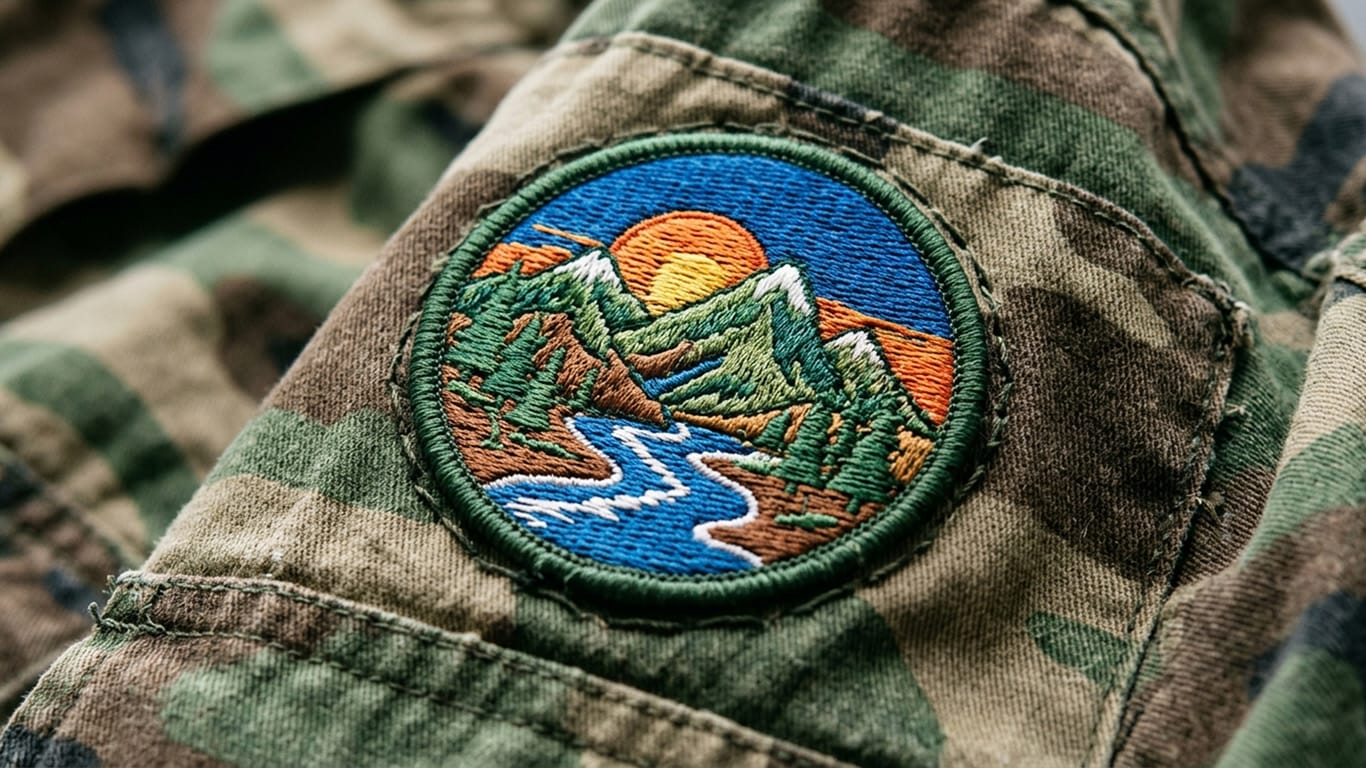
A detailed logo can lose its character when small text, thin lines, and colour transitions are simplified for production. Woven patches provide a finer surface for complex artwork, helping important details remain visible at smaller sizes.
Their fabric texture also adds depth that a flat print cannot fully reproduce. This balance of clarity and texture makes woven patches useful for hats, apparel, uniforms, bags, merchandise, and branded accessories.
What Makes Woven Patches Suitable for Complex Artwork?
Businesses can order custom patch solutions from dtfvirginia.com for logos, artwork, team identities, and product branding. A tightly woven surface supports precise decoration while still giving the finished patch a genuine fabric appearance.
Woven patches can work well for designs containing:
- Small lettering and compact brand names
- Thin outlines and narrow borders
- Detailed mascots and illustrated characters
- Multiple colours within one design
- Smooth colour transitions
- Fine patterns and repeated shapes
- Numbers, dates, and location names
- Detailed company emblems
- School and team logos
- Creator artwork and signatures
- Custom shapes and cut lines
- Product collection labels
Why Do Detailed Logos Look Clearer on Woven Patches?
Woven patches offer a controlled surface that can hold visual information without making the patch excessively thick. The material and printing method work together to preserve the features that make a logo recognizable.
Fine Lines Remain More Visible
Thin lines can become uneven when they must be recreated with thick embroidery thread. A woven canvas surface gives the design a more stable area for fine outlines and narrow graphic elements.
This helps preserve small borders, facial features, illustrated objects, and line based artwork. The design still needs sensible spacing, but fewer details must be removed before production.
Small Text Can Stay Readable
A logo may include a company name, establishment year, location, or short slogan. These elements can become difficult to read when the patch is reduced for a hat or uniform.
Custom woven hat patches can reproduce compact lettering through full colour UV printing on a textured woven surface. Clear type remains essential, so overly thin fonts should still be avoided.
Multiple Colours Can Appear Together
Detailed logos often use more than two or three colours. Traditional stitching may require each colour to be assigned a separate thread, which can make complex artwork harder to reproduce.
UV printing allows several colours to appear within the same patch. This gives brands greater freedom to preserve original palettes, coloured outlines, highlights, shadows, and small accent areas.
Gradients Do Not Need Heavy Simplification
A gradient moves gradually from one colour or tone to another. Recreating that transition with thread can require visible colour steps rather than a smooth change.
Printed woven patches can show softer transitions. This supports modern logo styles that use glow effects, shadows, fading colour, or dimensional shading to create a more developed appearance.
Fabric Texture Adds Character
Detail is not only created through colour and line work. The surface itself affects how the design looks. Woven canvas introduces a visible grain that gives the patch a tactile identity.
The texture can make a logo feel connected to the hat or garment rather than placed on top as a flat sticker. It works especially well for casual, outdoor, workwear, and lifestyle branding.
Custom Shapes Follow the Artwork
A standard square or circle does not suit every logo. Custom cutting can follow the outer edge of a mascot, badge, letter, symbol, or brand mark.
Removing unnecessary background space makes the silhouette part of the design. The finished patch looks more intentional and can fit naturally on front hat panels, sleeves, pockets, or bags.
Consistent Reproduction Supports Reorders
Brands often need the same logo across several batches. A saved production file helps maintain the approved colours, proportions, shape, and placement each time patches are reordered.
Consistency is important for uniforms, retail collections, team merchandise, and recurring events. Customers should not receive noticeably different versions of the same logo from one order to the next.
Which Projects Benefit Most From Woven Patches?
Woven patches are useful when a project needs both visual detail and a fabric based finish. The best applications provide enough space for the artwork and allow the texture to remain visible.
- Clothing brand logos on hats and jackets
- Team mascots on caps and sports bags
- Company names on employee headwear
- School emblems and graduation merchandise
- Club badges and membership apparel
- Event logos with names and dates
- Outdoor brands with illustrated symbols
- Artist merchandise featuring original artwork
- Limited release fashion collections
- Local business logos on promotional hats
The finished size should match the amount of information in the design. A complex logo may need more space than a simple monogram. Reducing the artwork too far can make even precise printing difficult to read.
How Can You Prepare a Detailed Design for a Woven Patch?
Good production begins with artwork that suits the patch size and shape. A clear file reduces uncertainty and helps the printed result stay close to the intended design.
- Use the Highest Quality Artwork Available
Vector artwork is useful because it can be resized without becoming pixelated. A high resolution image may also work when its dimensions support the intended patch size.
Avoid files copied from small website images or screenshots. Blurred edges and compression marks can become more noticeable once the design is printed.
- Check the Design at Its Final Size
Artwork may look clear when enlarged on a monitor. Reduce it to the planned patch dimensions and check whether the text, borders, and small symbols remain recognizable.
If an element disappears at actual size, make it larger or remove it. Real size review exposes problems early and prevents unrealistic expectations about tiny details.
- Strengthen Very Thin Elements
Thin lines may need slight adjustment so they remain visible against the woven texture. The same applies to delicate lettering, narrow borders, and small spaces between colours.
These changes do not have to alter the design’s identity. A minor increase in line weight can improve readability while keeping the original style intact.
- Create Enough Colour Contrast
Similar colours can blend together when viewed from a distance. Contrast helps text, symbols, and outlines stand apart from the background.
Test the design against the colour of the hat or garment as well. The patch and product should be reviewed together, not as two separate items.
- Keep Important Details Away From the Edge
Text and key artwork should not sit directly against the cut line. Leaving a small amount of space gives the design a cleaner border and reduces visual crowding.
Custom shapes need particular care. Narrow points and tight curves may require adjustments so the final outline looks balanced and remains easy to position.
- Choose a Shape That Supports the Logo
A circle suits badges and seals, while rectangles work well for names and wide logos. Custom cut shapes can highlight mascots, initials, and unusual brand marks.
The shape should improve recognition rather than create distraction. A simple outline often makes detailed internal artwork easier to understand.
- Review the Proof Carefully
Check spelling, dates, colours, dimensions, orientation, and shape before approving production. Compare the proof with the original brand file rather than relying on memory.
Approval is the last practical chance to catch an error. A careful review protects the entire order, especially when the same patch will be applied to many products.
Conclusion
Woven patches are ideal for detailed logos because they support fine lines, small text, multiple colours, gradients, and custom shapes while keeping a visible fabric texture. They suit hats, uniforms, merchandise, bags, and branded apparel. Clear artwork, suitable sizing, strong contrast, and careful proofing help preserve the design and create a patch that remains recognizable across every product and reorder.