Historical Roots of Gothic Ring Design
Gothic ring design traces its origins to the 12th-century Gothic architectural movement, where sharp arches, intricate stone carvings, and dramatic structural forms reshaped European art and craftsmanship. Early Gothic rings were not mere accessories—they were extensions of identity, faith, and social standing. For medieval clergy, bishop’s rings featured delicate, pointed filigree (metal threadwork) mirroring cathedral spires, often set with semi-precious stones like amethyst to symbolize piety and divine authority. The 19th-century Gothic Revival reignited this aesthetic, driven by architects like Augustus Pugin, who blended medieval religious symbolism with industrial-era techniques. Victorian Gothic rings also embraced mourning culture, a core Victorian preoccupation: black enamel skulls, crossbones, and inscribed death dates adorned these pieces, meant to honor the deceased and confront the fragility of life. A notable example is the 1860s mourning ring I once saw in a London antique shop, carved from jet (a black, lightweight fossilized wood) with tiny engravings of a weeping willow and the initials “E.H.”—it felt like a silent conversation with a long-gone person.
Iconic Symbolism in Gothic Rings
Every element of a Gothic ring carries layered meaning, turning metal and stone into a narrative of darkness, devotion, and rebellion. The most ubiquitous symbol is the skull, which rejects fear of death to instead celebrate its role as a reminder to live fully. Independent designer Alchemy Gothic’s red-eyed skull ring, for instance, pairs polished silver with blood-red enamel for the eye sockets, framing the skull as a symbol of primal life rather than decay. Bats, another staple, evoke mystery and the supernatural—linked to medieval beliefs of witches and nocturnal magic, they appear in rings with outstretched wings, often set with iridescent stones to catch light like moonlit fur. Thorns, adapted from Jesus’ crucifixion crown, represent sacrifice and redemption; modern designers often pair thorns with black roses, a twist that blends religious symbolism with romantic tragedy. I once owned a small silver thorn ring that I wore to every exam in college—its sharp, unyielding design felt like a quiet promise to push through hard times, a personal symbol of resilience. Other symbols, like spiders (weaving fate) and crows (messengers of the afterlife), add depth, making Gothic rings a language for those who reject mainstream sentimentality.
DEEPER DIVE: Here are Arizona’s Most Admired Companies of 2026
Craftsmanship and Materials That Define Gothic Rings
The allure of Gothic rings lies in their tactile, aged quality, crafted from materials that evoke darkness and durability. Traditional medieval rings favored sterling silver, jet, and black enamel—jet, mined in northern England, was especially popular for mourning jewelry because it was lightweight and retained a deep, matte black finish. Filigree and repoussé (hammered metal relief) techniques create the delicate, lace-like patterns that mirror Gothic architecture; a 14th-century French ring in the Louvre uses filigree to form pointed arches, with a tiny cross at its center. Modern Gothic rings have expanded the material palette: titanium steel and stainless steel make pieces affordable and scratch-resistant for everyday wear, while black diamonds and onyx add bold, opaque contrast. Designer Todd Reed’s work exemplifies modern craftsmanship—his “Darkside” collection features 18k gold rings set with rough black diamonds, with intentional surface imperfections that mimic the patina of antique pieces. 3D printing has also revolutionized the field, allowing designers to create complex, one-of-a-kind pieces like a multi-layered skull ring with moving jawbones, a favorite among Gothic subculture fans. The best Gothic rings balance fine detail with wearability, so they feel like a part of the wearer rather than a fragile museum piece.
Modern Revivals and Cultural Impact
Gothic rings moved from church altars and Victorian parlors to mainstream culture through the 1980s goth rock movement, where bands like Bauhaus and Siouxsie and the Banshees wore oversized skull and bat rings on stage, turning them into subculture icons. By the 2000s, social media amplified this reach: Instagram and TikTok creators like “Gothic Glam” (1.2M followers) shared ring collections spanning vintage mourning pieces to contemporary indie designs, making Gothic jewelry accessible to a global audience. Today, even mainstream brands dip into Gothic aesthetics—Tiffany & Co.’s limited-edition Skull Ring, though minimalist, sold out within weeks, proving the symbol’s cross-cultural appeal. Gothic rings have also seeped into pop culture: the Deathly Hallows ring in the Harry Potter films, the gothic-inspired accessories in *The Witcher*, and even streetwear brands like Supreme releasing limited-edition skull rings. What’s most interesting is the diversity of modern Gothic rings: there’s romantic Gothic rings with rose and heart motifs, steampunk-Goth blends with gears and brass accents, and minimalist Gothic pieces with subtle skull engravings. This evolution means Gothic rings now speak to anyone drawn to its themes of individuality and non-conformity, not just die-hard subculture fans.
Curating a Gothic Ring Collection
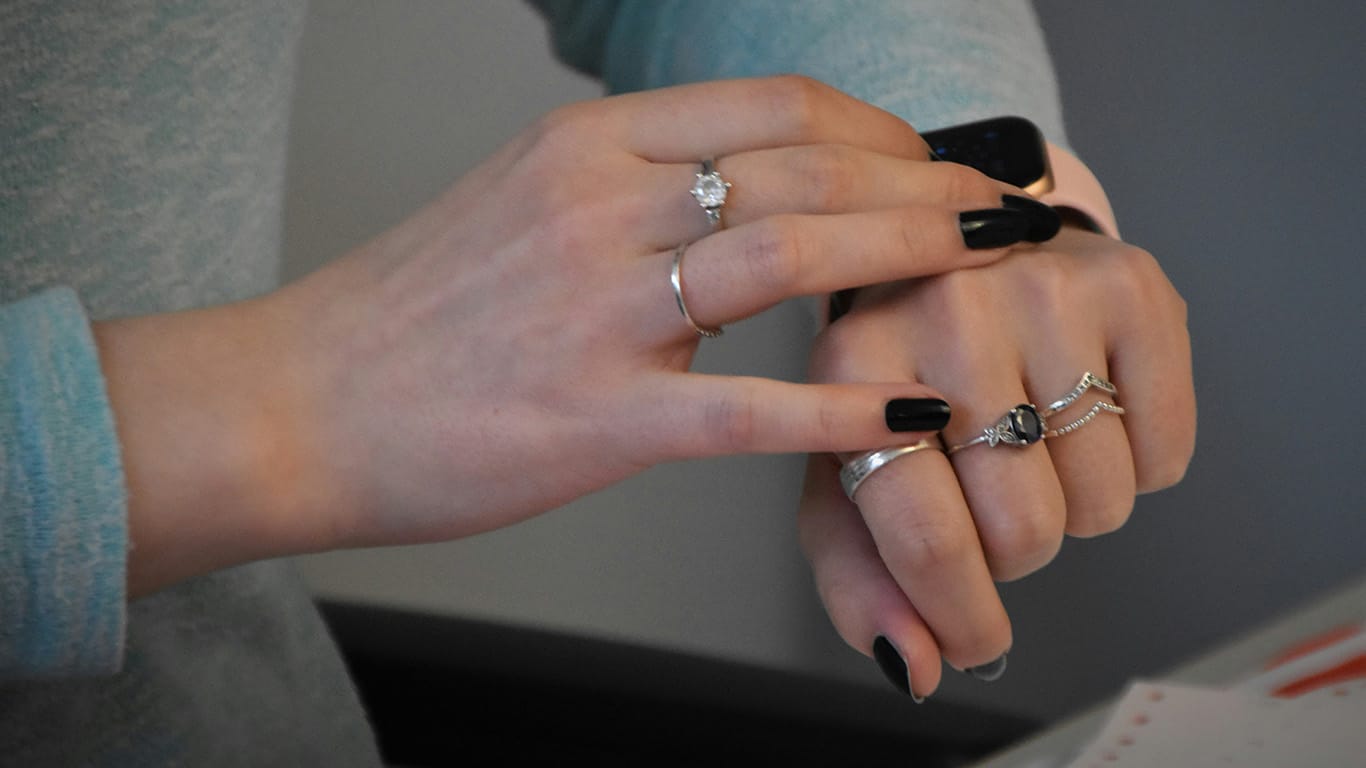
Building a Gothic ring collection is a personal journey, not a pursuit of rare or expensive pieces. Start by defining your connection to Gothic themes: do you love religious symbolism, subculture rebellion, or vintage history? For beginners, start with a small, versatile piece—an Alchemy Gothic bat ring or a sterling silver thorn band works for everyday wear. If you’re drawn to history, look for vintage mourning rings: check for hallmarks (like “18k” for gold or “ster” for silver) and age indicators—Victorian pieces often have tiny engravings of willow trees or urns. I learned this the hard way when I bought a fake “Victorian mourning ring” online; its enamel chipped easily and had no hallmark, so I now only buy from reputable antique dealers or independent designers. When stacking rings (a common Gothic styling trick), mix sizes and symbols: pair a thin skull band with a thicker thorn ring, and add a small bat ring on another finger for depth. Maintenance matters too: avoid wearing Gothic rings in the shower or while applying perfume, as chemicals can dull black enamel and scratch silver. My favorite collection piece is a 1890s jet mourning ring I found at a flea market—its surface has tiny scratches from 130 years of wear, each one a story I carry with me every time I put it on. The best Gothic rings aren’t just jewelry; they’re mirrors of the wearer’s beliefs, a quiet declaration that beauty exists in the dark.