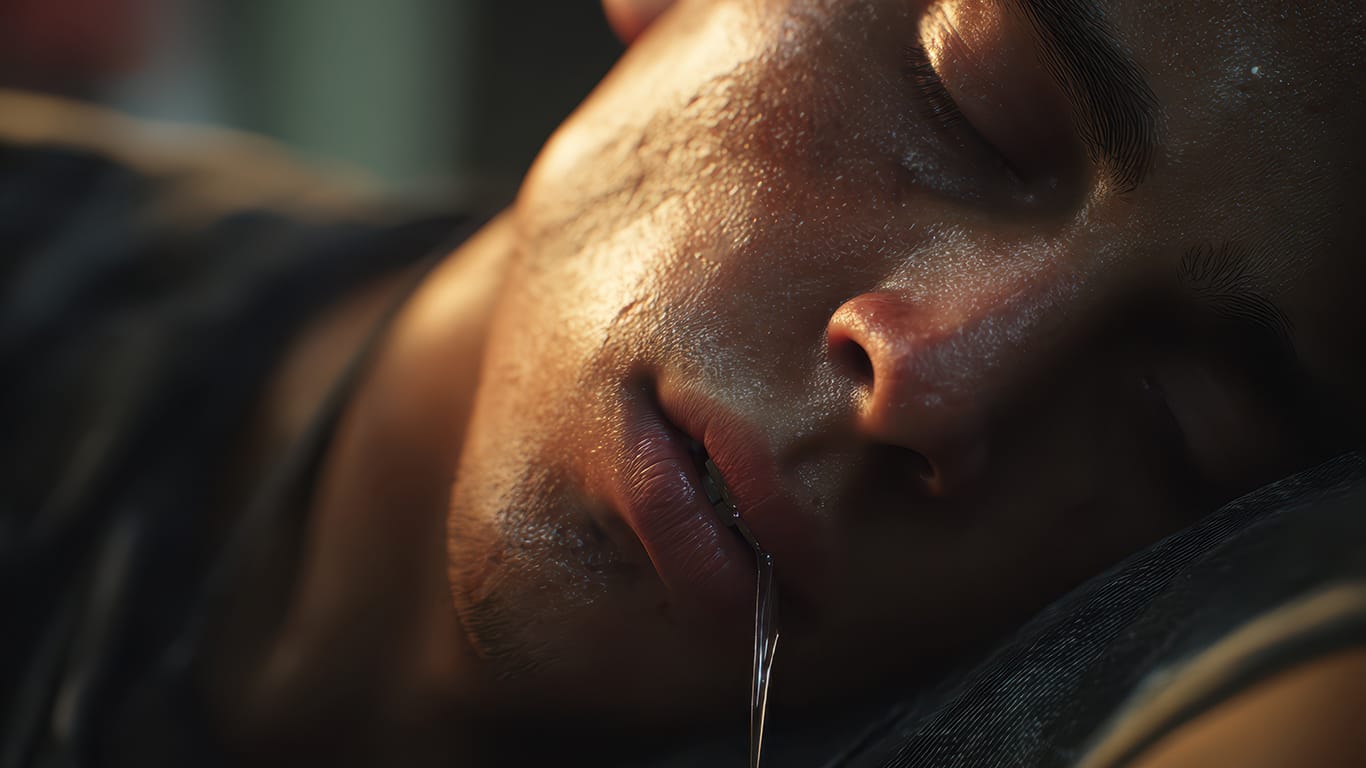
Drooling during sleep happens to most people at some point. Though usually harmless, persistent drooling can sometimes signal underlying health conditions. Knowing why this happens and when it warrants concern can help you determine if you need sleep apnea treatment or other medical intervention.
What Causes Drooling During Sleep?
Drooling happens when saliva escapes from your mouth as you sleep, primarily due to relaxed facial muscles and a dramatically slowed swallowing reflex. During waking hours, you swallow hundreds of times without thinking about it. When you fall asleep, your swallowing reflex drops to just a few times per hour.
Your salivary glands don’t completely shut down at night. They continue producing saliva at reduced rates, following a circadian rhythm that naturally decreases production during sleep hours.
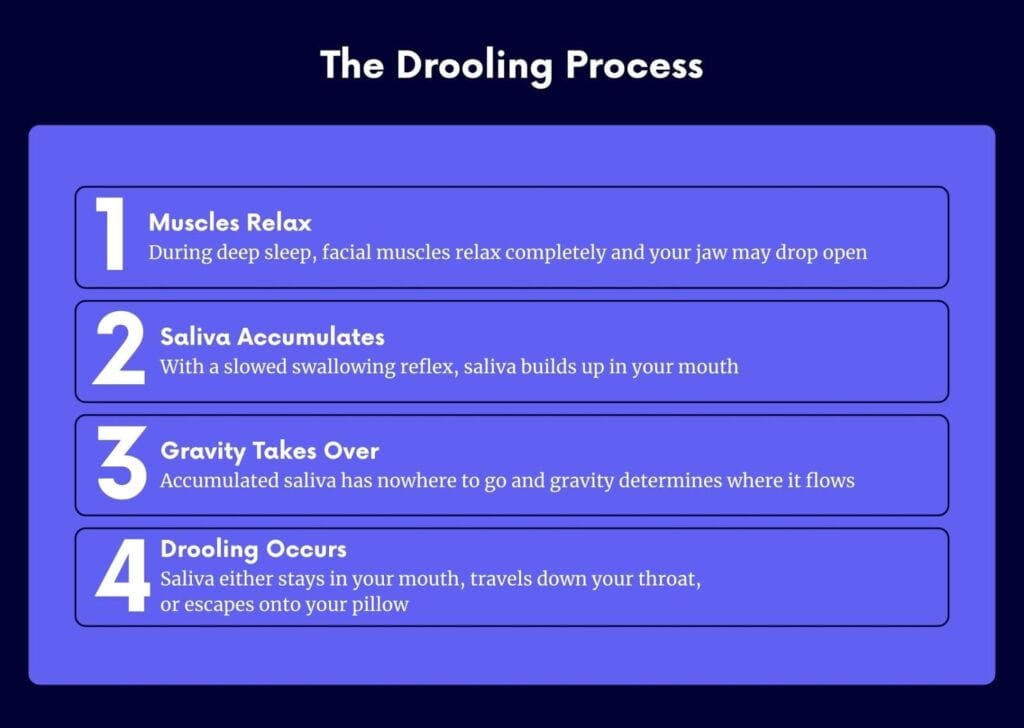
When your facial muscles relax deeply during sleep, your jaw may drop open. With a slowed swallowing reflex and relaxed muscles, accumulated saliva has nowhere to go but out. Gravity takes over, and depending on your position, that saliva either stays in your mouth, travels down your throat, or makes its way onto your pillow.
LEARN MORE: The 15 best public and private high schools in Metro Phoenix
FOOD NEWS: 25 places for great patio dining in Arizona
Does Your Sleep Position Make You Drool More?
Yes, your sleep position has a major impact on how much you drool. Back sleepers rarely wake up to wet pillows because gravity keeps saliva pooled in the mouth or guides it down the throat. Side and stomach sleepers face a different reality.
When you sleep on your side or stomach, gravity pulls saliva directly toward your pillow. If your mouth is open, even slightly, there’s a clear path for saliva to escape. The effect becomes more pronounced the longer you maintain that position throughout the night.
If positional drooling is your only concern, switching to back sleeping solves the problem immediately for most people. The challenge lies in maintaining that position throughout the night, especially if you’ve been a lifelong side sleeper.
Can Nasal Congestion and Allergies Cause Drooling?
Blocked nasal passages force you into mouth breathing during sleep, which dramatically increases your chances of drooling. When you can’t breathe comfortably through your nose, your body automatically opens your mouth to take in air.
This creates two problems. First, an open mouth provides an easy exit route for saliva. Second, breathing through your mouth dries out oral tissues, which can trigger increased saliva production as your body attempts to maintain moisture balance.
Seasonal allergies are frequent causes, with pollen and mold triggering nasal inflammation. The common cold and sinus infections create similar blockages. Even structural problems like a deviated septum or swollen adenoids can force mouth breathing.
Treating the underlying congestion resolves the drooling. Antihistamines for allergies, nasal sprays to reduce inflammation, or using a humidifier to keep airways moist can make substantial differences.
Is Drooling a Warning Sign of Sleep Apnea?
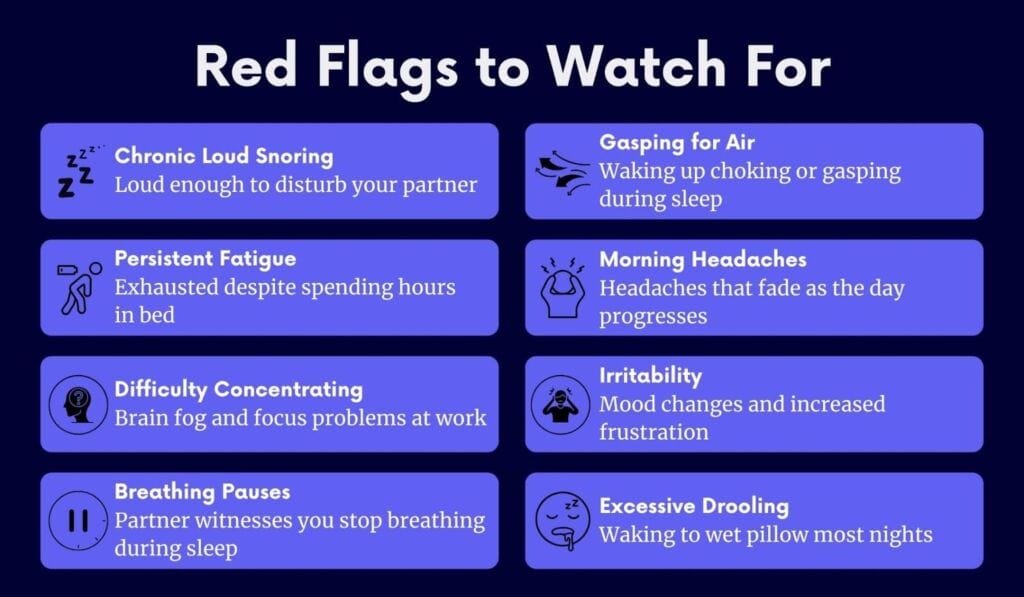
Excessive drooling can be an important early warning sign of obstructive sleep apnea, particularly when combined with other symptoms like loud snoring, gasping for air during sleep, or persistent daytime fatigue. This connection matters because sleep apnea affects approximately 30 million Americans, with the majority of cases going undiagnosed for years.
During sleep apnea episodes, soft tissues in the back of your throat collapse and block your airway. Your body struggles to get enough oxygen, which forces you to breathe through your mouth as compensation. This mouth breathing increases drooling substantially.
Beyond the wet pillow, sleep apnea brings serious health consequences. Untreated sleep apnea increases your risk of high blood pressure, heart disease, stroke, and type 2 diabetes. The constant sleep disruptions prevent you from reaching deep, restorative sleep stages.
Treatment options have improved dramatically in recent years. CPAP machines remain effective, and many people who can’t tolerate masks find success with oral appliances that reposition the jaw, or newer therapies like Inspire, an implantable device that stimulates the airway to stay open during sleep.
Can Acid Reflux Make You Drool More?
Gastroesophageal reflux disease (GERD) triggers increased saliva production as your body’s natural defense against stomach acid reaching your esophagus. When acid backs up into your throat during sleep, your salivary glands kick into high gear, attempting to neutralize that acid.
People with GERD describe feeling like there’s a lump in their throat or experiencing difficulty swallowing. This sensation, combined with increased saliva production, creates perfect conditions for drooling during sleep.
Managing GERD-related drooling involves addressing the reflux itself. Eating smaller, more frequent meals helps. Avoiding trigger foods like spicy dishes, citrus, chocolate, and caffeine makes a difference. Elevating the head of your bed by six to eight inches can prevent acid from traveling up your esophagus as easily.
How Can You Stop Drooling While You Sleep?
The timeline for addressing drooling depends on its cause. Positional changes may work the first night you try them, but congestion-related drooling should improve within days once you start treating allergies or infections. GERD-related drooling may take two to three weeks of consistent dietary changes to see results.
Some people find success with mouth taping. It`s a technique using specialized medical tape to gently keep lips closed during sleep. This encourages nasal breathing and prevents saliva escape. Start with partial coverage to ensure comfort and safety.
Combining strategies usually works better than relying on single solutions. Someone with both seasonal allergies and a side-sleeping habit will see more improvement by addressing both factors simultaneously, treating the congestion and using body pillows to maintain back sleeping.
If you’ve tried appropriate remedies for three weeks without improvement, schedule a medical evaluation. Persistent drooling despite addressing obvious causes suggests deeper underlying conditions. Healthcare providers can identify issues like enlarged tonsils, tongue positioning problems, or neurological factors that home remedies can’t fix.