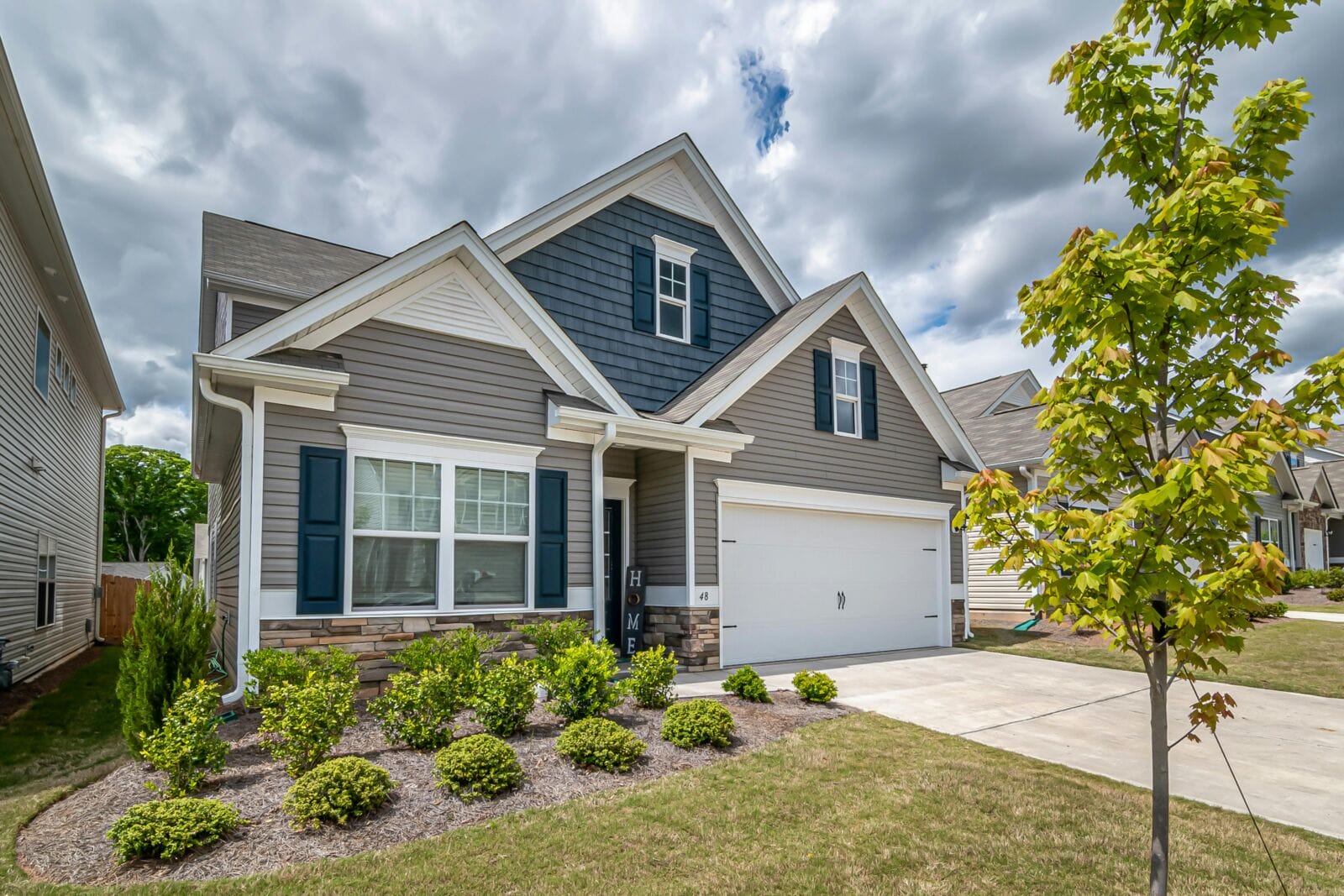
Redesigning the outside of a house can be exciting, but it is also one of those decisions that’s hard to reverse. A new paint color may look great in a sample but completely different across an entire facade. The same applies to siding, roofing, windows, doors, stone, landscaping, and outdoor lighting.
This is why visual planning has become such an important part of exterior renovation. Before ordering materials or scheduling construction, homeowners want to know what their property could actually look like after the changes.
Artificial intelligence is making that process easier. AI-powered design tools can take a photo of an existing house and create different exterior concepts based on styles, colors, materials, and other visual preferences. Instead of imagining the result, you can see several options and compare them.
AI does not replace architects, contractors, or other professionals for technical decisions. It can speed up the early creative stage and make it more visual.
Whether you are considering a small refresh or a major renovation, AI exterior visualization can give you a useful starting point.
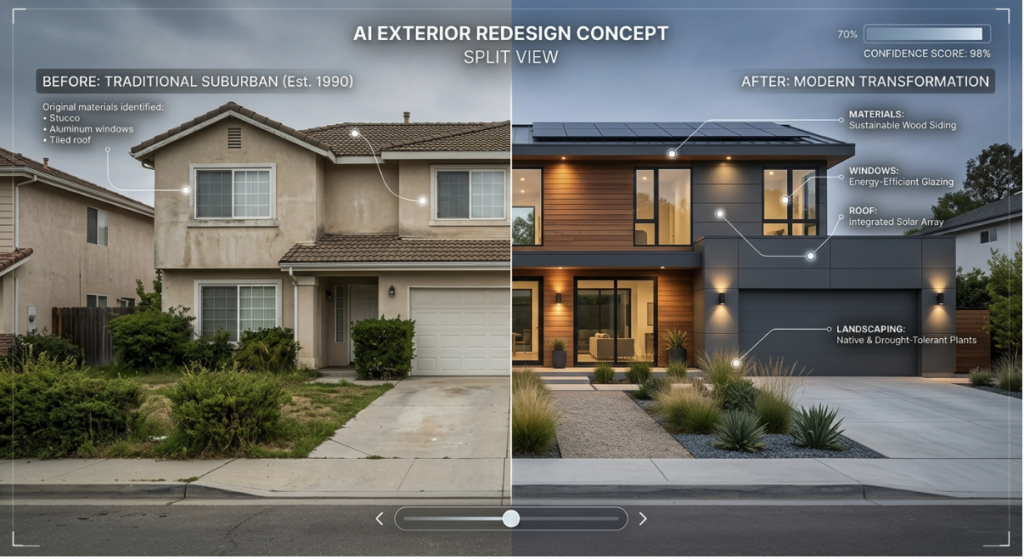
House Exterior Design Online Free: Exploring AI Tools for Home Visualization
Searching for free house exterior design tools online is often the first step for homeowners who want to experiment before spending money on a renovation.
Traditional exterior design can involve sketches, mood boards, material samples, and professional renderings. These methods can be valuable, but they may take more time, cost more, and require more technical knowledge than someone needs at the initial idea stage.
You can use the same approach to explore modern, traditional, farmhouse, minimalist, contemporary, or other exterior styles.
There are several reasons homeowners may find AI visualization useful:
- Fast experimentation: You can create several concepts without manually redrawing the property each time.
- Personalized visualization: Instead of looking only at generic examples, you can work from an image of your actual home.
- Style comparison: You can place different exterior styles side by side, making it easier to identify the direction you prefer.
- Early planning: Visual concepts can help you decide which ideas are worth discussing with a professional before investing in materials.
Free tools can be a convenient starting point, though features and image quality vary by platform. Some may offer basic visualizations at no cost while reserving advanced features for paid plans.
Most importantly, remember that AI-generated images are visual concepts, not construction drawings. A generated facade may look convincing while ignoring structural requirements or real-world material limitations.
DEEPER DIVE: Here are Arizona’s Most Admired Companies of 2026
Design Home Exterior: Planning Facades, Materials, and Curb Appeal With AI
When you design home exterior spaces, there is much more to consider than simply choosing a new paint color.
The facade includes several elements that need to work together. Siding, brick, stone, roofing, windows, doors, trim, lighting, and landscaping all contribute to the overall appearance.
Changing one element can affect how the others look. A dark roof may create a different visual balance with light siding, while natural stone can add texture to an otherwise simple facade. AI makes it easier to experiment with these combinations.
You might begin with your current house and create one concept with light siding and dark trim. Then you could try a warmer palette with wood accents. Another version might use stone around the entrance and a more traditional color scheme.
This kind of experimentation is especially useful because exterior materials can be expensive. Seeing a concept before you buy anything can help you narrow your options.
If you are sharing your ideas with family members or a designer, visual concepts can also make the conversation easier. Instead of describing an idea like “modern but not too modern,” you can show an image that shows the direction you have in mind.
Exterior Design AI Free: How to Create and Compare Exterior Concepts
Searching for free exterior design AI tools reflects a broader shift toward accessible visual planning. You no longer need to be an architect or know professional 3D software to create a rough exterior concept.
AI can provide a starting point from a simple photograph and a general design direction. The process is usually most effective when you approach it as an experiment rather than expecting one perfect image.
Start with the existing property. Then think about what you want to change. Maybe the house looks too dark, the facade feels outdated, or the entrance doesn’t stand out enough. Instead of changing everything at once, experiment with individual design ideas.
Try a new color palette first. Then explore different materials. After that, look at architectural accents and landscaping. This makes it easier to understand which changes have the biggest visual impact.
If you want to share the concept with others, you can see the redesign here and use the visualization as a conversation starter. The value is often in having something concrete to discuss rather than trying to explain an exterior renovation entirely through words.
There are also some limitations to keep in mind. AI may alter windows, doors, rooflines, or other architectural features even when you did not ask it to. It may also generate materials or landscaping that are not realistic for your climate, budget, or property. For that reason, treat generated images as inspiration.
Once you have a concept you like, the next step is to verify whether it can actually be built.
AI for Exterior Design: Visualizing Different Styles Before Renovation
Comparing styles is one of the most useful applications of AI for exterior design.
Homeowners often know they want their property to look “better,” but that isn’t necessarily a specific design direction. AI can help turn that vague goal into several visual options.
For example, one image could show a contemporary facade with simple lines and neutral colors. Another could use traditional materials and more decorative details. A third might combine natural wood, stone, and modern windows.
It can also prevent a common renovation planning problem: choosing individual elements without considering the whole house.
A particular front door may look attractive in isolation, but it may not work well with the existing siding or roof. AI visualization encourages you to consider the complete composition.
Some of the exterior elements you can experiment with include:
- Color schemes: Test combinations for siding, brick, trim, doors, and other visible surfaces.
- Materials: Explore concepts using wood, stone, brick, stucco, metal, or combinations of several materials.
- Architectural details: Visualize shutters, porches, balconies, columns, trim, or updated entryways.
- Landscaping: Consider how plants, paths, fences, and outdoor features affect the property’s appearance.
The important thing is to keep the existing architecture in mind. Not every style works equally well with every house.
AI can show you an attractive concept, but it cannot always determine whether that design fits the structure, neighborhood requirements, local climate, or building regulations. That is where professional input becomes important.
AI for House Exterior Design: How to Turn Exterior Ideas Into Realistic Visuals
AI for house exterior design can be especially helpful when you already have a clear idea but need a visual reference.
Perhaps you have seen a house with a combination of dark siding and natural wood that you like. Or maybe you are considering a new porch and want to understand how it could affect the overall appearance.
Instead of collecting unrelated reference images, AI can help translate those ideas into a concept based on your property.
The more specific your starting point, the more useful the visualization can be. Think about the architectural features you want to keep and the elements you want to change.
You can also create multiple variations. One version might use subtle changes, while another could be much more dramatic.
This is helpful because homeowners sometimes discover that their original idea is either too conservative or too ambitious once they see it applied to the actual property.
AI can also help with communication. A contractor may understand “replace the siding with a darker material,” but a visual reference can make the intended result much clearer. The same applies when discussing ideas with an architect, designer, or family member.
Still, realism has limits. AI-generated images may not accurately represent exact material textures, true colors under different lighting conditions, or the physical dimensions of architectural features. Before deciding, look at real product samples and confirm measurements.
Think of the process as a funnel. Begin with many creative possibilities, narrow them down visually, and then move toward practical verification.
Using AI Before Making Real Exterior Changes
Exterior renovation can be expensive, which makes experimentation especially valuable. A few minutes spent comparing visual concepts can help you identify what you want before committing to expensive materials or construction work.
Whether you are looking for free online tools for house exterior design or exploring more advanced AI platforms, the goal should be the same: use visualization to clarify the planning stage.
AI is not a replacement for professional architectural or construction advice. It doesn’t know every structural detail of your property, and you should never treat a generated image as proof that a renovation is technically possible.
What it does exceptionally well is help you explore. You can compare colors, materials, styles, landscaping ideas, and architectural details without physically changing the house. You can create a shortlist of concepts and use those images when discussing the project with professionals.