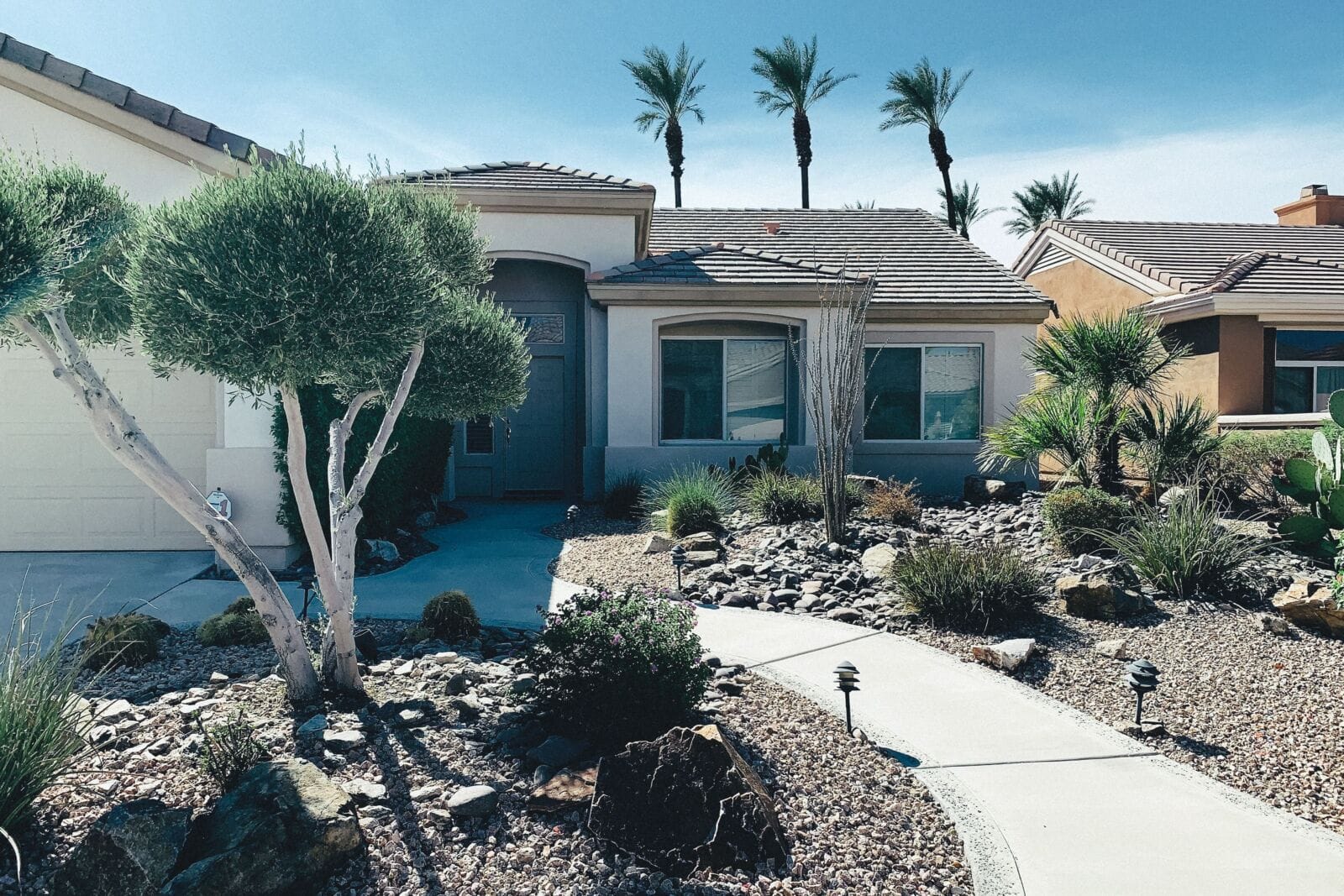
Ask a Valley real estate agent what retirees and downsizers put at the top of the list and the answer rarely changes: one level, no stairs. The ranch house has been a fixture of Arizona neighborhoods since the 1950s, and most people assume it’s still what gets built.
The construction data says otherwise. In the Mountain states, the share of new homes built on a single story has dropped by almost nine percentage points in five years. For anyone planning to buy new or build, that gap between what buyers want and what’s being built is worth understanding.
An older Arizona wants fewer stairs
Arizona added 67,394 residents in the year ending July 1, 2025, according to U.S. Census Bureau estimates, bringing the state to 7.62 million people. Net domestic migration accounted for 31,107 of them.
The state is also getting older. Quickly. Census estimates count 1.57 million Arizonans age 65 or older in 2025, up from 1.34 million in 2020. That’s roughly one in five residents.
Older households tend to stay where they are. In AARP’s 2024 Home and Community Preferences Survey, 75% of adults 50 and older said they want to remain in their current homes as they age, and 51% said they need a home that supports independent aging. A house with the bedroom, bathroom and kitchen on one floor does much of that work before any modification is made.
The new-home numbers are moving the other way
Nationally, single-story construction is holding up. The National Association of Home Builders, analyzing Census data, found that one-story homes made up 48.6% of new single-family starts in 2025, up from 47.5% the year before.
The Mountain division, the eight-state group that includes Arizona, went in the opposite direction. Its single-story share fell from a peak of 50.7% in 2020 to 41.9% in 2025. That’s below the national figure and well below the South, where the share runs as high as 61.7%.
No agency publishes an Arizona-only number, so the state’s own share may differ from the regional one. Still, Census completion data for the broader West region tells a similar story: 46% of single-family homes finished in 2025 were one-story, against 54% in the Midwest and 51% in the South.
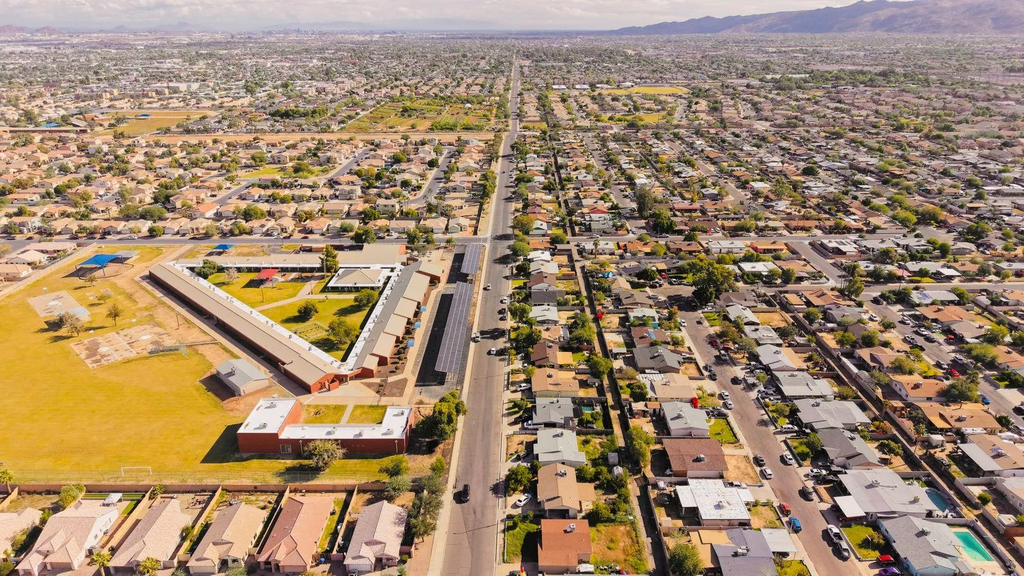
Smaller lots help explain the shift
A one-story house needs more ground than a two-story house of the same size. The land isn’t there the way it used to be.
Census figures put the median lot for a new for-sale home in the West at 5,996 square feet in 2025. The national median was 8,427 square feet, and in the South it was 8,552. On a lot under 6,000 square feet, a builder who wants to offer 2,200 square feet of living space plus a garage has little choice but to stack it. Two stories fit. One often doesn’t.
The Plan Collection’s one-level ranch home designs make the lot issue easy to see. As the site notes, ranch homes “usually need bigger property lots” because the living space is spread across one story. On a lot under 6,000 square feet, that wider footprint can quickly become the limiting factor. In the Phoenix metro, that can narrow the options for buyers who want a new single-level home, especially on smaller lots. Active-adult communities, larger lots, and custom or semi-custom builds are often where more of those choices turn up
In the Phoenix metro, that can narrow the options for buyers who want a new single-level home, especially on smaller lots. Active-adult communities, larger lots, and custom or semi-custom builds are often where more of those choices turn up.
MORE NEWS: Honeywell is building new $500 million manufacturing facility in Tempe
DEEPER DIVE: 10 Arizona restaurants make Yelp’s Top 100 Mexican food spots
Cooling costs deserve a second look
There’s a second tradeoff, and in Arizona it’s a big one. A ranch has more roof and more exterior surface relative to its living space than a compact two-story home, which can increase exposure to summer heat gain.
The Energy Information Administration’s 2020 Residential Energy Consumption Survey shows how much that matters here. Air conditioning accounts for 27% of household energy use in Arizona, three times the 9% national share. Arizona households that use air conditioning spent an average of $658 a year on it, compared with $299 nationally. Some 86% of Arizona homes have central air.
None of that rules out a single-story home. It does mean attic insulation, duct location, roof color, window orientation and shaded outdoor space matter more on a ranch than on a compact two-story. Newer plans account for it. Older resale ranches often don’t. Ask for the summer utility history before making an offer.
The same survey found that almost no Arizona homes have a basement. Elsewhere, a ranch can gain space by finishing the lower level. Here, every square foot has to come from the footprint.
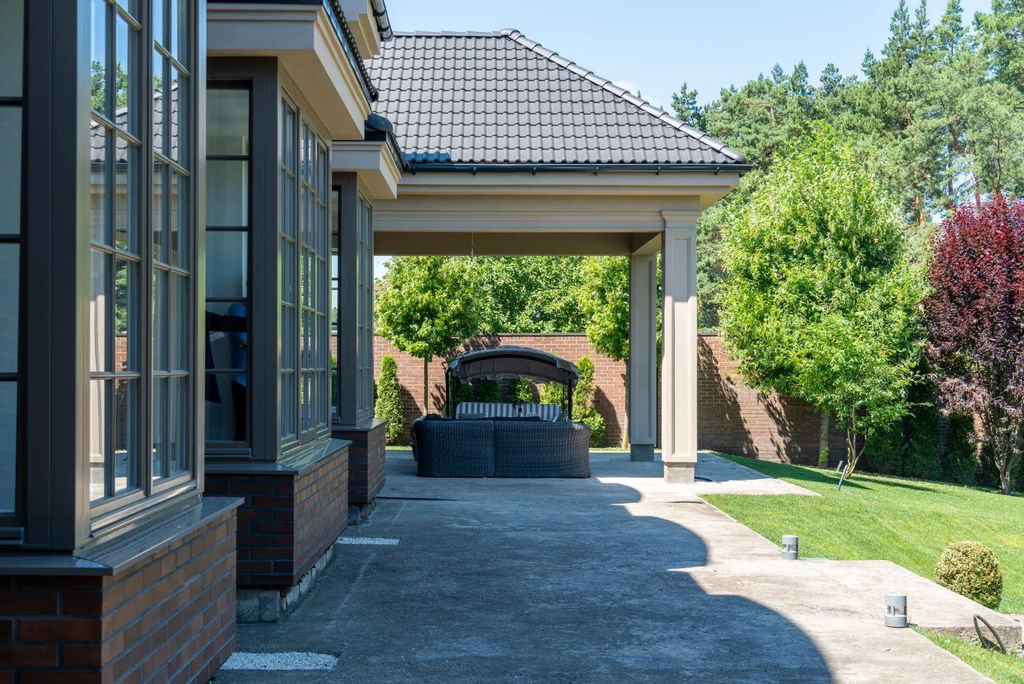
What to check before choosing a single-story plan
For buyers building on their own lot, the plan and the parcel have to be chosen together. Useful questions include:
- What are the lot’s buildable width and depth after setbacks, and does the plan’s footprint fit with room for a patio?
- Which direction will the main living-area windows and the covered patio face?
- Are the ducts in the attic or inside the conditioned space?
- Is the primary suite separated from the secondary bedrooms, or do all bedrooms share one hall?
- Does the garage entry reach the kitchen without a step?
- Does the HOA or the subdivision’s design guidelines limit single-story footprints or lot coverage?
Buyers looking at production homes should ask a simpler question first: how many single-story floor plans does the builder offer in this community, and on which lots? The one-story plan can be limited to wider lots that carry a premium.
Single-story supply is worth watching
There is no current Arizona-specific study showing that single-story homes sell for a premium, so buyers should not assume they do. What is clear is that Arizona’s 65-and-older population is growing while the Mountain region is building a smaller share of one-story homes than it was five years ago.
For buyers who want one level, the house plan and the lot need to work together. The wider footprint that makes a ranch easy to live in can also make it harder to fit on a smaller lot.