For companies like the Arizona-based Gamers Guild, the business of fun and games is booming. According to ICv2, the North American hobby games market was valued at close to $3.7 billion in 2025 and up 98% from the start of the decade.
Once a specialized niche, physical games have surged in popularity as “nerd culture” has become a mainstream phenomenon. Increased demand was one reason local hobby retailer Gamers Guild recently moved into a 49,000-square-foot warehouse — more than four times the size of its previous space.
READ MORE: Phoenix apartment demand surges as construction slows
This expansion supports the company’s publisher services, which “give independent and growing publishers access to professional infrastructure so they don’t have to build everything from scratch,” according to Gamers Guild’s website.
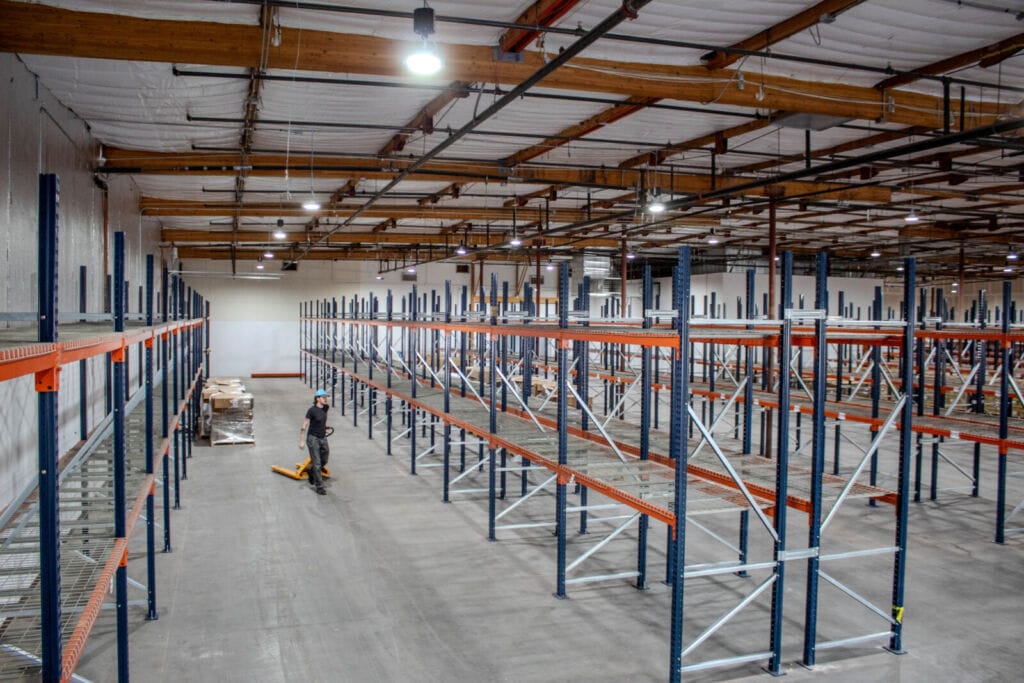
Shortly after settling into its new warehouse, Gamers Guild shipped the first wave of product for the Cyberpunk Trading Card Game, which raised more than $29 million on Kickstarter against its initial $100,000 goal — making it the most-funded gaming campaign in the platform’s history.
“We shipped something like 20,000 boxes over nine days,” says Ben Blythe, CMO of Gamers Guild. “There was a lot to learn along the way.”
The warehouse expansion coincides with another, more subtle transition for the company: dropping the Gamers Guild AZ moniker in favor of Gamers Guild USA.
“We love Arizona, but we serve all North America and wanted our website to reflect that,” Blythe explains.
In a perfect world, he continues, everyone would buy locally, but keeping product on shelves can be difficult for mom-and-pop shops. Some smaller communities, like the one Blythe grew up in, don’t even have a dedicated game store, leaving online purchases as the only viable option.
“If people can’t shop locally, they can support a gaming community that pays good wages instead of giving money to a big-box retailer — and we’ll ship it out in one to three business days like Amazon,” Blythe says. “We have an unofficial saying, ‘We might not be your friendly local game store, but we’re still your friendly game store.’”
Building the guild
Beyond its sizable e-commerce operation, Gamers Guild has two brick-and-mortar shops, both in the Valley. The Tempe store opened in July 2021 in a traditional retail setting most shoppers would be familiar with.
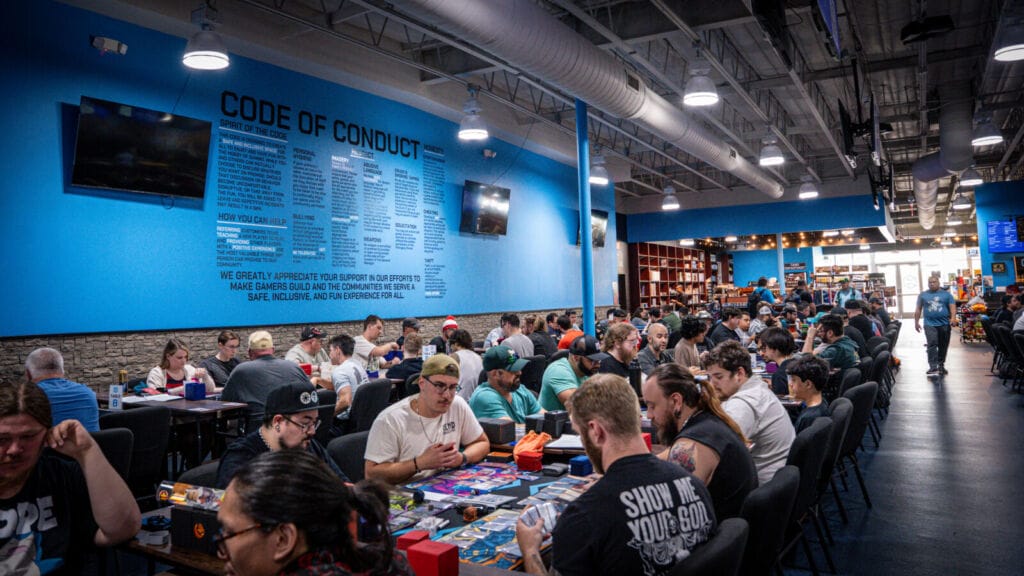
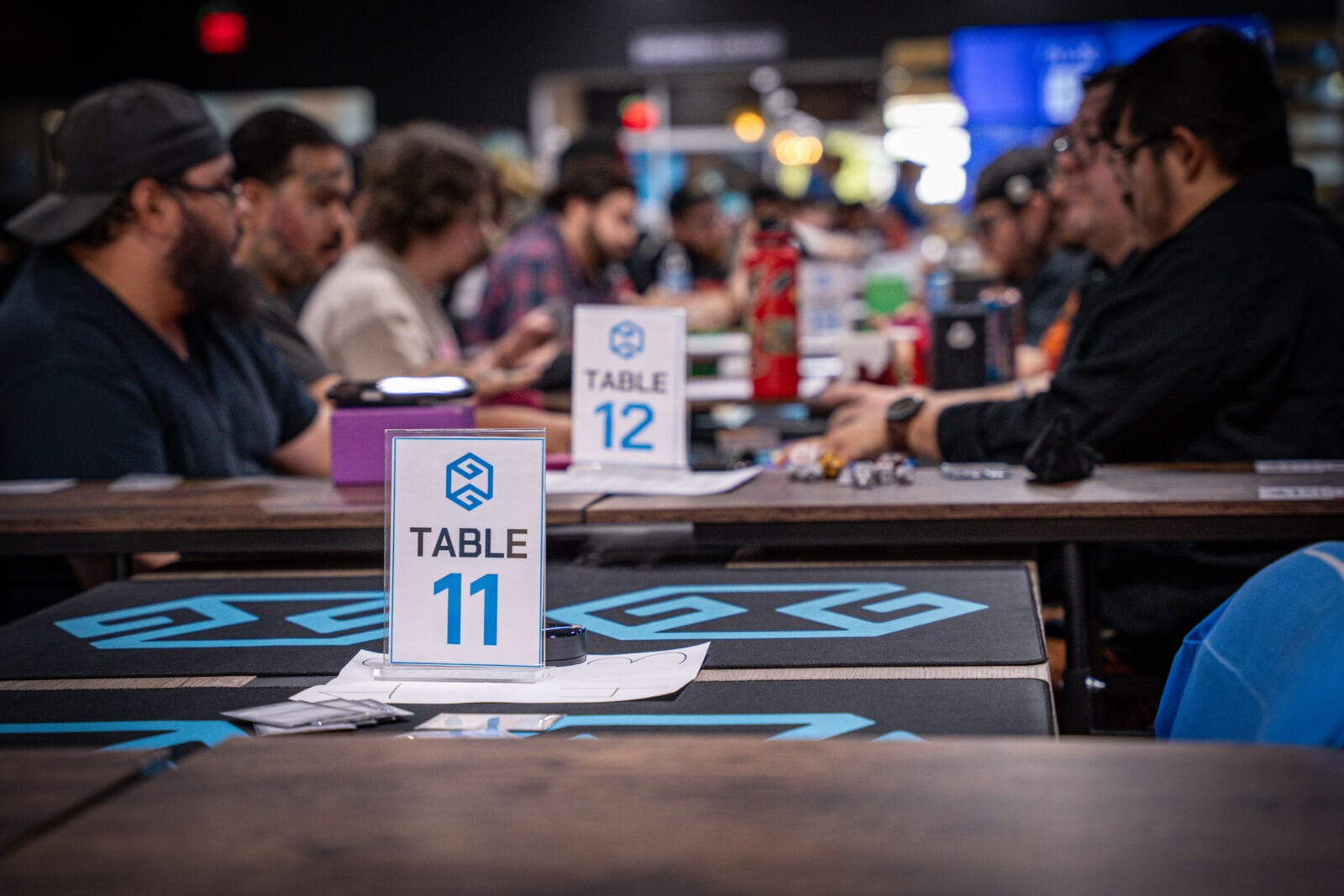
The North Phoenix location, however, offers a radical take on what a game shop can look like. The 30,000-square-foot facility was converted from a gym, providing ample room for product displays and an expansive play area with the capacity to run much larger tournaments than the Tempe store.
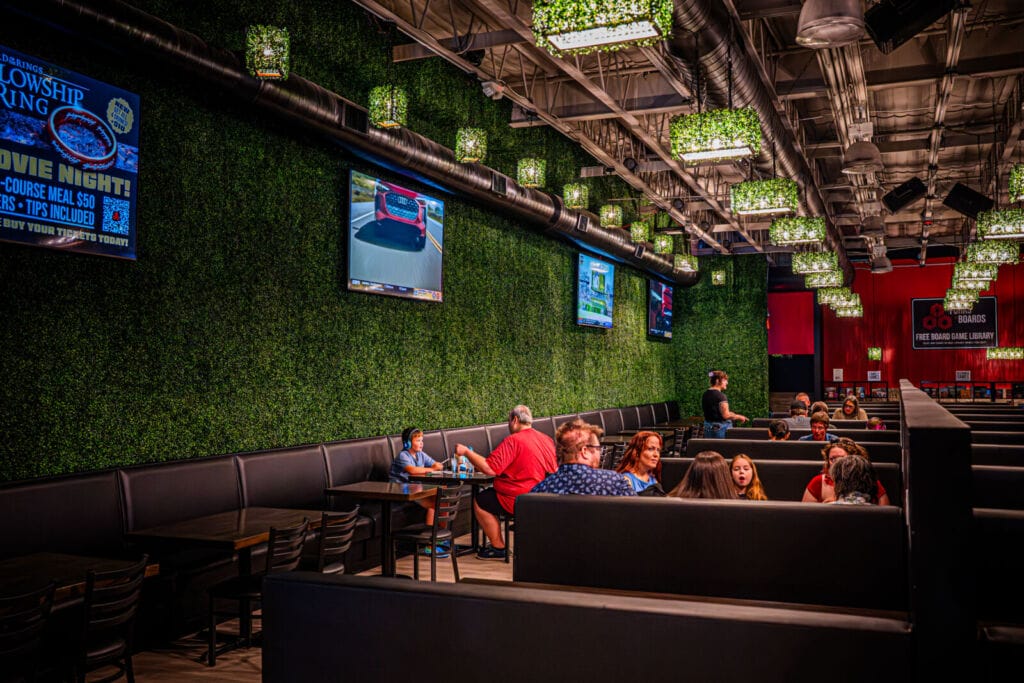
Another unique aspect of Gamers Guild North Phoenix is its restaurant, Forks & Boards, which has been an integral part of the business since the location opened its doors in September 2024.
Forks & Boards features a rotating menu that can accommodate dietary restrictions, along with a full bar. Guests can sit in the restaurant for a traditional service experience, or order from their phones to have food delivered directly to their table in the play area.
“We’re always trying to get non-gamers through the doors, so we figured if people come to Forks & Boards and like it, they’ll get exposed to everything gaming has to offer,” Blythe explains. “It’s the whole idea of ‘If you build it, they will come.’”
Putting a kitchen in a former gym, however, is easier said than done. Ensuring food runners can move through it efficiently was a challenge, as was nailing down the fundamentals like drainage and ventilation, according to Blythe.
“On top of that,” he adds, “our menu is allergy-friendly, which means we have to segment the kitchen so there’s no cross-contamination. Figuring out this space was the hardest part of the entire buildout [of Gamers Guild North Phoenix], but it’s all worth it when I can order a pizza on game night.”
A growing community
Much has been written about the atomization of society as the institutions that once served to bring neighbors together have waned from public life. Providing a welcoming third space — a place to belong besides work and home — is at the heart of Gamers Guild’s ethos.
That’s why the company doesn’t charge a fee for using an open table in the play area, nor does it expect a purchase to be made. In fact, the North Phoenix location maintains a sizable board game library guests can use free of charge.
“The reality is, sometimes people just need a place to shuffle up,” Blythe says. “It doesn’t cost us anything to provide that aside from rent, which we’re already paying.”
When folks frequent events hosted by the store or organize their own gaming groups, Blythe says a sense of responsibility for the shared space develops naturally.
“If you go to a park on a regular basis, you might get involved in a council that acts as stewards of that park,” he continues. “We want people to have that sense of ownership and help enforce our code of conduct.”
Gamers Guild’s code of conduct covers multiple topics that can be boiled down to two main guiding principles: respect and honesty. Many of the problems that arise in community spaces, from personal conflicts to bad hygiene, can be solved with “straightforward, honest, loving conversations,” Blythe adds.
The other key aspect of building loyal, thriving communities — which are the lifeblood of hobby stores like Gamers Guild — is what Blythe wryly describes as “bad improv.”
“You can’t force any of it,” he continues. “The secret is to say ‘yes, and.’”
For example, he points to a mahjong group that began to meet consistently at the store. Despite not knowing much about the game, Blythe says Gamers Guild is looking into purchasing an automatic tile shuffler to support a budding community that sprouted naturally.
“It’s just another way we’ve been able to create this flywheel of success.”