Phoenix’s architectural landscape is transforming. For decades, we’ve seen business developments, lifestyle hubs and communities sprout up across the desert. But as we look toward 2035, the question is no longer simply how much Phoenix will grow, but what kind of city that growth will create.
MORE NEWS: The office trends that are redefining the Phoenix market
One of the biggest shifts will likely be a more concierge-oriented, amenity-driven approach to development. Rather than thinking about mixed use simply as different uses located next to one another, developers and architects will be thinking more intentionally about how residential, hospitality, retail and workplace environments interact.
In residential development, that could mean apartments and senior living integrated with retail and hospitality, with residents sharing services, amenities and gathering spaces that make daily life more convenient and connected. In the workplace, it means office design increasingly borrowing from hospitality—comfortable shared spaces, thoughtful food and beverage offerings, wellness amenities and other features that make the workplace feel less transactional and more like a place people choose to spend time. For us, that represents the next evolution of our “Life in Place” philosophy: designing environments where different uses do more than coexist, they actively enhance one another and the experience of the people using them.
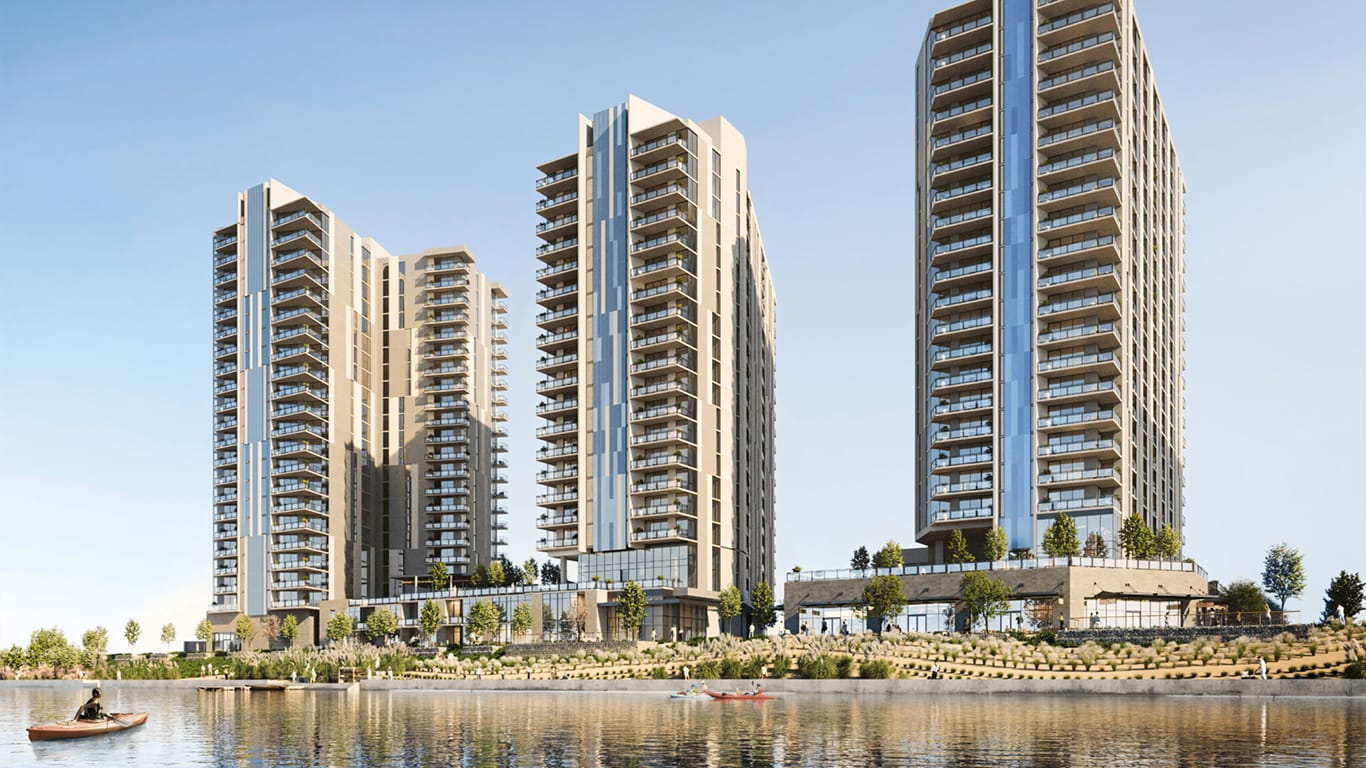
DAVIS recently completed the design and construction administration for the three-tower mixed-use residential community, Shorehaven – for Silverstein Properties along Tempe Town Lake. The 724-unit complex includes 1.3 million square feet of residential units, amenity space, retail space, parking, and green space, and even has access to the running trails and waterfront amenities. The community truly fits into the unique context and combines many design elements to create a concierge and amenity-driven living.
Phoenix is also becoming an increasingly global city.
As companies and industries choose Arizona, they bring new ideas and influences from around the world. We will see those influences reflected not only in the businesses that open here but also in our dining, culture and the way our communities are designed. Phoenix’s identity will continue to evolve from that of a rapidly growing Southwestern city into one of the country’s major metropolitan centers. Phoenix is already the fifth-largest city in the U.S., with more than 1.6 million residents, and experts predict the Phoenix metropolitan area could grow to roughly 6.2 million residents by 2035.
Perhaps most interesting will be where that growth takes shape.
For years, conversations about the Valley’s development focused on Phoenix, Scottsdale and the East Valley. In the next decade, some of the most transformative growth could happen in places that have received less attention. The West Valley continues to attract major development, while areas such as Deer Valley are emerging as increasingly important employment and commercial centers.
That growth also creates demand for the infrastructure and services needed to support expanding communities. The recently completed HonorHealth Primary Care – Peoria Medical Campus along Loop 101 is one example. DAVIS completed design and construction administration for the project and is now working on additional medical office developments in the West Valley as demand for healthcare services continues to grow alongside the population.
That growth will reshape how we think about Greater Phoenix. Instead of one traditional urban core surrounded by suburbs, the Valley is becoming a collection of interconnected hubs, each with its own identity and opportunities.
The challenge over the next decade will not simply be accommodating more people as Arizona continues to attract new residents and investment. It will be ensuring that growth produces communities people actually want to live in, places that are connected, functional and distinctive. If we do that well, the Phoenix of 2035 will not simply be a larger version of the city we know today. It will be a more connected and dynamic place that reflects how dramatically the Valley itself has evolved.
Author: Mike Davis is the CEO of DAVIS Architects.