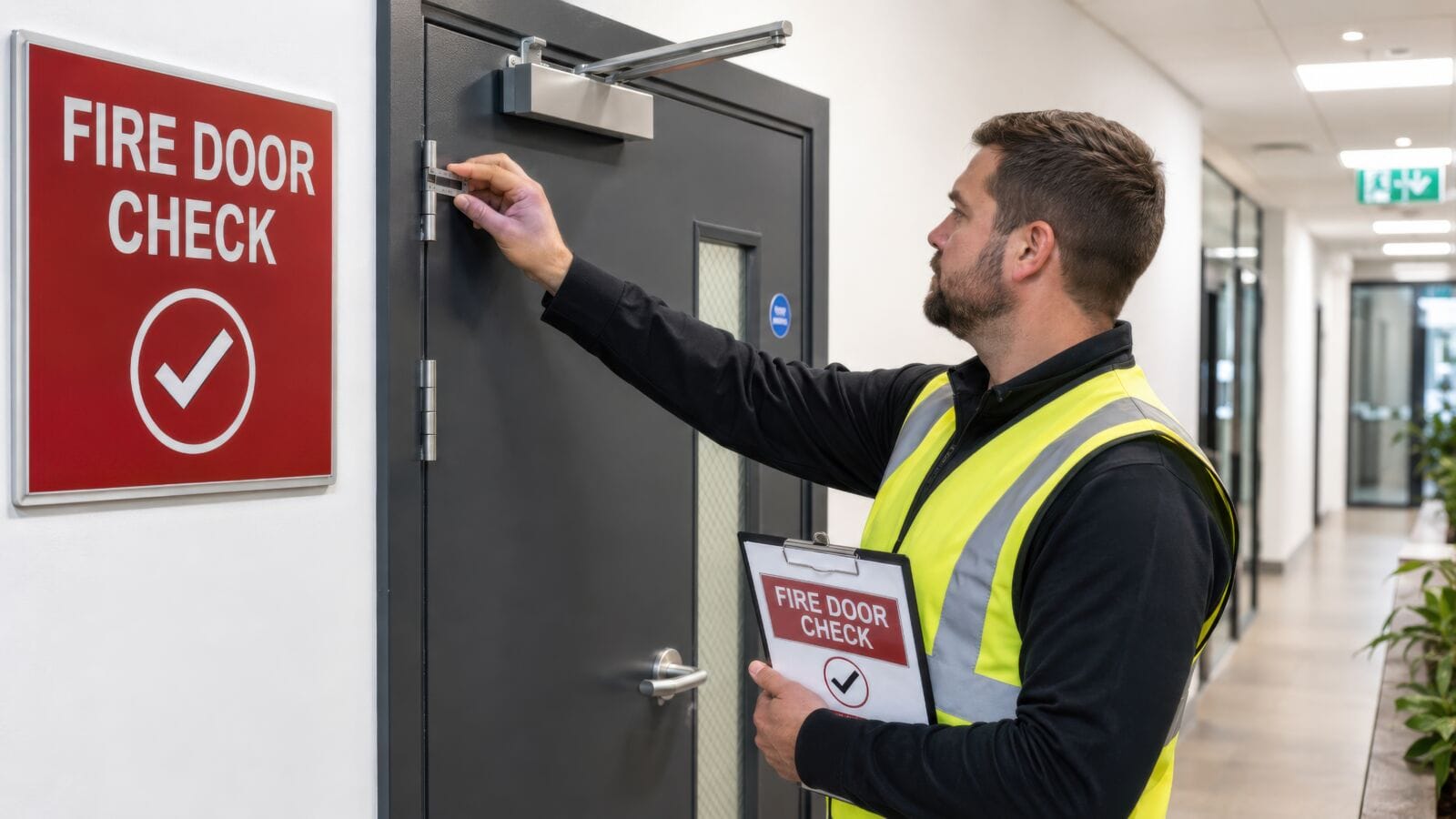
Most property owners never think about fire door specification until an inspector flags something wrong. By then, fixing a mismatched assembly costs a lot more than getting it right the first time. A handful of checks early in a project can save owners from failed inspections, coverage disputes, and rework nobody budgeted for.
Fire doors protect people and property during a fire, but only when the full assembly matches what was actually tested. The rating, size, frame, glazing, and hardware all have to line up with what the building’s fire safety plan calls for. Change one piece without checking the rest, and the assembly can lose its listing without anyone realizing it.
Why Specification Matters More Than Owners Think
Every commercial building has openings that need a fire rating based on how the space gets used. Stairwells, corridors, mechanical rooms, and unit entries in larger buildings almost always fall into this category. Local code and the building’s approved plan decide what rating each opening actually needs.
A lot of owners treat fire doors as something the contractor handled once, back when the building went up. That’s not really how it works. A door swapped out without matching paperwork, new hardware installed without checking compatibility, or a tenant renovation that alters an opening quietly, all of these can create problems that don’t show up until much later.
Working with a supplier that carries a wide range of fire-rated doors across steel, wood, and glass gives owners more room to match a replacement to the original spec, instead of grabbing whatever’s available locally on short notice.
Questions Worth Asking Before a Project Starts
A short list of questions catches most of the common mistakes.
What rating does each opening actually need? Pull this from the building’s approved plan directly, not from a guess based on a similar property down the street. Ratings shift based on occupancy, where the opening sits in the building, and local code amendments.
Who’s holding onto the documentation? Listed door assemblies come with test records and certification papers. If nobody updates those records when a door gets replaced or modified, the building can drift out of compliance and nobody notices until an inspection catches it.
Does the replacement match the whole assembly, not just the rating number? A door with the correct fire rating but the wrong frame, glazing, or hardware might not match its tested configuration anymore. That can void the compliance claim even though the door itself still carries the right rating on paper.
Is there an approval step for changing a rated opening? Adding a card reader, swapping hardware, cutting in a new vision panel, any of these can affect a door’s listing. Owners should require sign-off before changes like this happen, not just during new construction.
One Supplier Makes Compliance Easier to Track
Owners running several buildings or a bigger portfolio usually find it easier to stick with one supplier for fire doors. Documentation, replacement parts, and future orders stay in one place instead of scattered across vendors that each keep records differently.
This manufacturer works directly with project teams to confirm rating, sizing, and paperwork before production starts. That kind of coordination matters most when owners need matching assemblies across several buildings or project phases at once.
What Actually Happens When Specification Goes Wrong
Getting this wrong doesn’t just mean a failed inspection. Insurance carriers look closely at life safety compliance during underwriting and renewal now. A building with mismatched or undocumented fire rated openings can end up facing higher premiums, or a denied claim after a loss.
Tenants and their attorneys pay closer attention to this too, especially in apartment buildings and healthcare adjacent properties where safety expectations run higher. A gap in the paperwork can turn into a legal headache long after the original construction wrapped up.
Keeping Records Current Isn’t a One-Time Job
Specification doesn’t end once the doors go in. Every time one gets replaced, repaired, or modified, the paperwork should be updated to match. A simple log tracking each rated opening, its assembly details, and its last inspection date makes future reviews go a lot faster.
This habit pays off during ownership changes too. A new buyer or property manager can look at the log and know exactly what’s installed, instead of starting from scratch or guessing based on drawings that might be years out of date.
The Bottom Line for Owners
Fire door specification looks like a small line item next to everything else in a construction project, but it carries consequences that stick around for years. Owners who treat it as something ongoing, not a box checked once, end up in a much stronger position at the next inspection, renovation, or claim.
Frequently Asked Questions
What is fire door specification?
It’s the process of matching a fire rated door assembly, including size, frame, hardware, and glazing, to what a building’s approved life safety plan requires.
Why do fire doors need documentation?
Listed fire door assemblies come with test and certification records proving the door meets its rated performance, and those records often get requested during inspections and insurance reviews.
Can a fire door lose its rating after installation?
Yes. Changing hardware, cutting new openings for glass, or swapping in unmatched parts can void the original listing even if the door looks the same as it always did.
How often should fire door records be updated?
Any time a door gets replaced, repaired, or modified, not just once during the original construction phase.
Does insurance care about fire door compliance?
Many insurers review life safety documentation during underwriting and after a claim, so missing or mismatched fire door records can affect coverage and premiums.